
Where can I place a bet on the way this war ends?
It might be the Third World War. Or not. It might lead to a new Great Depression. Or not. Iran might be destroyed in four weeks. Or maybe Israel will be destroyed after a couple of years. Unless it nukes Iran. Or vice versa. Or whatever.
For the first time in my life, I found fun in watching two shitheads. But that’s only because they might be, at least in part, right.
What is there to lose, anyway? Reality is so great! Two major wars, the economic decay of the West (thanks to the most retarded CEOs in history), the decline of Western civilization (thanks to the most inept political leaders in history), the AI apocalypse and the increasingly Orwellian surveillance (thanks to Big Tech, to which the same politicians have contributed), the end of the pretense of an international order, the end of any hope in progress, or merely of any hope whatsoever.
Who could have thought that a rogue, maleficent, and senile pedophile with the morality of Satan and the intelligence of a frog crushed by a truck would become the leader of the greatest military power in the world?
📹 On YouTube: Why America is Losing the War With Iran (w/ John Mearsheimer) | The Chris Hedges Report:
(0:00) Intro
(2:30) Why was Trump the one?
(5:25) General Caine
(7:26) Did Trump think it’d be easy?
(8:41) Did Netanyahu think it’d be easy?
(10:05) Israel’s goal
(11:04) Iran’s strategy
(15:33) U.S. Escalation ladder
(19:12) Killing civilians doesn’t work
(23:46) Shutting down Strait
(28:15) Iranians need a good deal
(32:08) Consequences
(35:52) Russia and China
(40:09) Future of U.S. power in the ME
(45:49) Military censorship in Israel
(52:25) Outro
👉 The full transcript is here.
I asked Grok for an opinion (yes, I asked it if the two could be considered as being “slightly pro-Putin” and “pro-Iran”):
Both John Mearsheimer and Chris Hedges have long been viewed by mainstream foreign-policy commentators, neoconservatives, and liberal interventionists as dissenting voices who contradict the dominant U.S. narrative—first on Russia/Ukraine during the Biden era, and now on Iran/Israel. Critics often frame this dissent as “slightly pro-Putin” or “pro-Iran” (or at least providing cover/apologia for them), but that’s more a rhetorical smear than an accurate description of their positions.
They are consistent anti-interventionist critics of U.S. foreign policy: Mearsheimer as an offensive realist who explains great-power behavior in terms of security and spheres of influence, and Hedges as a left-leaning anti-imperialist journalist who sees U.S. actions as aggressive empire-building. Neither endorses Putin or Iran’s regime ideologically or morally; they argue U.S./NATO/Israeli policies provoked or mismanaged the conflicts and are failing.
This label sticks most strongly to Mearsheimer. … Critics (e.g., Anne Applebaum, Alexander Stubb, The Hill, and various Russia experts) label him a “Putin apologist,” “useful idiot,” or someone legitimizing “Russian brutality” and genocide by blaming the West and downplaying Putin’s agency. They say he echoes Kremlin talking points on NATO as an existential threat and ignores Russian imperialism. Even after the 2022 full-scale invasion, he doubled down: the war is “the West’s fault,” defensive on Russia’s part, and the U.S. is prolonging it unnecessarily.
Hedges gets similar (though less intense) flak. He has called the invasion “provoked and baited” by NATO expansion (which he witnessed promises against in the 1990s), criticized U.S. arms shipments as turning Ukraine into a proxy war meat grinder, and highlighted “worthy vs. unworthy victims” while noting U.S. hypocrisy. …
Their recent interview (“Why America is Losing the War With Iran,” March 2026) follows the same pattern amid the ongoing U.S.-Israel strikes on Iran (which escalated dramatically under Trump, including leadership decapitation attempts).
They argue the U.S./Israel miscalculated badly:
- Netanyahu “trapped” Trump into a war for regime change or to “wreck” Iran (like Iraq/Libya), but air power alone can’t achieve it—no boots on the ground means no surrender.
- Iran is rational and resilient, using missiles/drones smartly to target Gulf economies and infrastructure for leverage rather than direct confrontation. It has “no incentive to quit” and can drag this into a Vietnam-style quagmire or force concessions (sanctions relief, reparations).
- Closing the Strait of Hormuz risks global recession/depression (hitting Europe, Japan, South Korea hardest).
- U.S. goals are incoherent; Israel may even go nuclear if losing.
…
This directly contradicts the “original U.S.-Israel narrative” of Iran as an existential threat whose nuclear/military program must be smashed quickly, with strikes leading to collapse, regime change, or decisive victory. Instead, they portray Iran as the one in a stronger long-term position due to U.S. blunders.
Are they labeled “pro-Iran” or apologists the same way? Not yet to the same degree—searches turn up almost no mainstream accusations of “Iran apologist” or “pro-Iranian” tied specifically to this interview or their broader views. (Mearsheimer has separately argued Iran is a rational actor that should get nuclear weapons as a deterrent, and neither is a threat to the U.S.) The war is too recent (second week as of the podcast), and their focus is on U.S. strategic failure rather than praising Khamenei. Some left-antiwar circles (e.g., certain Reddit threads) celebrate the interview positively, but pro-Israel or hawkish voices mostly just note their anti-U.S. slant without the full “apologist” tag that Putin got. The pattern is identical, though: contradicting the official line (Iran weak/aggressor; quick win possible) gets you painted as sympathetic to the adversary.
Let me quote John Mearsheimer from the transcript:
Well, you could have a worldwide depression. You could have something less than that, like a worldwide recession, that would have huge consequences for people all over the planet, especially in developing countries, less so in developed countries. But even in developed countries, it’s quite clear that the importance of oil for running the international economy simply can’t be underestimated.
…
And we have long understood the centrality of oil, this natural resource for fueling the international economy. And if something went catastrophically wrong with the flow of oil coming out of the Middle East, this would have disastrous consequences for the international economy. We’ve long understood this. And this is why we consider the Persian Gulf to be a vital strategic interest. All of that tells you that if this war plays out in ways that you have a serious cutoff of the flow of oil out of the Gulf, or it’s almost completely cut off, this will have disastrous consequences for the international economy.And it won’t be just a case of not being able to get gas for your car at a reasonable price. That’ll be the least of our problems. The fact is that if you cut off the flow of oil from the Gulf, the effects of that will ripple throughout the economy. It will have a tremendous effect on the industrial base as a whole. It will have a tremendous effect on the cost of electricity. Inflation will go through the roof. Production will be curtailed in serious ways. As I said, you could be in a global recession or a global depression. And people talk about that possibility all the time. And I want to be clear here. I’m not arguing, Chris, that this is going to happen.
And in fact, I think that once it becomes clear that we’re heading in that direction in a serious way, to put it in slightly different terms, once it becomes clear that we’re heading for the edge of the cliff, I think the Trump administration will pull back. I think that President Trump and his lieutenants, who are not the world’s greatest strategists, will understand clearly that we have to be very, very careful here because of what the consequences would be.
…
Well, the first thing we should just talk about is the incentives that the Chinese and the Russians have to help Iran. And the fact is they have huge incentives, both of them, to help Iran and to do everything they can to make sure that the United States suffers a humiliating defeat in Iran. The United States is a mortal enemy of both Russia and China.
And I believe that Putin and Xi Jinping fully understand this. I believe they don’t say that publicly for diplomatic reasons. They’re smart enough not to advertise just how dangerous they think the United States is, but they surely understand that they’re dealing with a country that’s basically a rogue elephant that can’t be trusted and is incredibly powerful.
…
I think if you look at the Saudis, they had serious doubts, this is before February 28th, as to whether the United States was a reliable ally.
As I’m sure you remember, the Saudis formed a strategic partnership with Pakistan. And Pakistan literally said it would put its nuclear umbrella over Saudi Arabia. And now the Turks are trying to help or trying to join that Saudi-Pakistani alliance to make it triangular because the Turks are worried about the Americans as well. The Turks and the Saudis see that the Americans and the Israelis are a tag team and that the Israelis at least, but even the Americans are willing to use military force very liberally in the region.
And who’s to say they won’t use it against the Gulf state? You remember that the Israelis actually attacked in the past year that had a shocking effect on countries in the Gulf, the Israelis who are joined at the hip with the Americans, attacked Qatar. What does that tell you? Are we safe? Are the Americans going to protect us? They didn’t protect Qatar from an Israeli attack.
…
I believe the Iranians have the assets to attack Israel and to do great damage. And as you and I both know, Israel is a postage-sized, postage stamp-sized state. It’s a small state and the Iranians with all those ballistic missiles and drones can do a substantial amount of damage, especially if this war becomes a protracted conflict.
So I think that Israel is going to suffer and I think the fact that Israel is constantly at war against its neighbors, and you want to remember the Israelis are now engaged with Hezbollah. They’re not only fighting against Iran, they’re fighting against Hezbollah in a serious way as we speak. And of course, the genocide is ongoing in Gaza. So you have this multi-front war. There’s no sign that it’s ever going to end. As you and I both said, they’re not going to destroy Iran. Iran is not going to disappear from the map.
You’re not, in all likelihood, going to get regime change. The person who’s now in charge in Iran is more likely to pursue nuclear weapons than not. He’s more inclined to pursue nuclear weapons certainly than his father was, who was the principal block against Iran getting nuclear weapons. So you can easily imagine a situation where Iran has nuclear weapons or is beginning to push down that road.
And the question you have to ask yourself is, what effect is that going to have on Israeli society? If you’re an Israeli citizen and you’re constantly fighting these wars and you’re running to bomb shelters when either Hezbollah or Iran is lobbing missiles and shooting drones at you, what does this say about your future life there? And then when you begin to hypothesize a situation where maybe Iran has a nuclear weapon and, you know, Iran is a mortal enemy and you’ve been telling yourself these stories for decades that Iran’s principal goal is to eradicate you from the earth.
And as soon as they get a nuclear weapon, they’re going to attack you. I mean, isn’t that going to incentivize you to leave the country? So I think Israel’s future is very bleak here. … So I think Israel is a country that’s in real trouble. And I think the idea that they can get themselves out of trouble by fighting more and more wars is a fallacious argument.
Where could I bet on the outcome of a war whose end I might not live to see?
Meanwhile, unpatriotic media could get in trouble in North Korea Russia Iran the US.
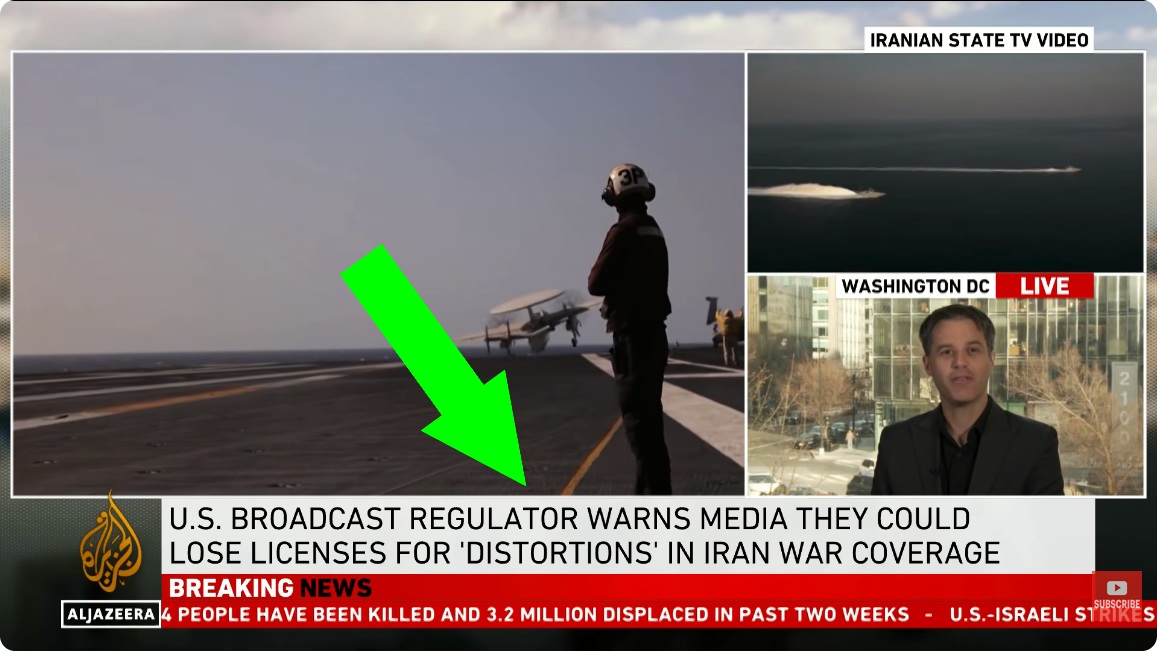
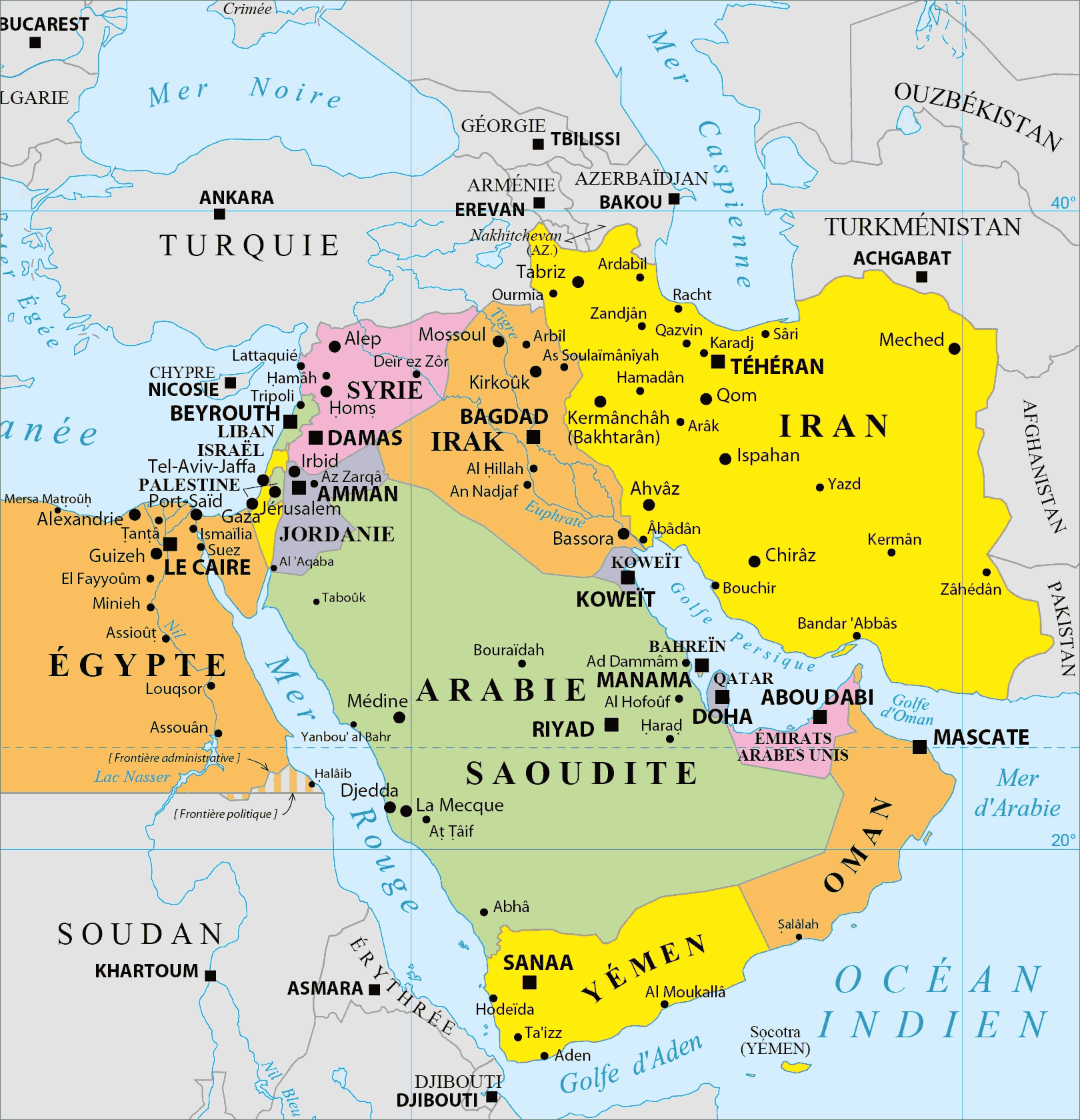
“Israel’s future is very bleak” is the only thing I could bet on. Some thoughts:
Alternative 1)
It wins all the wars, even toward Iran that (unlike what Tel Avid claims, it does not only demand regime change, but see it as a permanent non-functional state). Well, with that high of having destroyed Iran, it will turn towards Turkey next and Pakistan after that. Let’s remember that Israel is radicalizing more and more not only due to the media, but the religions factions much higher reproduction rate. But that would be just too much of a bone to chew for such a tiny nation, no matter the technological superiority. The US times of loosing more than 1000 deaths in a foreign land is gone for good.
Alternative 2)
Iran, if it survives for a few months, it will be able to remain with its animosity in low burner mode, even if in a low-key as Hezbollah does. Russia and China would only increase help with materials, and Iran has sufficient human capital to develop any strategy and technology it needs for its resistance for decades to come. Few will invest in Israel in that scenario, let alone as China overpowers the US. Israel will have already de facto cleared of Arabs the rest of Palestine, so it will have almost no sympathies at all, not even in Europe.
Alternative 3)
Israel uses the nuclear weapon on Iran within this decade. Horrendously, I rate this possibility ostentatiously elevated, like 30-50% high!!! They have proven in current environment they can get away with anything, they could even get away with killing Spanish’ PM Sanchez or a US even merely viewed as vaguely pro-Palestinian US candidate if they wanted it, so using nuclear weapons is completely feasible; they would just justify it as the US did, it is to “ultimately saving lives”. This will position Israel in Alternative 1, but with the aggravation of being now also detested in the world for centuries to come (main reason why they have not exercised the nuclear option just yet.)
Alternative 4)
Iran gets the nuclear weapon. The chances they get nuked first now will be some 80-90%. Israel, won’t even care to assess if Iran would be able to retaliate at the same time (Russia/China likely will notify instantly to Tehran of such attack!). A few thousand Israelis would just be on the air at the time of the attack while heading their new promised land… Patagonia. Besides, the Israeli calculation is that Iran’s military are too ‘ethical’ to respond with nuclear even if attacked with it first; Shia Muslims care for honor to ways incomprehensible to us. For this motive alone, I don’t think Iran will pursue nuclear weapons today, even when now we know it is the only thing that keeps the US at bay; Tehran knows their top leadership is unlikely they will ever push the button that will kill even hundreds of thousands, let alone millions…
The fun goes on: Yanis Varoufakis joined Chris Hedges and foreboded evil: How the Iran War Will Cause a Global Financial Crisis (Yanis Varoufakis) | The Chris Hedges Report.
35 minutes follow. A few tidbits only:
The Chinese bonanza:
The moron meant MWh, not kWh! (Current prices are here.)
There is still half of the video from which I didn’t collect any transcript.
US-Iran war explained by Chinese AI animation: Legend of the Valley of Gold.