Not long ago, ZDF broadcast an 18-minute documentary titled Warum sich Siemens gerade für immer verändert (“Why Siemens is changing forever right now”). Only after I concocted this automated but brushed-up translation to English did I notice that the video is also available on YouTube, with an annoying auto-dubbed English audio track (you can switch to the original audio, though).
🤖
Why Siemens is changing forever right now
Alexander Wulfers, Economic & Business Editor, Frankfurter Allgemeine Zeitung: Siemens was once an industrial conglomerate in decline. Too big, too sluggish, too trapped in the past. Until a new boss comes and makes a radical decision. He breaks up Germany’s oldest large corporation into its individual parts. It is the beginning of a remarkable transformation. Today, we are looking at how Siemens is completely reinventing itself. For that, we spoke with the man who triggered this change.
Joe Kaeser, Siemens CEO 2013-2021: “I know many former colleagues, including supervisory board members and executives, who said: We never believed you’d make it through.”
Alexander Wulfers: And with the one who now has to take the next step.
Siemens is to become a digital corporation. Germany’s answer to ChatGPT.
Peter Körte, Member of the Managing Board: “We electrify, we automate, and we digitize. And we do this across over 30 industries. And that is exactly what our customers expect from us.”
How much does the world cost?
Alexander Wulfers: Our story begins in the year 2013. Siemens is now in a pretty deep crisis. The company has just weathered a major corruption scandal. That’s a whole different story. The business is also running anything but smoothly. Siemens is missing its profit targets, the stock price has collapsed, and the CEO has to go. Instead, a man is now taking over, who was described in the media at the time as: No one knows Siemens as well as he does.
Joe Kaeser: “The company was in a very, very bad state. Actually much worse than the numbers indicated.”
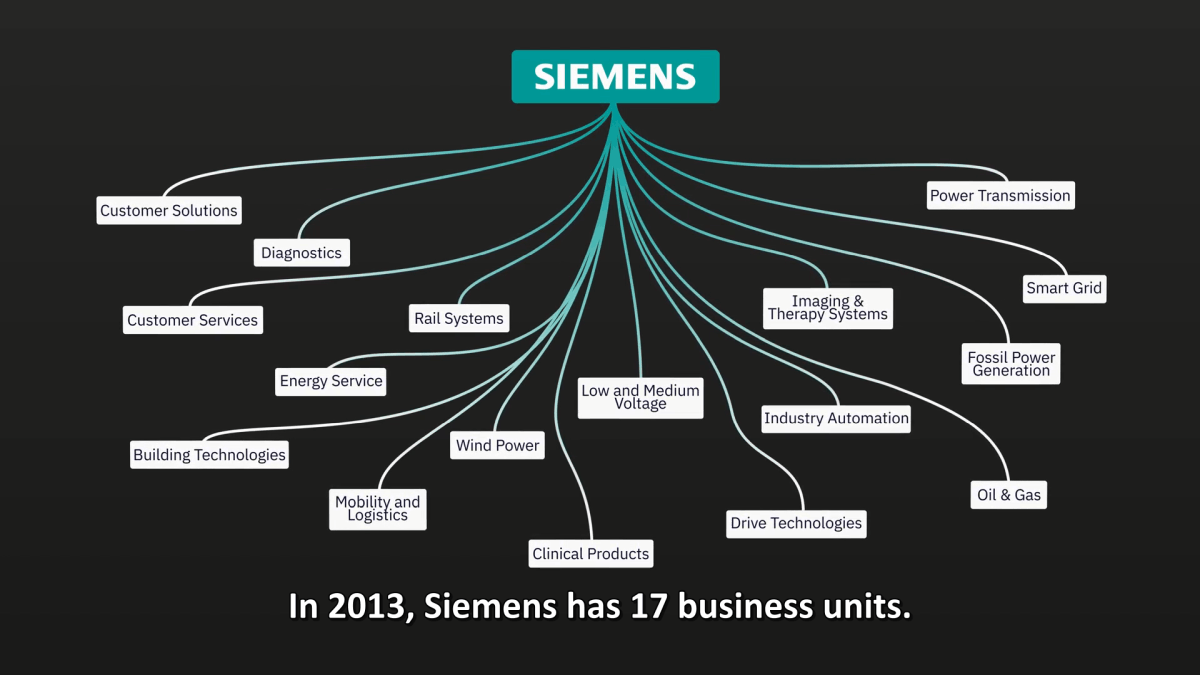
This is Josef, known as Joe, Kaeser. He is, up to this point, the Chief Financial Officer and has been with Siemens for over 30 years. Now he is becoming CEO. And the task ahead of him is immense. The corporation has become a gigantic industrial colossus. With so many sectors that it’s hard to keep track. In 2013, Siemens has 17 business areas.
From laboratory diagnostics to railroads, from electric car engines to gas turbines. And why they are all in one company is not always apparent at first glance. And not on the second either. In front of this mess now stands Joe Kaeser: “The Siemens of 2013 was a company that grew slower than its competitors. And that’s why the first priority was to get the company back on track.”
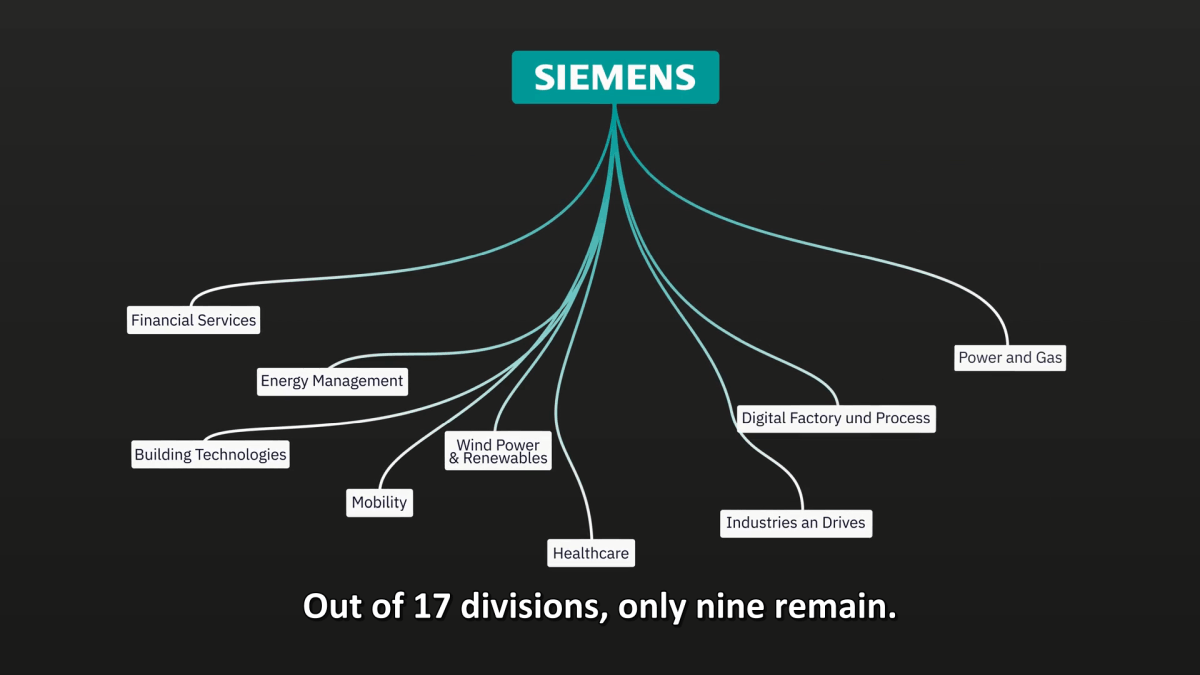
Kaeser is initially cleaning up as the new CEO. Out of 17 divisions, only nine remain. “And then the question was actually: Well, is that enough? Or what will a company of the future have to look like?”
Kaeser understands: A mere restructuring will not make Siemens fit for the future. That’s why he is now planning an even more radical step.
A radical plan
To understand this step, we need to delve into economic theory. Siemens, in the mid-2010s, is what experts refer to as a conglomerate. In the past, in the 60s and 70s, such conglomerates had a tremendous advantage.
It was not so easy to finance a company back then. Banks and investors prefer to give their money to the largest possible companies. The lenders are heavily regulated and risk-averse. And alternative sources of funding, such as venture capital funds, are still scarce. Siemens can, in a way, internally cross-finance new business areas with its profitable divisions. The corporation acts as its own bank.
But the world of the 70s has long since disappeared. Companies like Siemens are in global competition. It has become easier for smaller companies to access capital markets. Today, conglomerates therefore no longer have an advantage. On the contrary, their size and breadth become a disadvantage.
And that’s exactly what Joe Kaeser recognizes as well: “The speed at which companies do business has changed. And diversification and breadth have never been friends with speed.”
In other words: Conglomerates are too slow. They lack a clear focus and make it difficult for investors to understand what they are actually buying. In the case of Siemens, this means: Anyone who wants to invest in medical technology must also buy wind turbines and industrial technology. Conglomerates like Siemens are therefore systematically valued lower on the stock market than the sum of their individual parts. In the 1990s, a term was established in management literature for this: the conglomerate discount (Konglomeratsabschlag). And it increasingly becomes a problem for Siemens. Additionally, those who become too large and powerful eventually become sluggish.
Kaeser remembers a story from the 1980s. Back then, a few people from a small start-up in America came to Siemens. They want to cooperate on a revolutionary idea: making phone calls over the internet. The Siemens managers are downplaying it. The Handelsblatt has summarized the story like this: «They were shown the door. “If making phone calls over the Internet were possible,” thought the managers at the global leader in telecommunications, “we would have invented it ourselves.”»
Well, quite a mouthy bunch, those Siemens folks. Joe Kaeser still remembers the Siemens vibe of those years from his own experience: “I still know a few players from back then who were my bosses’ bosses’ bosses’ bosses. So, if they didn’t bow at least to the knee level, it was already a career-limiting incident. There were already signs of arrogance.”
By the way, the small start-up back then was called Cisco. They are now one of the most important developers of internet infrastructure and are currently worth twice as much as Siemens on the stock market. According to Kaeser, arrogance was not the only reason for Siemens’ reluctance: “That was a typical innovator’s dilemma. You are the world market leader, you master a technology. You also know very well that the next technology is the best. But you doesn’t want to go there because you would be cannibalizing yourself.”
Kaeser has learned from this mistake. He knows that Siemens must either continue to change or the company will perish.
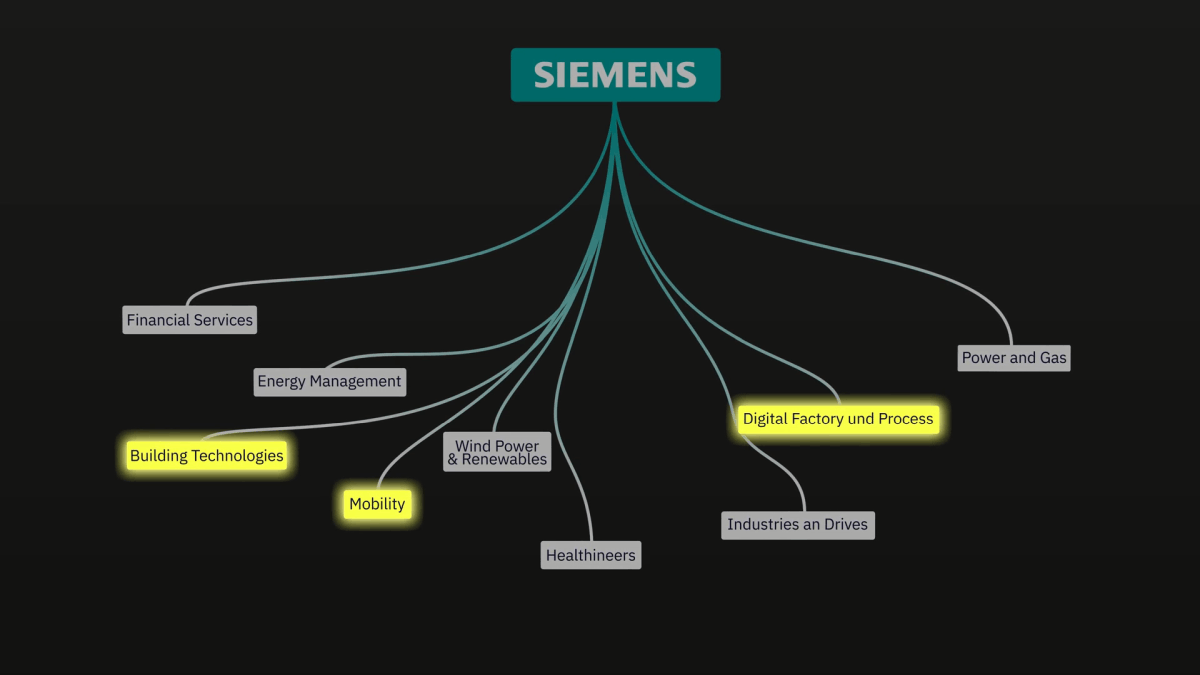
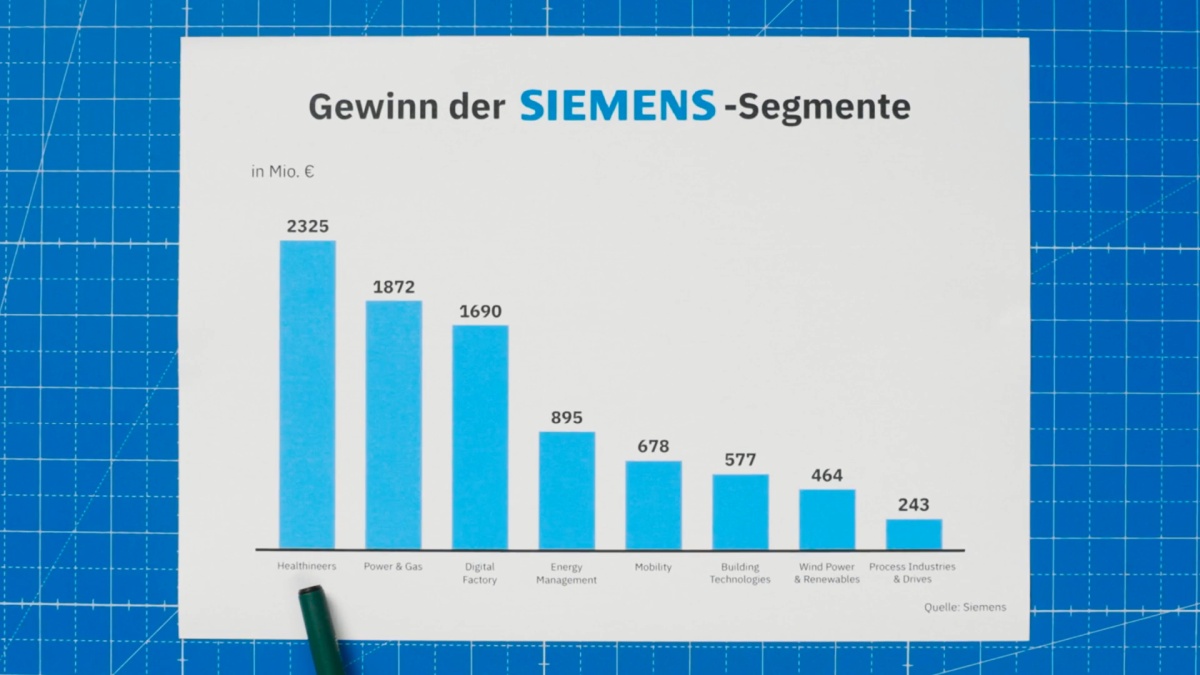
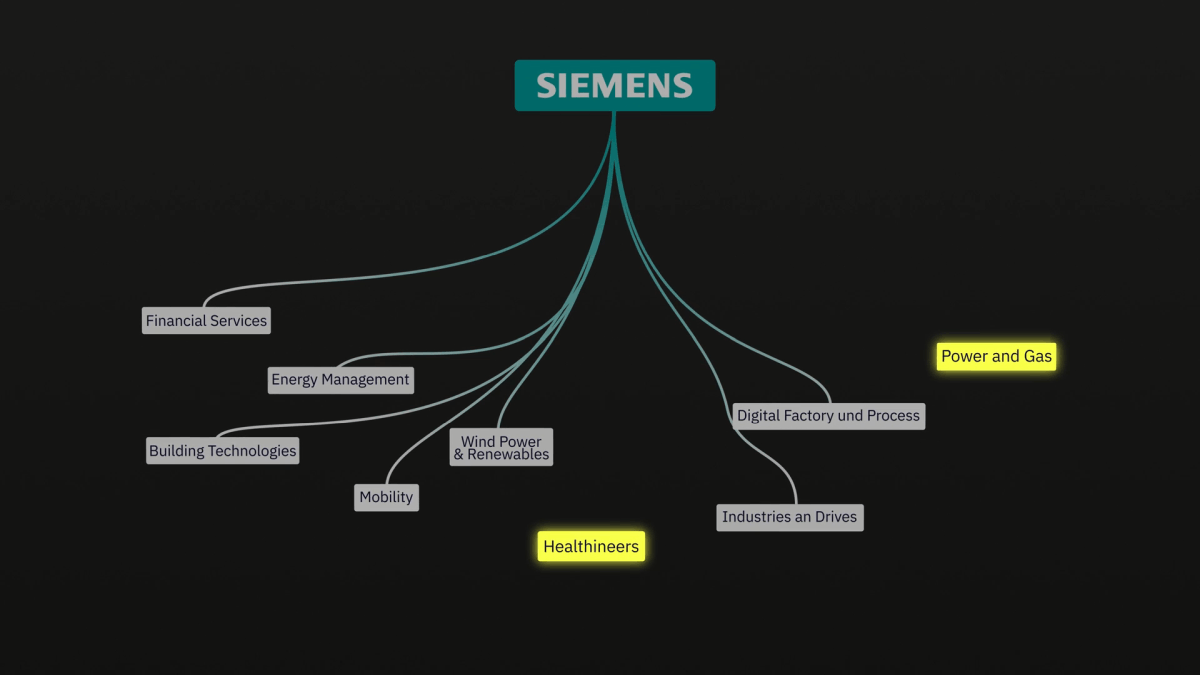
Let’s take a look at which parts of the company are still with Siemens in 2016, three years after Kaeser started. There are such diverse topics involved, like Building technologies, Mobility, and Digital factories.
The two business areas that generate the most profit are, on the one hand, Power & Gas, which includes energy technology such as turbines, and on the other hand, medical technology (“Healthineers”).
And Kaeser decides now: Of all things, these two areas are to be split off.
The resistance within the company is significant, but Kaeser is undeterred. It is probably the most explosive decision in Kaeser’s Siemens career. He can continue as before and give in to the resistance. Or he goes through with his plan now. It’s now about nothing less than the dismantling of Germany’s oldest major corporation.
The breakup of Siemens
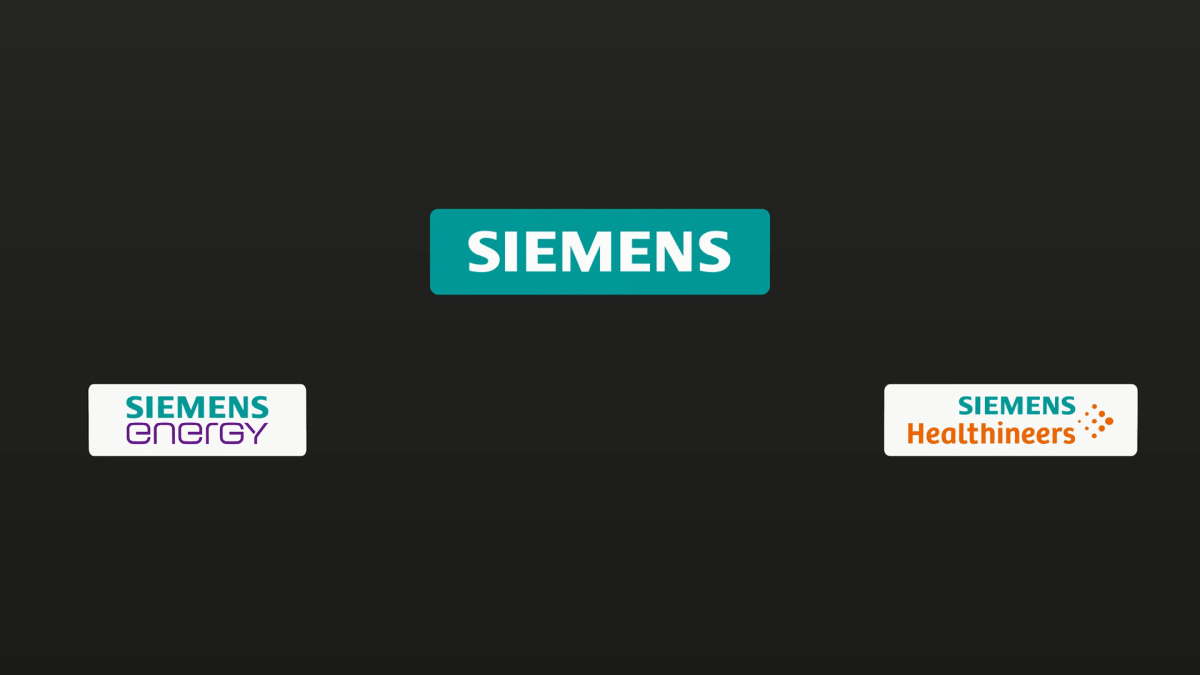
Joe Kaeser doesn’t wait long now. In 2017, Siemens Healthineers was established as an independent company for medical technology.
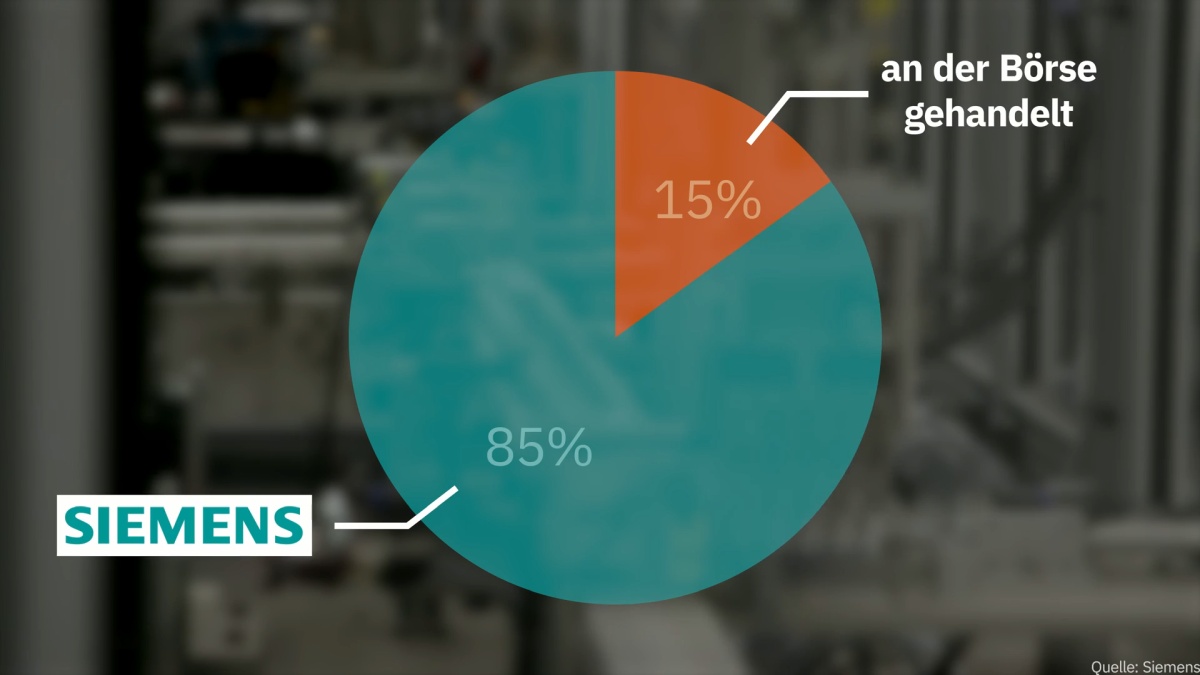
Healthineers manufactures machines for MRIs and CTs, as well as for laboratory diagnostics, for example. Their machines are found in hospitals in almost every country in the world. From Kaeser’s perspective, the spin-off is a no-brainer. In 2018, it will go public [on the stock exchange]. And the new company goes straight through the ceiling. We’ll get back to that in a moment.
For now, only 15 percent will be sold. Healthineers is now an independent company, but Siemens remains the largest shareholder.
It’s in 2020 that the second part of Kaeser’s plan will come into effect. Now the energy business is also being spun off into a new company: Siemens Energy.
It will receive, in addition to gas turbines, renewable energies from the old parent company. For example, wind turbines. Small spoiler: These wind turbines will become a huge problem. Siemens initially retains 35 percent of the shares in Siemens Energy. They will gradually give up almost all of it over time.
In the midst of the COVID-19 pandemic, the second step of the split will also be completed. Instead of a conglomerate, there will be an energy company, a medical technology company, and a focused industrial company in the future.
It is nothing less than the largest voluntary breakup in German history. The scale of this is also demonstrated by what happens on the stock market afterwards. All three companies are now part of the DAX and belong to the 40 largest publicly traded companies in Germany. The only question is: If Siemens has spun off its two cash cows, what will they actually do?
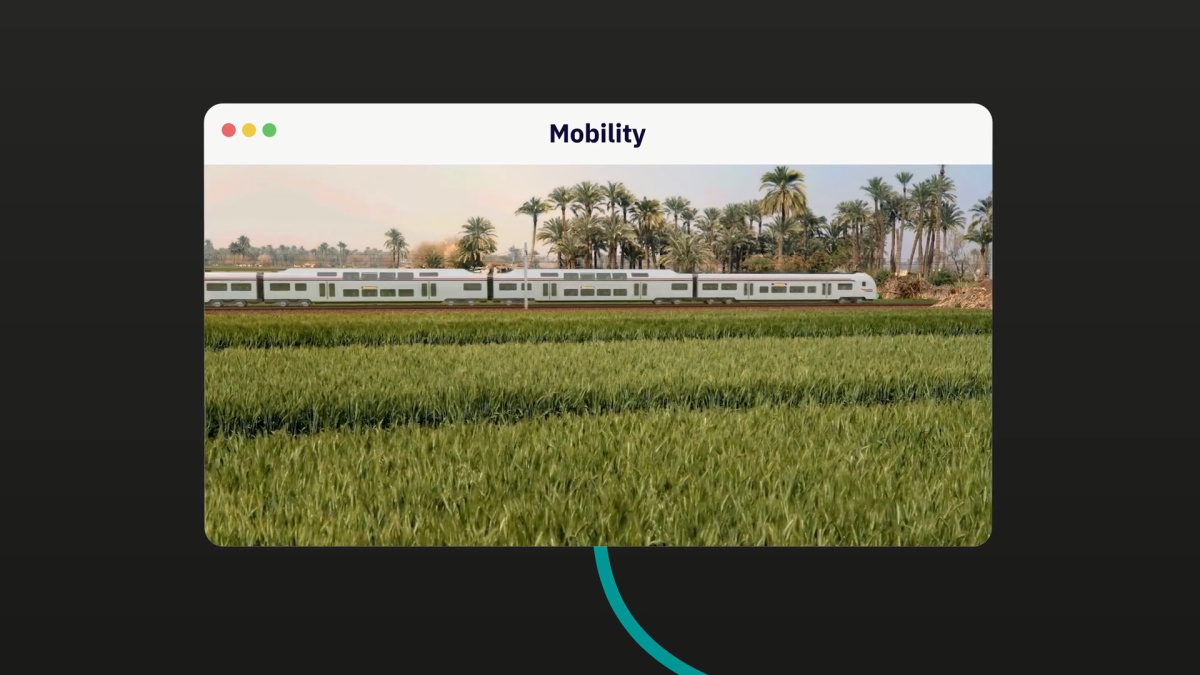
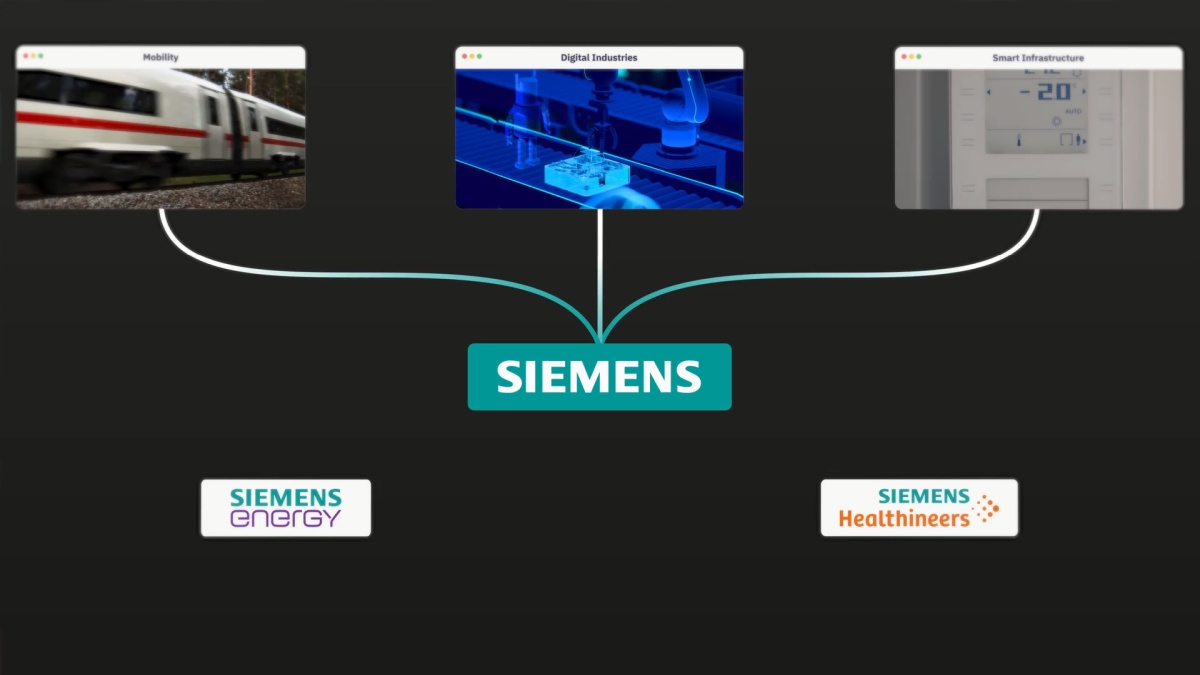
Siemens AG has been focusing on only three business areas since 2020. The first operates under the name Mobility. These are mainly trains, for example, the ICE.
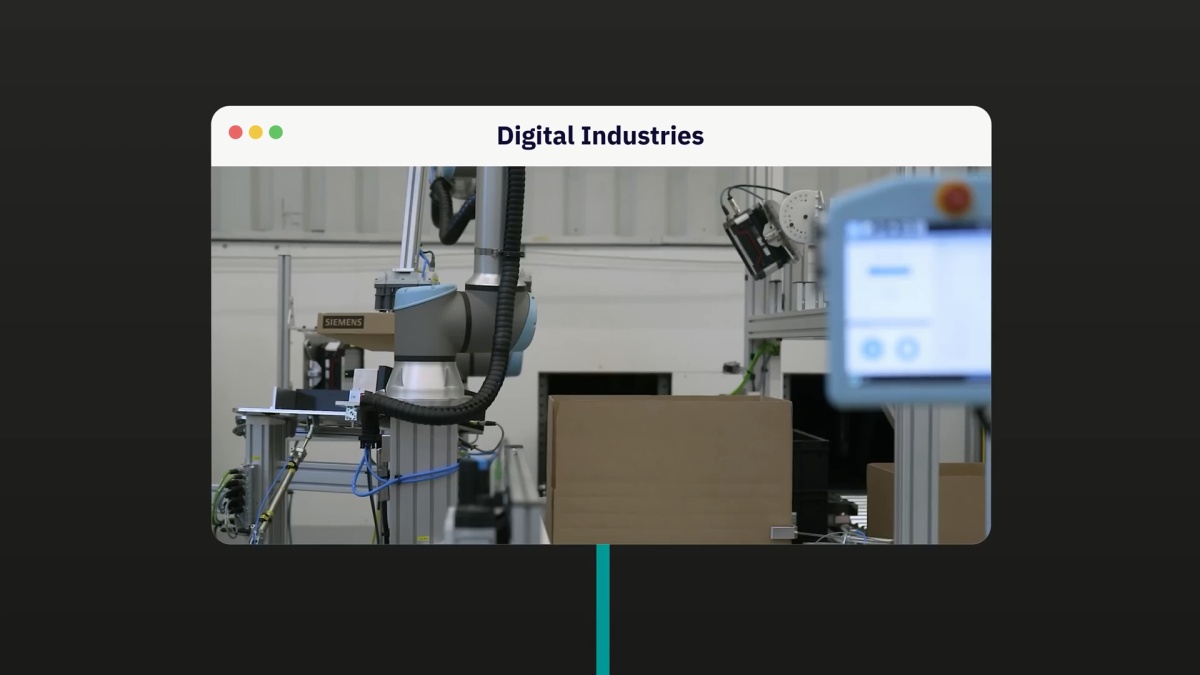
Secondly, Digital Industries, meaning the digitalization and automation of traditional industry.
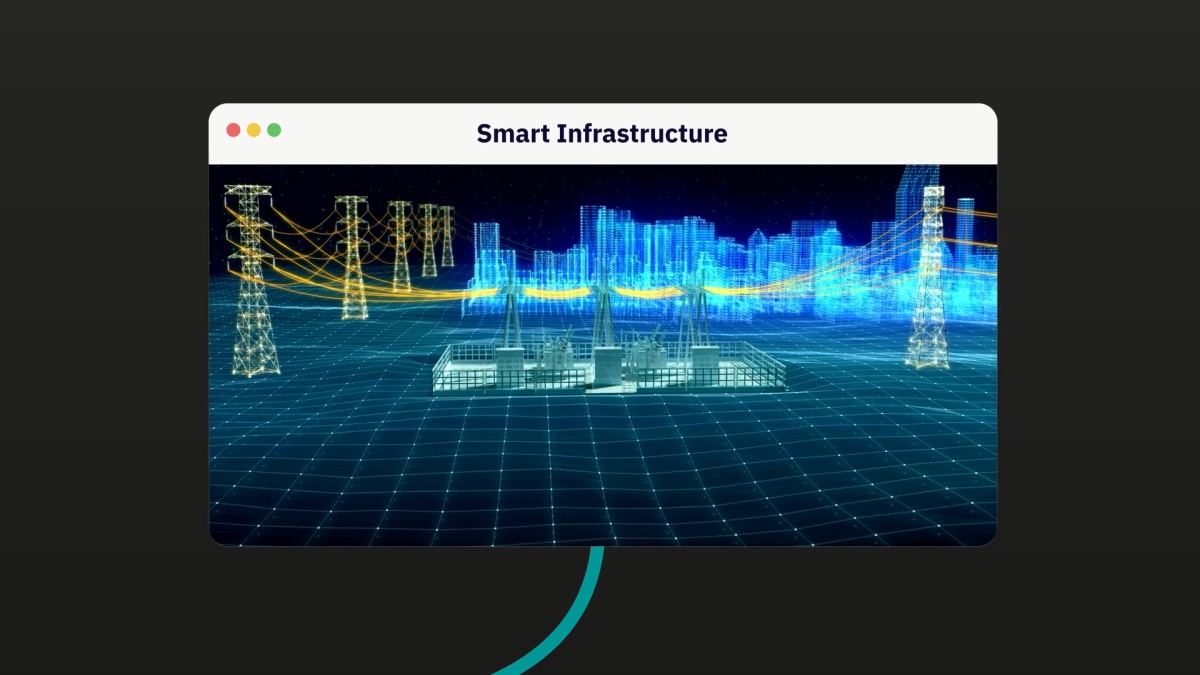
And then there is the third area, Smart Infrastructure. This includes, for example, building technology such as heating and cooling systems or security systems.
The breakup was supposed to be the liberation blow for Siemens. Joe Kaeser’s work is done. He will step down from the top position at Siemens in 2021 and become the chairman of the supervisory board of Siemens Energy. But he only laid the foundations. Now his successor must shape the remaining Siemens into a powerful unit. Siemens can now completely reinvent what it stands for.
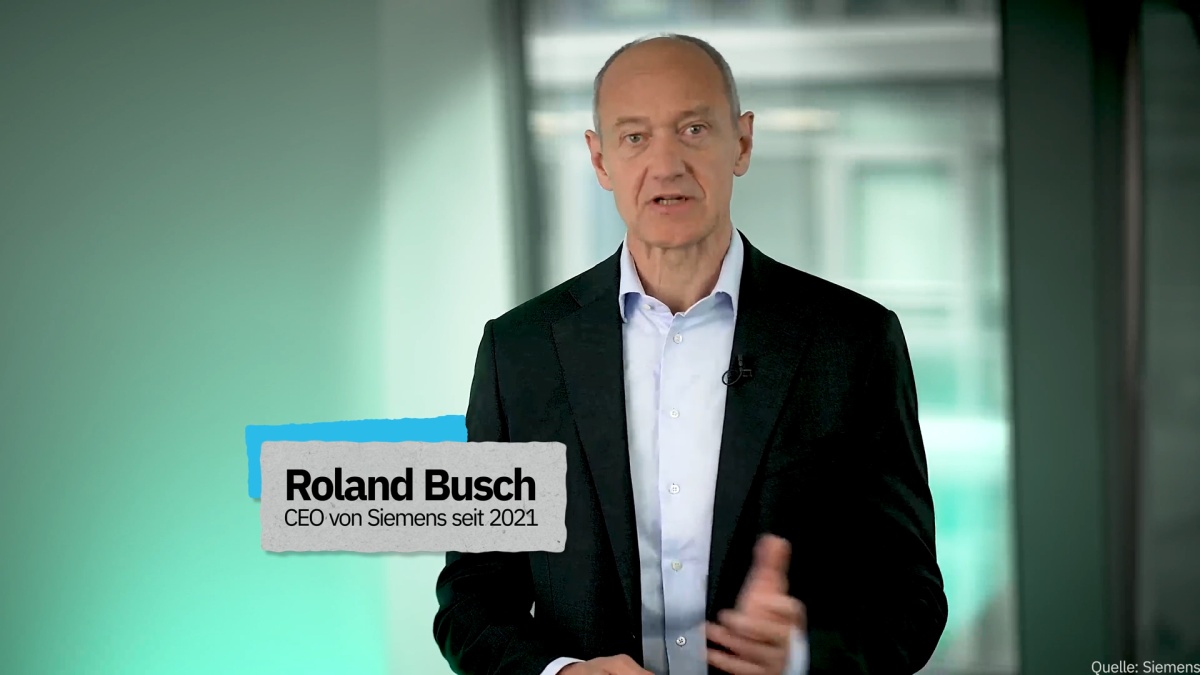
The new man at the top is Roland Busch. Just like Kaeser, he is a Siemens homegrown talent and has been with the company for almost 30 years. But unlike the financier Kaeser, Busch is a trained physicist. Busch is now stepping in to completely reinvent the nearly 180-year-old corporation once again. The old Siemens is to become a digital company. Germany’s answer to Google, OpenAI, and the like. And for that, Siemens is now looking for the biggest stage possible.
Can AI Save Siemens?
January 2024, Las Vegas. The city of sin, gambling, and the world’s largest electronics fair.
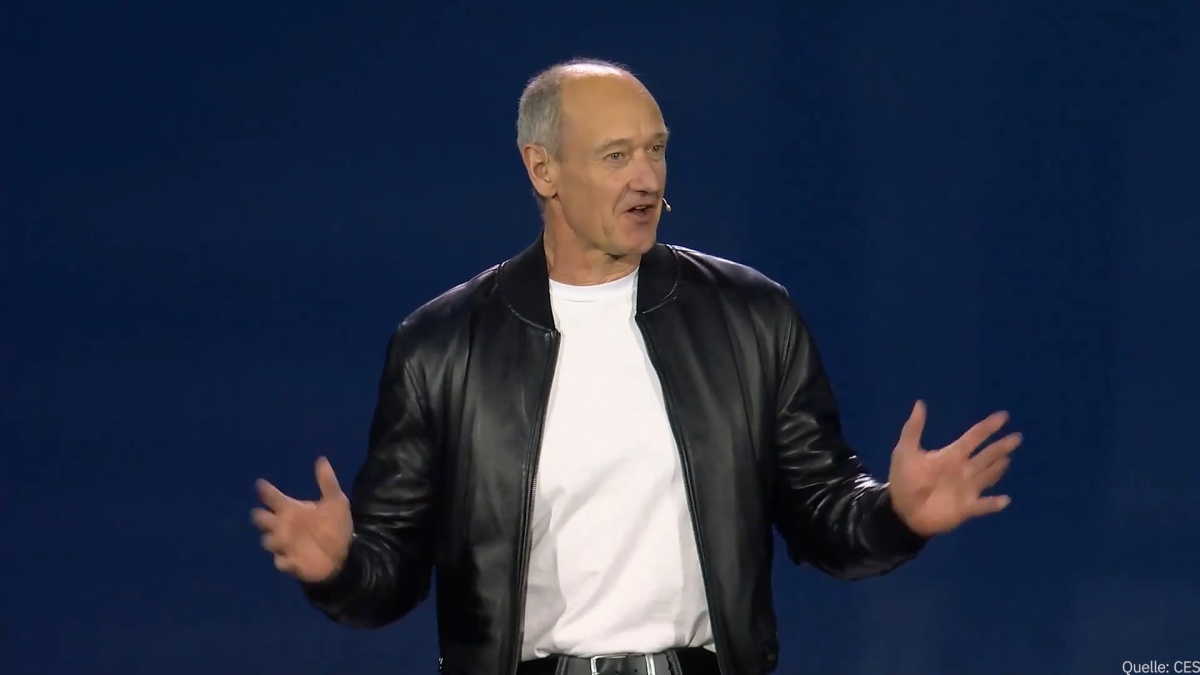
Here at the Consumer Electronics Show, trendy start-ups and major digital corporations meet every year to showcase their latest products. And this year’s keynote is delivered by none other than the new Siemens CEO, Roland Busch. That this is no longer the Siemens of grandma and grandpa, one should already recognize from the leather jacket. The message is clear: “Technology.”
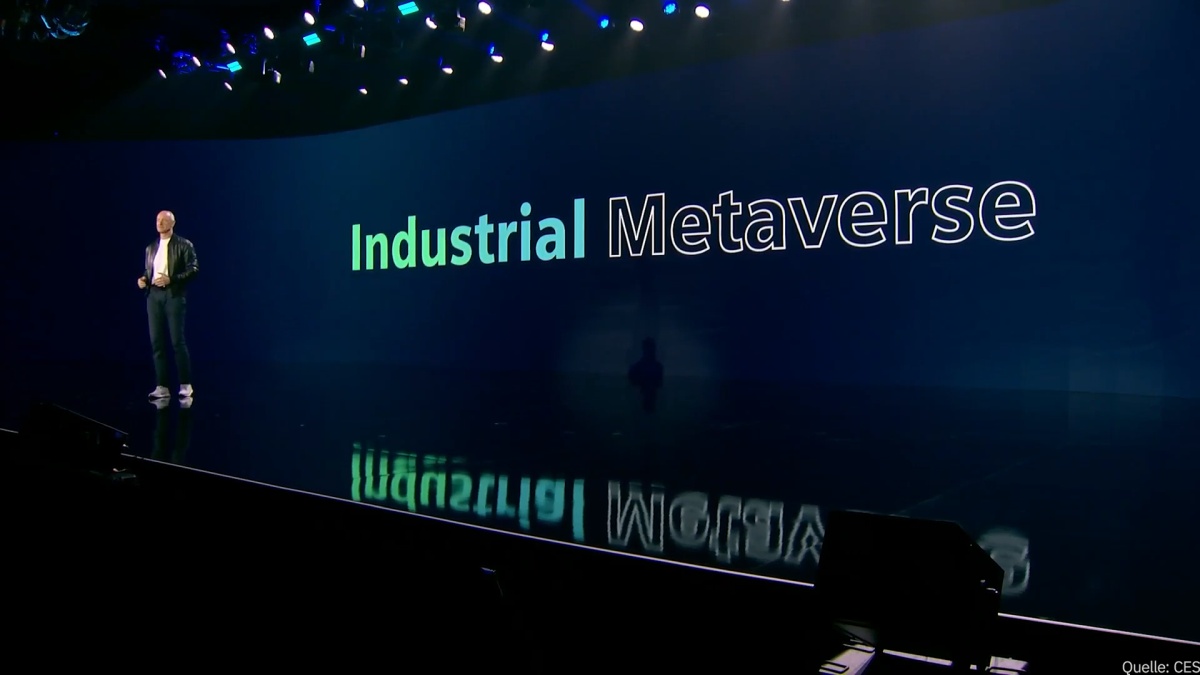
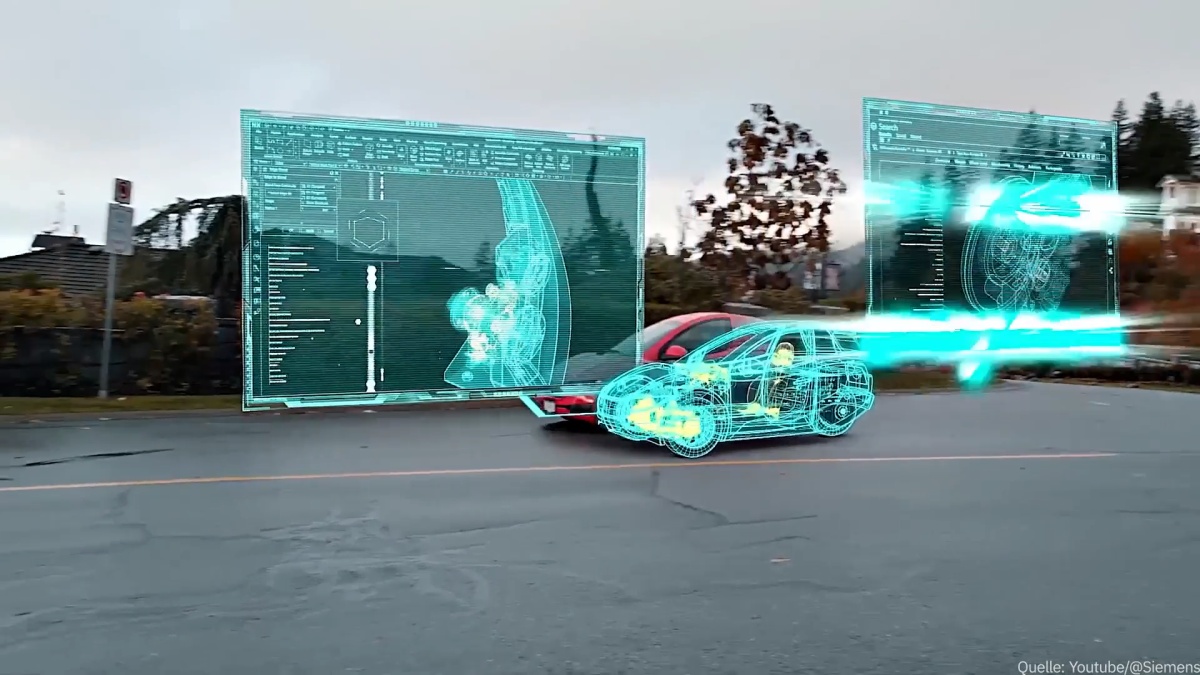
Siemens no longer wants to be just an old machine builder. Siemens is now a tech corporation. Not only in terms of clothing choices, but also in naming new products, Siemens is looking to the very top. The most important core product for the Siemens of the future is called Industrial Metaverse (“Wow!”).
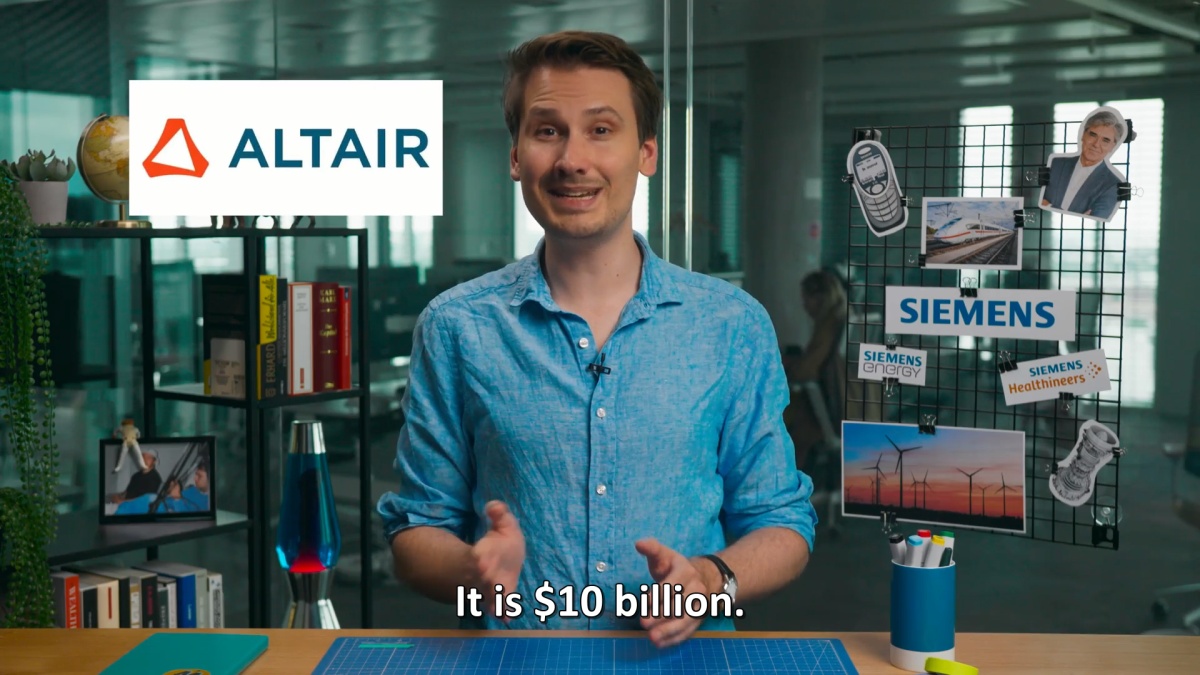
Siemens no longer just builds machines. It also offers software to digitally simulate entire factories. This is supposed to make production more efficient than ever before. And Siemens is now going on a major shopping spree. The American software company Altair, at $10 billion, will be the most expensive acquisition in the company’s history.
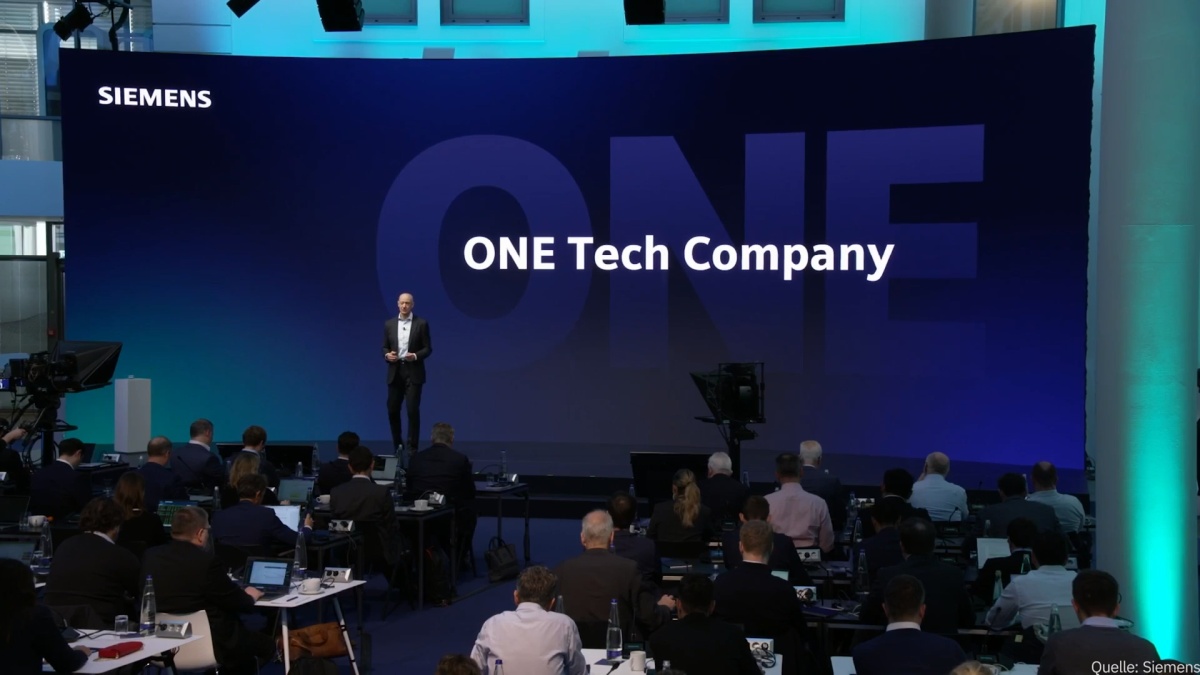
Shortly thereafter, another software company is added for five billion (Dotmatics). The whole thing is also financed by the sale of Healthineers shares. Busch summarizes the new strategy under one name: “One Tech Company.”
In this context, not only the word “Tech” is important, but also the “One.”
Because it represents the opposite of what Siemens has been for over 100 years. Siemens wants to become a unified company. No more many individual departments. All processes should flow together, and the different departments should mutually benefit from each other’s know-how.
Peter Körte: “We electrify, we automate, and we digitize. And we do this across 30 industries. And that is exactly what our customers expect from us.”
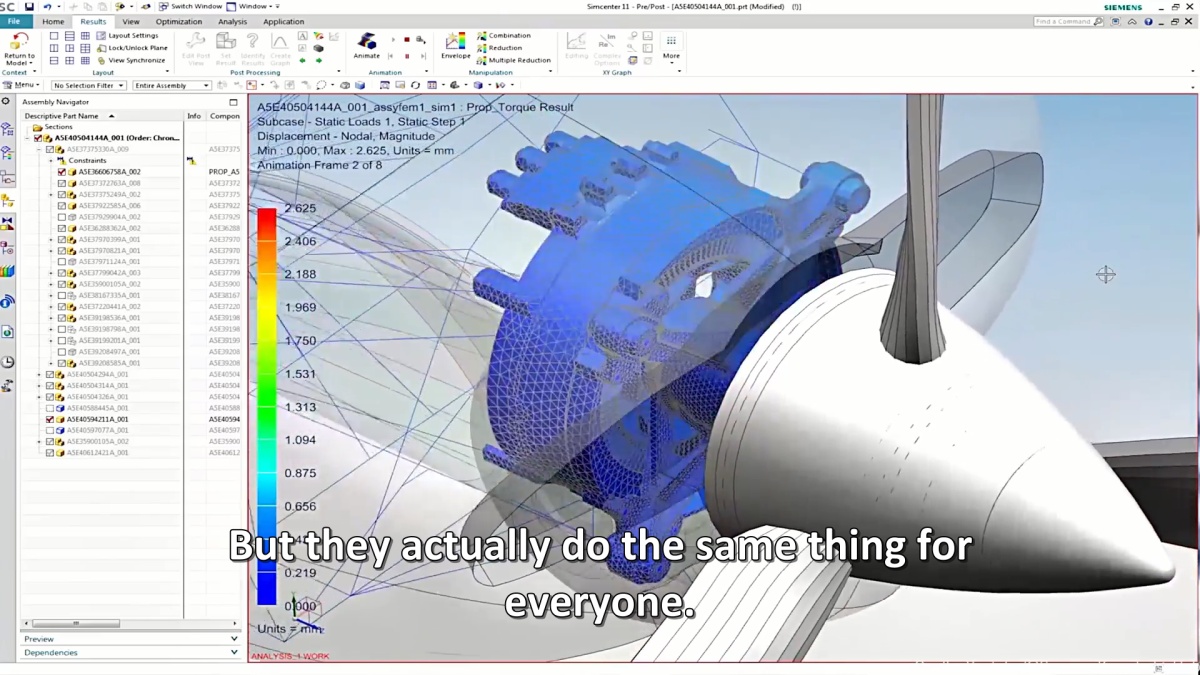
This is Peter Körte. He is responsible for strategy and technology on the Siemens board and is essentially right behind Roland Busch. Körte says that Siemens still serves dozens of industries, but they actually do the same thing for all of them. This creates synergy effects. And in the future, software will play a central role in this.
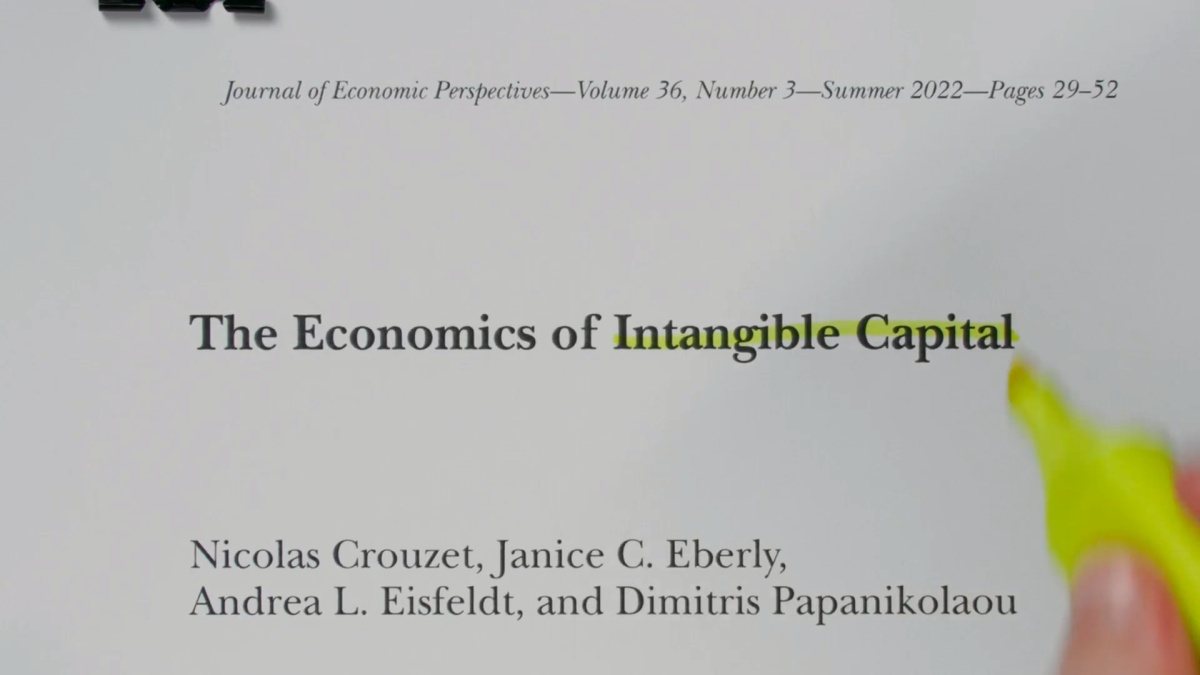
The whole thing, of course, makes economic sense. In science, software is considered intangible capital. Immaterial capital.
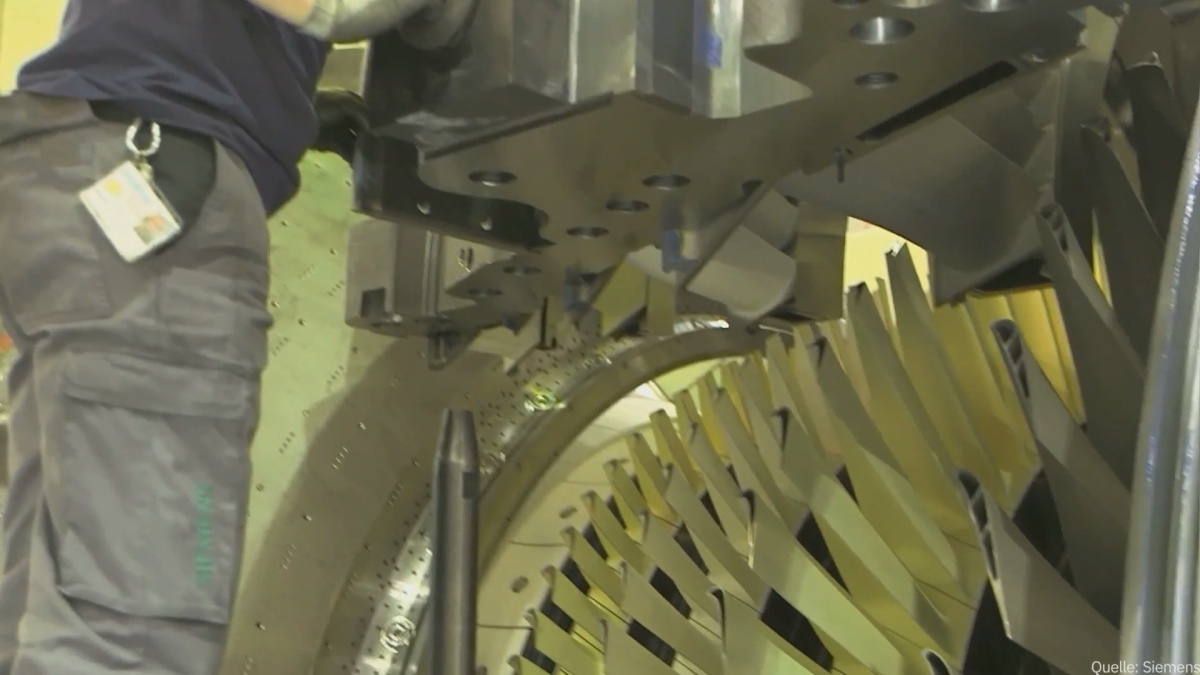
Conventional capital, for example, consists of machines. So, the things with which Siemens has made its money so far.
Intangible capital is everything you can’t touch. And that has a big advantage. A machine can only be used in one factory at a time. Digital programs, on the other hand, can be used throughout the entire corporation. They can therefore be scaled in a completely different way. A software company can therefore grow much faster than a traditional industrial company. The stock market therefore tends to value tech companies higher than industrial companies.
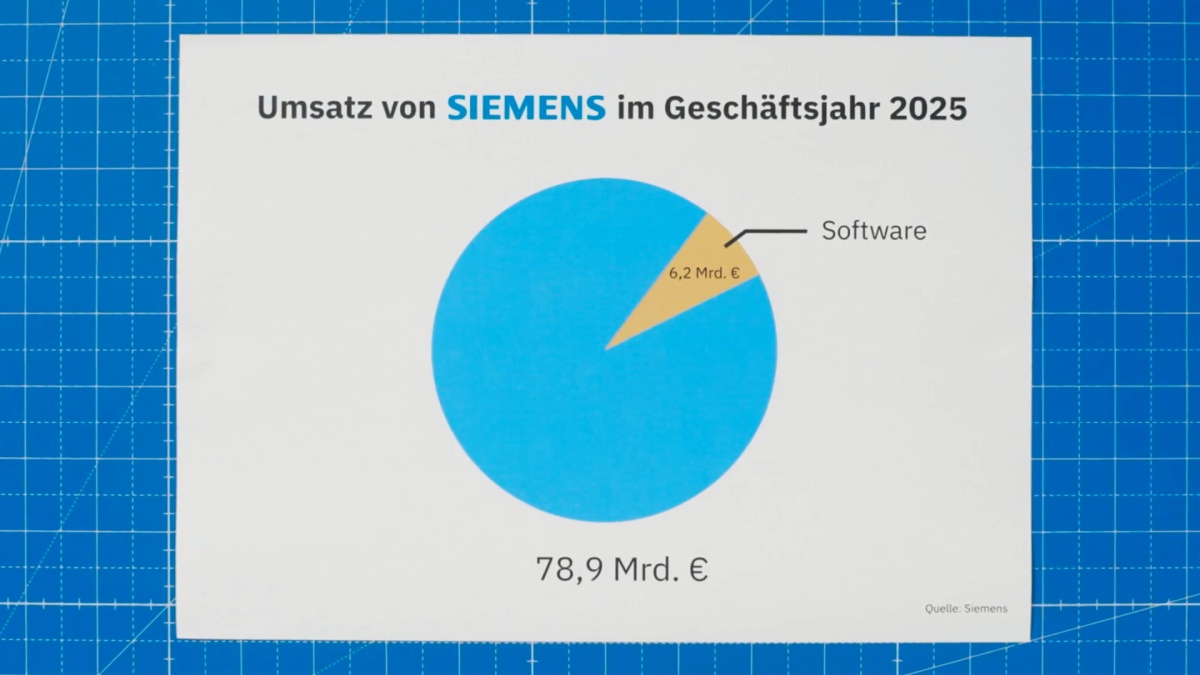
In reality, software at Siemens does not yet play as dominant a role as it sounds. Let’s take a look at the annual report. Siemens made almost 80 billion euros in total revenue in the last fiscal year, and only six billion of that with software.
So, is that a bit of a publicity stunt? I also asked Peter Körte that. “No, it’s not just for effect. When it comes to revenue, with software, it always comes back.”
Software revenues are therefore more valuable to the company than hardware revenues, says Körte, because they reliably return in the future. This is rewarded on the stock market. Moreover, Körte says, there is actually already a lot of software embedded in the hardware. “Today we have these gray boxes that we sell, a control unit, a programmable logic controller. We sell that today as hardware. But actually, there’s a lot, a lot of software in there.”
Nevertheless, the software business is expected to grow significantly. Siemens aims to double its revenue from it in the coming years. And there is a type of software that is growing more rapidly than any other.
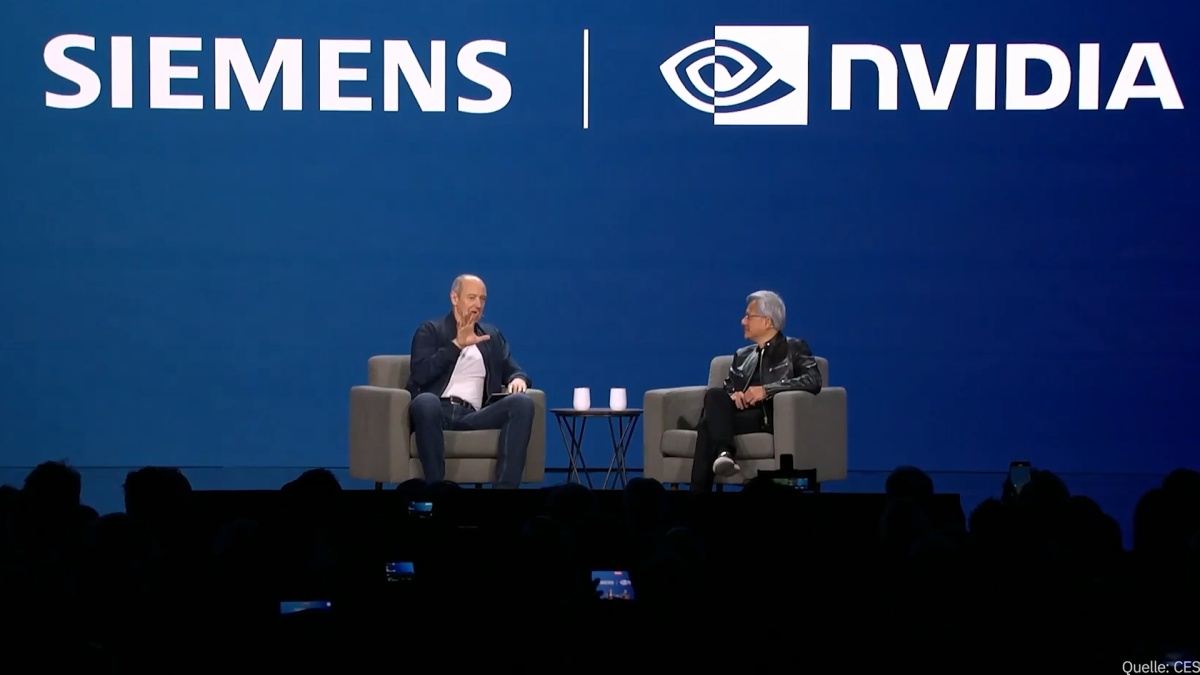
In 2026, Busch is back at CES, this time without a leather jacket. He probably would have only had the second-best fit, next to Mr. Leather Jacket himself, Nvidia CEO Jensen Huang. This time, he is sitting next to Busch on stage.
And Busch is actually only talking about one topic this time: AI, AI, AI, AI, AI.
AI, artificial intelligence. That’s yet another topic where Europe is pretty much written off. The big stars of the AI world come from America. Open AI, Anthropic, Google. European attempts to keep up have failed miserably. But there is still a glimmer of hope. Industrial AI, that is, the integration of machines in the real world with the capabilities of intelligent simulations on the computer. That would be an area where Germany has an advantage. Because the Federal Republic still has a large industrial share in its economy. And hardly any company knows this German industry as well as Siemens. After all, Siemens technology has been in the factories of German medium-sized companies for many decades.
Siemens is now developing a model for industrial AI, essentially a ChatGPT for the industry. With a crucial difference. Peter Körte: “These data that we use daily in product development and production are generally not language, not words, but numbers, data, facts.”
Siemens wants to build an AI model that speaks the language of the industry, works 100 percent correctly without hallucinations, and is secure against cyberattacks. Peter Körte: “If I now have a robot and tell it, «Take my phone, grab it, lift it up, and then place it on the right,» that would probably take an automation engineer a day to develop today.”
The Siemens AI agent is supposed to accomplish exactly that more quickly. And this AI is now being developed not in a single business unit, but collaboratively across the Digital Industries and Smart Infrastructure sectors. Finally, the end of the conglomerate structure is paying off now. Peter Körte: “You know how much it costs to develop an AI language model. Now imagine if you were to split today’s Siemens AG into 30 separate divisions and tell each one, «Now develop your AI model on your own.»“
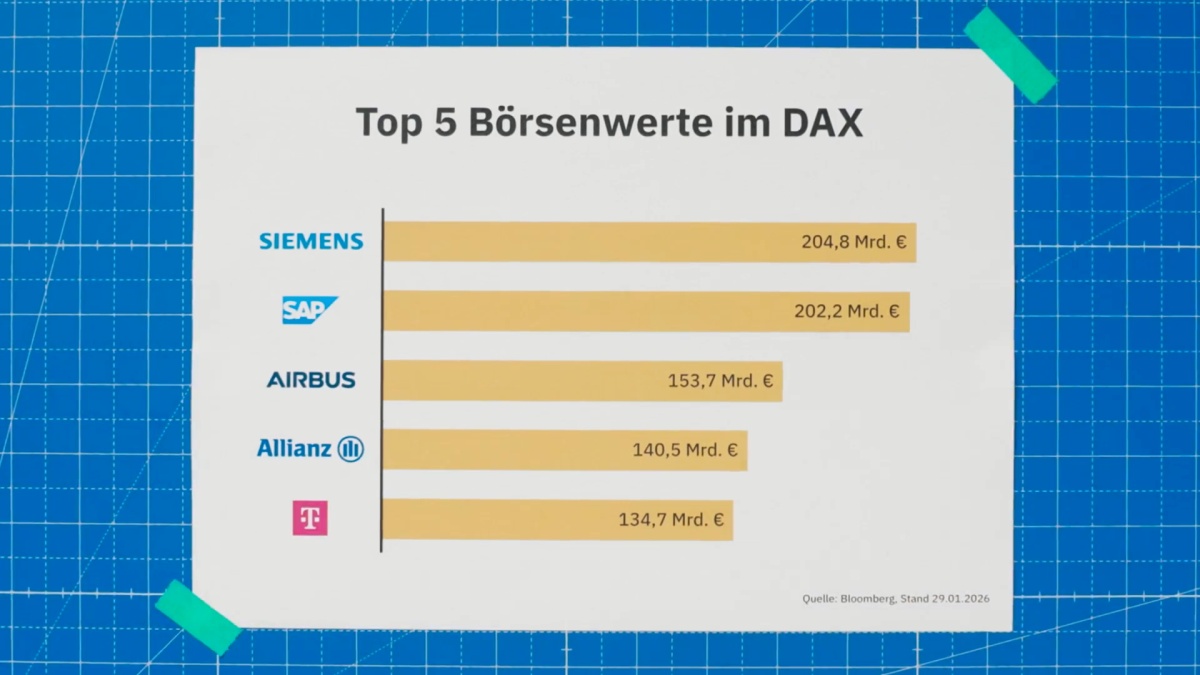
Siemens is currently doing quite well. At the beginning of 2026, it was the most valuable company in Germany, despite having divested two huge business units.
The company has recently achieved record profits, mainly thanks to its rapidly growing digital and automation business.
So far, it seems that Kaeser’s plan has worked out. At least from the perspective of Siemens AG. But that’s only part of the story. From the old Siemens, a total of three companies have emerged. And that brings the focus to the other two. The breakup didn’t work equally well for everyone.
New Plan, new problems?
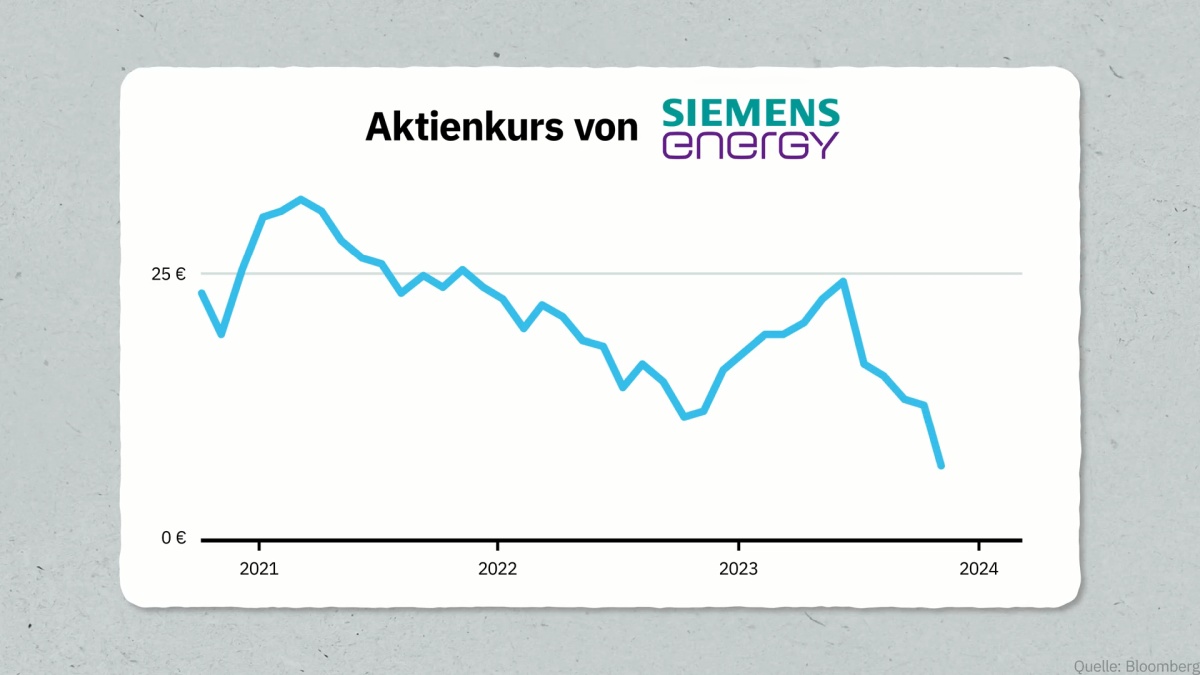
When Siemens spun off its energy business in 2020, it was already a bit of a problem child. And these concerns are confirmed in 2023. In the wind power sector, there are huge problems. Product defects in the wind turbines are leading to costs in the billions. The division is incurring significant losses. The stock price plummets, and banks are still hesitant to lend Siemens Energy money.
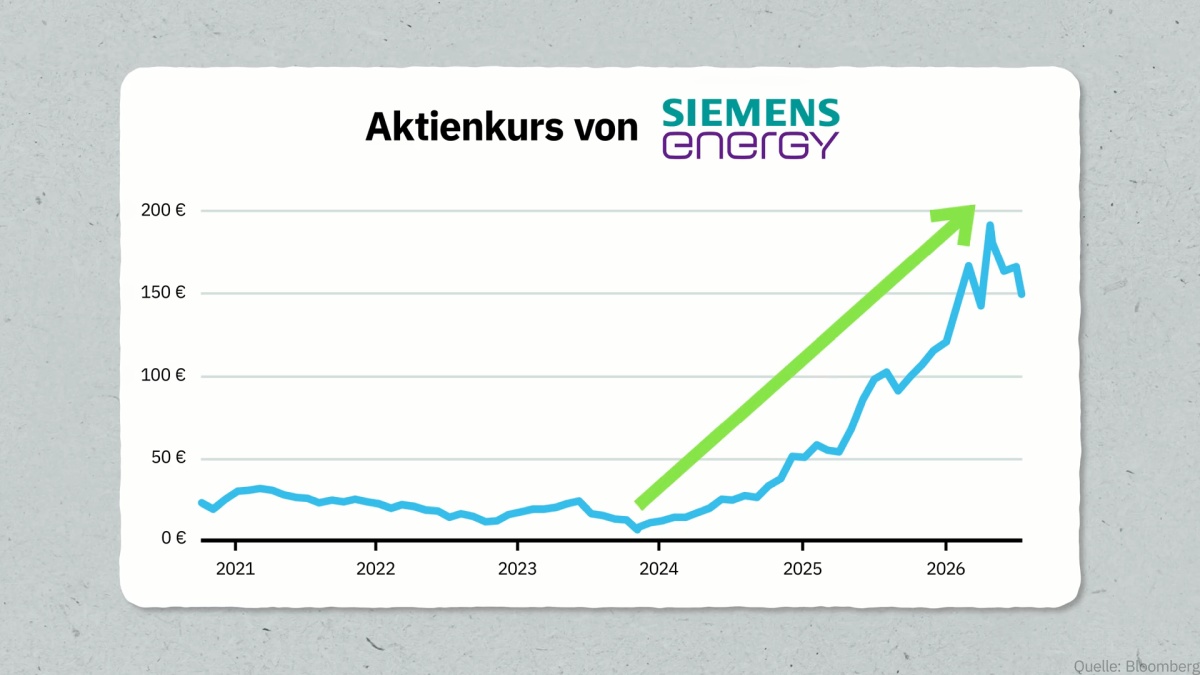
But the company survives, and then something happens that no one expected. Artificial intelligence saves the corporation, and precisely through the division that seemed to have the least future potential. Because artificial intelligence requires data centers, and data centers need a lot of energy. And to produce it, many companies are now acquiring new gas turbines. Gas turbines from Siemens Energy.
They were once considered a thing of the past due to the energy transition. Suddenly, the business with fossil technology becomes a hit for Siemens-Energy. The stock price rises more than twentyfold in three years, and Siemens-Energy suddenly becomes the big climber in the DAX.
Siemens-Energy has just announced the next big step away from the parent company. The company will change its name. To Omterra. So far, it still pays around 300 million euros each year for the naming rights to Siemens. Nevertheless, the question arises whether the breakup was truly successful.
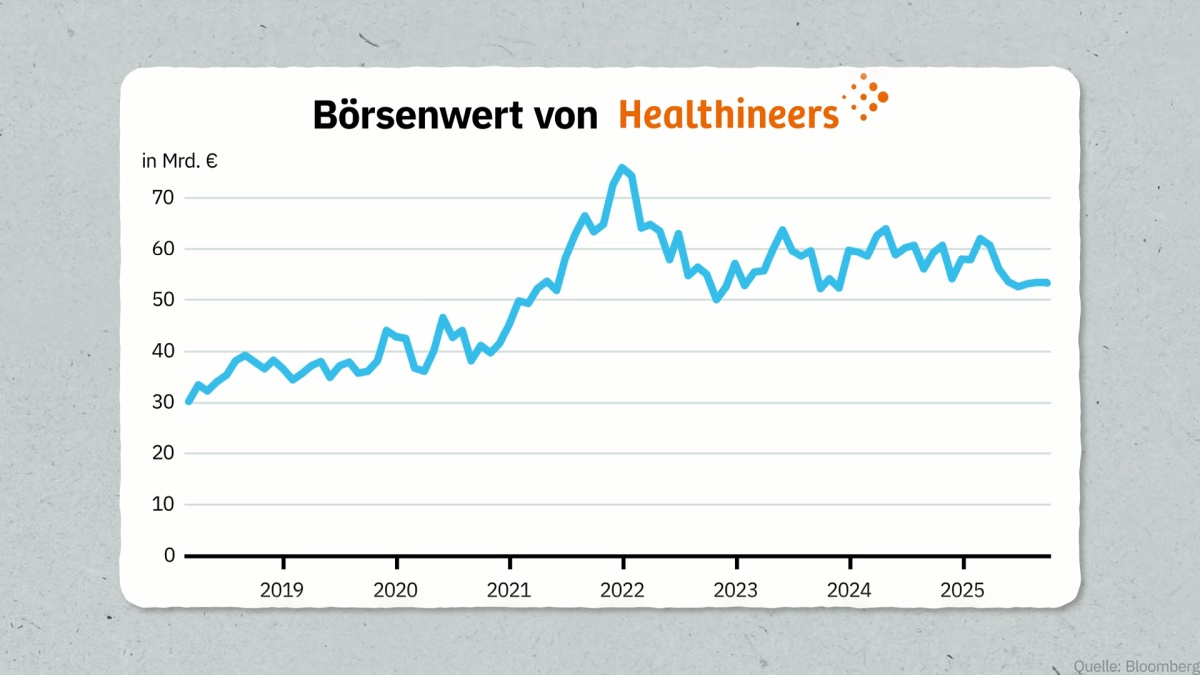
Because there is still a third group in the Siemens empire. And of all companies, it suddenly encounters problems. Quite different from Siemens and Siemens-Energy, Siemens Healthineers has been performing well lately. The highly profitable medical technology business was initially brought to the stock market by Kaeser because it is so attractive to investors. This calculation also pays off immediately. The market value of Healthineers doubles within three and a half years. But recently, things haven’t been going so well. Demand from China is weakening. The stock price has fallen.
Perhaps this also has something to do with what Kaeser sees as the biggest mistake of the split. It wasn’t consistent enough. Joe Kaeser: “Something along the lines of, «We’re keeping a majority stake in Healthineers for now. We’re keeping a minority stake in Energy, and while we’re selling, we’re not really selling it off completely.» That’s a very bad outlook for the valuation.”
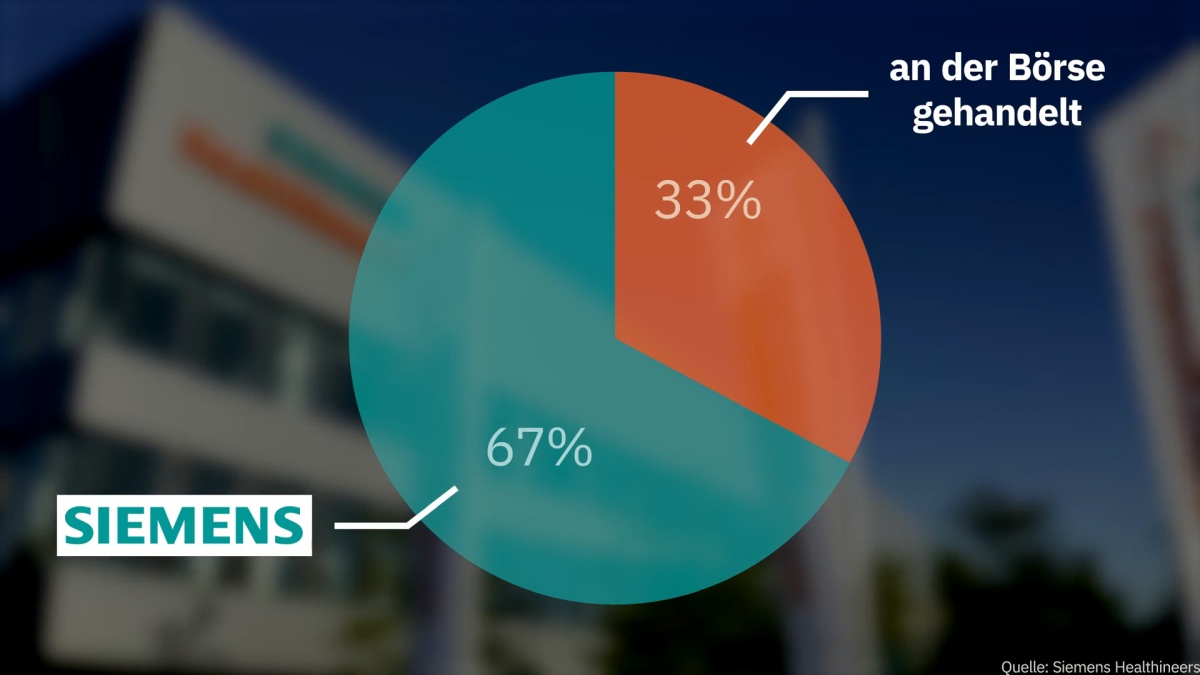
Kaeser therefore believes that Siemens did not quickly and consistently separate from its business units, which still affects the valuation. Siemens still holds 67 percent of Healthineers today.
Only in November 2025 did the company finally decide to deconsolidate its remaining stake in Siemens Healthineers, meaning it would soon relinquish its majority. Seven years after the IPO. The stock price then initially fell even further. Because now there is uncertainty in the market about whether a lot of shares will be sold soon.
One of Siemens’ biggest competitors did it better. General Electric in the USA, or simply GE. They have been active in very similar business fields to Siemens for decades. Starting in 2022, the GE CEO is systematically splitting the venerable company into three parts. Today, the three companies together are worth seven times as much as the old GE.
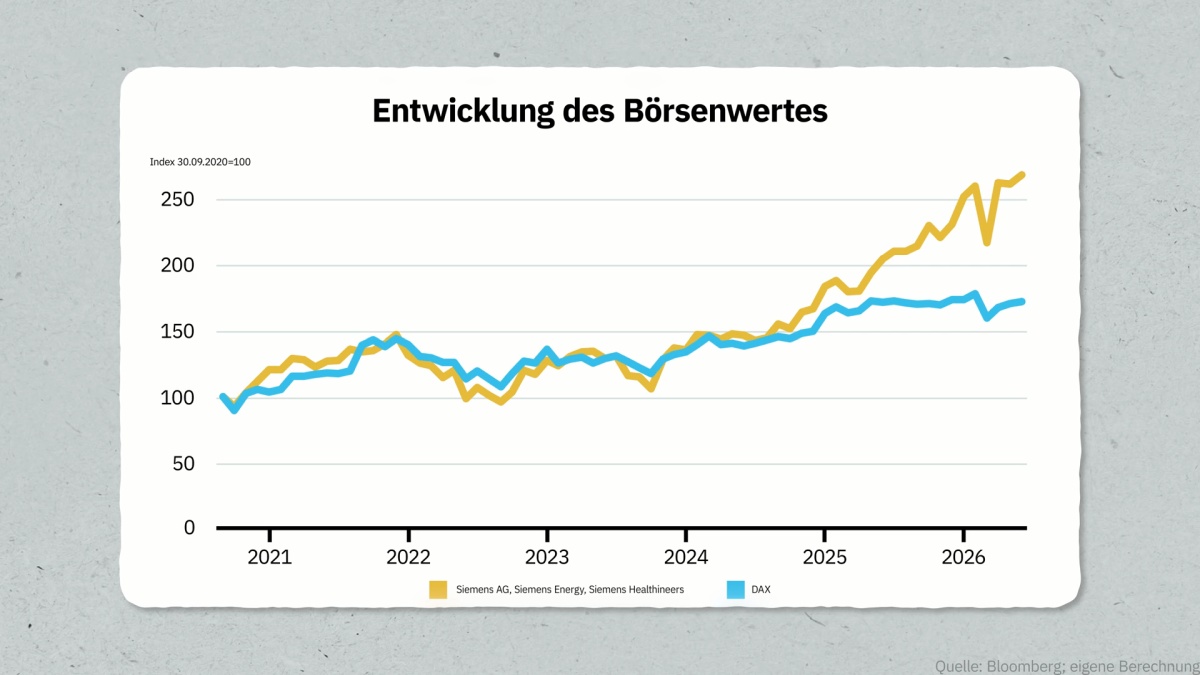
The era of conglomerates is also history in the USA. Perhaps there was more in it for Siemens as well. Nevertheless, even the half-hearted breakup has already paid off. Taking all three companies together, their market value has developed better than the DAX. Despite the problems at Healthineers.
It is, all in all, the successful end of two traditional sectors in the Siemens portfolio. Business areas in which Siemens has been active for over 150 years. Now the three companies will have to show whether Siemens can really reinvent itself completely after almost 180 years.
That was our video on Siemens’ reinvention. What do you think? Can Siemens become the digital corporation in Germany? Write it in the comments. If you want to see what happens when an industrial company fails to adapt, take a look at our video on Porsche (Der tiefe Fall von Porsche).
🤖
More than 90% of the comments on YT are positive. Most Germans seem to be terribly gullible. Of the few critical ones, I selected the most relevant, as translated by Google:
● Digitalization with Siemens?!? … LOL … we’ve been down that road before … it’ll be just like with Siemens-Nixdorf again … 😉
● “Käser is cleaning house: 17 divisions will be reduced to nine.” – But you don’t say how these are being cleaned up: were they merged, were individual divisions sold?…
● Siemens will suffer massively from AI.
● The bit about VoIP, Siemens and Cisco is completely made up.
● No, AI will replace Siemens.
● Okay, industrial metaverse. The CEO has just outed himself as incompetent.
● Everything for stock market valuation. 🤮🤦♂️
● AI and gas turbines, huh? So it’s still best to keep your hands off Siemens shares. 😅
● We have Siemens kitchen appliances and would never buy Siemens again. The software is truly awful. If Siemens wants to succeed as a digital company with software, they have a lot of catching up to do and need to do many things differently/better!
● Look at Siemens salaries, ask yourself, would an AI expert want to work there? There can only be one answer.
● The video oversimplifies things so much that it has virtually nothing to do with reality. In particular, the information presented regarding economics/the stock market and AI is quite meager.
● Werner von Siemens is turning in his grave right now…
● A few words about Siemens Mobility’s wholly-owned, independent subsidiary would also have been appropriate. They are no longer part of Siemens AG.
● Somehow, Siemens hasn’t managed to save anything except its share price. Physical production is down compared to before in all divisions. I’m skeptical about this because if a company isn’t producing anything physical, then it’s not really needed.
● It’s always fascinating when old men talk about “digitalization”… not that there aren’t older people who really know their stuff about technology, etc., but I always find it strange when you see 60+ year old, usually wise men, who mostly have a business background, talking about digitalization and simply having absolutely no clue what they’re talking about. Perhaps that’s why Germany is so far behind… here, all the old people who often don’t even know how to turn on a PC are now desperate to develop AI, etc., while in the USA, for decades, relatively young people with technical expertise have often been running companies.
● Siemens is a bank with a small electrical engineering department. 😂
● No, Siemens won’t be able to do it because there are too many old idiots in management positions.
● Where are the Siemens employees?
● Who would voluntarily buy Siemens products? They practically fall apart just by looking at them (except for trains and medical equipment). Siemens is the modern AEG. Unpack, switch on, warranty claim.
● As a software developer, I closely follow developments in language models, and I highly doubt that Siemens will develop a good language model on its own. Developing a language model that’s actually usable for practical purposes requires, among other things, researchers and unimaginable infrastructure. Siemens should instead focus on integrating its technologies with other language models (from OpenAI, Anthropic, and others).
● No, sorry — Siemens can’t do it. And let’s be honest: if they can’t even create a digital twin of their own company to manage it effectively — how are they supposed to do it for other companies? Utter nonsense! It might work in the short term, but then…
● A complete miscalculation and misguided development. According to the board, a key reason is the slow growth. But what’s so bad about maintaining a stable and steadily growing company? Now the most profitable divisions are being sold, including to China. What remains are the divisions with vague future prospects.
● Käser is talking nonsense… They could have simply nationalized Siemens and fired all the middle management, and the company would run smoothly just because of the streamlining… Instead, they’ve been selling all sorts of things that bring in money for years. They simply want to drive the company into the ground. They’ll completely go under when the AI bubble bursts.
● Okay… Siemens, Telekom… SAP… and digitalization… managed with software based on Java… in 2026.
● This whole industrial world is so embarrassing. And copying that leather jacket is… ugh. Lemmings.
● So, if I understand correctly: Siemens is divesting itself of its profitable divisions, in the end the Siemens name isn’t even there anymore, and that’s considered success?? So I’m giving away my fastest racehorse and sticking with my old nags.
● Siemens has nothing to do with the original anymore.
● So Siemens sold everything good: energy, household appliances, and medicine? And that was a good thing???
This blog uses technologies like cookies to store and/or access device information. Consenting to these technologies will allow us to process data such as browsing behavior or unique IDs on this site. Not consenting or withdrawing consent will adversely affect certain features and functions.
Functional
Always active
The technical storage or access is strictly necessary for the legitimate purpose of enabling the use of a specific service explicitly requested by the subscriber or user, or for the sole purpose of carrying out the transmission of a communication over an electronic communications network.
Preferences
The technical storage or access is necessary for the legitimate purpose of storing preferences that are not requested by the subscriber or user.
Statistics
The technical storage or access that is used exclusively for statistical purposes.The technical storage or access that is used exclusively for anonymous statistical purposes. Without a subpoena, voluntary compliance on the part of your Internet Service Provider, or additional records from a third party, information stored or retrieved for this purpose alone cannot usually be used to identify you.
Marketing
The technical storage or access is required to create user profiles to send advertising, or to track the user on a website or across several websites for similar marketing purposes.



Leave a Reply