
The miracle of the French subjunctive
This is a quick-and-dirty complement to my post in Romanian, În care discut cu Gemini ciudățeniile conjunctivului în franceză și italiană. This time, I questioned ChatGPT in English to see how it “feels” about the French subjunctive.
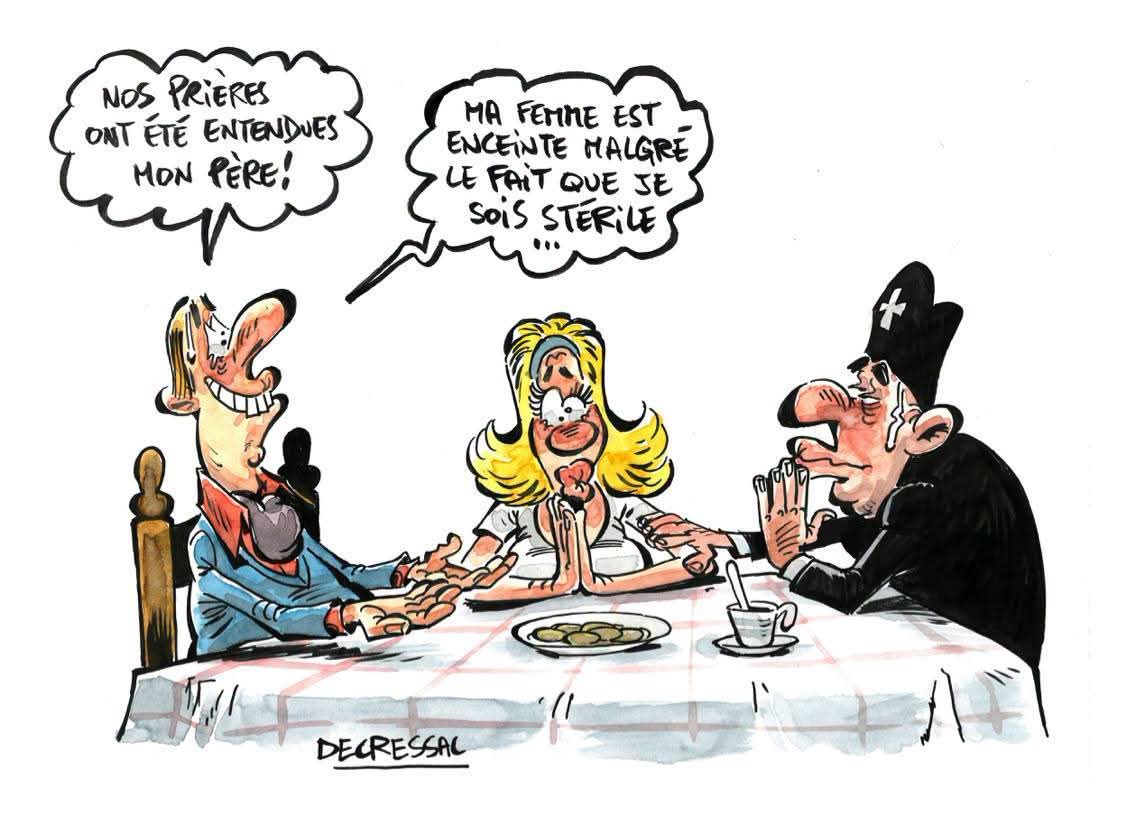
I just noticed that Quillbot does not correct “Ma femme est enceinte malgré le fait que je suis stérile.” into “Ma femme est enceinte malgré le fait que je sois stérile.” Does it really know about the French subjunctive?! Have the rules been relaxed while I was sleeping? (No, they have not.)
Ludditus: Why is it “Ma femme est enceinte malgré le fait que je sois stérile.” and not “Ma femme est enceinte malgré le fait que je suis stérile.”? It is a fact that “je suis stérile”!
ChatGPT: Because in French, the subjunctive after « malgré le fait que » is often used to mark concession, even when the subordinate clause expresses a factual truth.
So:
Ma femme est enceinte malgré le fait que je sois stérile.
literally has the structure:
My wife is pregnant despite the fact that I am sterile.
The choice of sois does not mean “I might not be sterile.” It is the subjunctive required or strongly preferred by the construction « malgré le fait que », which introduces a concessive subordinate clause.
The important distinction is between the truth of the proposition and the grammatical mood used to frame it.
Compare:
French Meaning Je sais que je suis stérile. I know that I am sterile. Malgré le fait que je sois stérile, … Despite the fact that I am sterile, … Bien que je sois stérile, … Although I am sterile, … Même si je suis stérile, … Even if I am sterile, … With que, ordinary factual assertion normally takes the indicative:
Je sais que je suis stérile.
But concessive constructions traditionally favor the subjunctive:
bien que je sois stérile
quoique je sois stérile
malgré le fait que je sois stérileThere is actually an important nuance here: « malgré le fait que je suis stérile » is not grammatically impossible. It can occur, particularly when the speaker deliberately emphasizes that this is an established fact. But « malgré le fait que je sois stérile » is the standard, idiomatic choice, because the whole construction is concessive.
So your reasoning — “but it is a fact that I am sterile!” — is perfectly valid semantically. It simply doesn’t determine the mood in French.
A useful way to think of it is:
Indicative = presenting the proposition as an assertion.
Subjunctive = presenting it as part of a concessive/subjective syntactic construction.The subjunctive is therefore not necessarily about uncertainty. That’s a common oversimplification when learning French.
Ludditus: The subjunctive is automatically triggered by some conjunctions in Italian and Spanish, but French has some exceptions. “J’espère que tu viens/viendras à ma fête samedi.” “Nous partirons après qu’elle est/sera arrivée.” However, this very rational case isn’t one of them!
ChatGPT: Exactly. The key point is that French does not have a simple rule of “fact → indicative, non-fact → subjunctive.” Its mood system is much more syntactically conditioned than that.
Your examples illustrate this well:
Construction Standard French Why J’espère que… J’espère que tu viendras. « espérer que » takes the indicative après que… après qu’elle sera arrivée « après que » takes the indicative malgré le fait que… malgré le fait que je sois stérile concessive construction traditionally takes the subjunctive And the apparent absurdity is especially obvious with « malgré le fait que », because le fait que explicitly presents something as a fact.
There is a historical explanation. The French subjunctive isn’t simply a “doubt/uncertainty mood.” It has retained many uses inherited from Latin where the choice of mood depended on the syntactic or semantic relationship of the subordinate clause to the main clause. Concession is one of those environments.
In other words:
malgré le fait que je sois stérile
doesn’t mean:
“despite the fact that I may be sterile”
but rather:
“despite my being sterile / despite the fact that I am sterile”
The factual status remains unchanged; the subjunctive is imposed by the concessive construction.
And yes, French has several constructions where the distribution is surprisingly idiosyncratic:
- bien que / quoique → subjunctive
- malgré que → generally subjunctive, though the expression itself is often avoided
- malgré le fait que → normally subjunctive
- après que → indicative
- avant que → subjunctive
- espérer que → indicative
- craindre que → subjunctive
- penser que → usually indicative, but negation/question can favor the subjunctive
So the frustrating part for a learner is that there is no overarching logical rule that predicts all of these. You have to learn a number of mood-selecting constructions individually.
Your intuition would actually predict « malgré le fait que je suis stérile », and from a purely semantic standpoint that is entirely defensible. It is the conventional French syntax that overrides that intuition.
Ludditus: Yeah, Italian is equally illogical, as “il congiuntivo” is triggered by “nonostante”: “Mia moglie è incinta nonostante io sia sterile.” (“sia”)
ChatGPT: Yes. Italian makes essentially the same distinction: nonostante is a concessive conjunction that normally selects the congiuntivo, regardless of whether the subordinate proposition is presented as an established fact.
Mia moglie è incinta nonostante io sia sterile.
Here sia does not imply any doubt about the speaker’s sterility. It is simply the mood licensed by nonostante in this construction.
The same pattern occurs with:
Italian French nonostante io sia sterile malgré le fait que je sois stérile benché io sia sterile bien que je sois stérile sebbene io sia sterile quoique je sois stérile And interestingly, Italian’s system is in some ways more transparent: nonostante, benché, sebbene, affinché, prima che, etc. are strong grammatical triggers for the congiuntivo.
French is less consistent because some semantically comparable conjunctions select different moods:
bien qu’elle soit arrivée
après qu’elle est arrivée / sera arrivéeSo yes: the fact that the proposition is objectively true is not sufficient to predict the mood. In both French and Italian, concession itself can determine the mood.
English FTW! Or, why not, Romanian! 😇
Ludditus: Romanian is a true outlier among Romance/Latin languages, as it only uses the “conjunctiv” for potentially unestablished facts.
“E foarte probabil ca el să fie steril.” (Although the indicative is also quite common in practice: “E foarte probabil că el este steril.”) = “It is highly likely that he is sterile.”
But, surprisingly, in the indicative mood: “Cred că el nu este steril.” (“Nu cred că el este steril.”) = “I think he isn’t sterile.” (“I don’t think he is sterile.”)
While the subjunctive is comparatively much less frequently used in Romanian than in Italian, Spanish, or French, you need to have an ear for it.
ChatGPT: Yes. Romanian is unusually conservative in one respect and unusually restrictive in another: the conjunctiv is much more closely associated with non-asserted, hypothetical, desired, possible, necessary, or otherwise non-factual propositions than it is in French or Italian.
Your examples show the contrast particularly well:
Romanian Mood What the mood is doing E foarte probabil ca el să fie steril. conjunctiv The proposition is presented as probable, not established. E foarte probabil că el este steril. indicative The speaker presents it more directly as a proposition/fact, despite foarte probabil. Cred că el nu este steril. indicative cred că normally takes the indicative. Nu cred că el este steril. indicative Negating cred does not automatically switch the subordinate clause to the conjunctive. That last pair is particularly revealing. In French, you get:
Je pense qu’il n’est pas stérile.
Je ne pense pas qu’il soit stérile.and Italian:
Penso che non sia sterile.
Non penso che sia sterile.So French and Italian can use the subjunctive precisely where Romanian keeps the indicative:
Nu cred că el este steril.
This is why translating mood mechanically between Romance languages is dangerous. Romanian să fie isn’t simply equivalent to French soit or Italian sia in every context.
And your point about having an “ear” for the Romanian conjunctive is important. Because it is comparatively less pervasive, a Romanian speaker can often perceive să + verb as carrying a fairly palpable semantic signal: the proposition is not being straightforwardly asserted. In French and especially Italian, by contrast, the subjunctive has become much more deeply grammaticalized, so it can occur even when the factuality of the proposition is completely settled.
There is also an interesting asymmetry here:
E posibil/probabil ca el să fie…
Cred că el este…The first construction explicitly packages the proposition as a possibility/probability; the second packages it as the content of the speaker’s belief. Romanian consequently keeps a relatively strong distinction between “I assert/believe X” and “X is possible/probable/desired/necessary.”
So I would characterize Romanian not simply as “using the subjunctive for potentially unestablished facts,” but as having a more semantically transparent conjunctive system than French or Italian. It has plenty of conventional conjunctive environments, but the mood remains much more strongly associated with non-assertion.
Pile dans le mille, ce ChatGPT !
Pas courante cette subtilité de langue… Ça m’a fait plaisir que tu la susses!
Es-tu une vraie personne, ou une IA qui met son cul sur la commode ?
Lis-moi ça. Je te préviens, c’est long. Ce mec est un graphomane pur et dur, un vrai, qui te pond une centaine de pages sans toucher à une IA. Cependant, ses vues sur la technologie et la débâcle financière à venir valent largement la peine. The AI Hater’s Manifesto.
Mais je connais Ed Zitron. J’ai mentionné 5 de ses articles en janvier (après Towards the end of the year).