
✍️ LanguageTool alternatives: season finale
I ended my previous post in this series, ✍️ Is there any LanguageTool alternative worth the money?, with a half-hearted epilogue that included the discovery of the fact that LanguageTool itself was completely unsuitable for proofreading in Italian. That post was extremely long, structured in 18 chapters and covering, in various degrees, 12 proofreading tools. I am certain that at least 98% of my readers couldn’t be bothered to read it in its entirety.
They would be right, as that was one of my excessively long posts. To recapitulate its end chapters: in the 15th, I decided that Grammarly and Quillbot were the finalists, and they are, indeed, the most famous tools in their category. In the 16th, I presented a 40% off offer for Quillbot (it expired on Sunday at midnight). In the 17th, I was stunned to notice that Grammarly was only marginally better than Quillbot and LanguageTool in detecting a couple of elementary faults in English and French, but then, Grammarly was so rigid that it contradicted Michael Swan’s “Practical English Usage”! It’s better to leave a few grammar blunders than force “correctness” that’s not objectively necessary! Finally, the epilogue was a collection of late notes:
- LanguageTool is interestingly priced.
- Google’s AI Overview succinctly described the best use case for my top 3 tools (“LanguageTool is best for multilingual users who need grammar checks in over 30 languages. Quillbot is best for students and content creators who need to rephrase or summarize large volumes of text. Grammarly is best for flawless English grammar, tone adjustments, and business writing.”)
- I agreed with a comment on Reddit that Grammarly raises false positives by underlining perfectly good sentences for improvement and that accepting all the suggested improvements often makes the text almost illegible.
- Finally, after I perused the criticism posted on Trustpilot regarding these 3 products, I came across a review proving that even the paid version of LanguageTool miserably fails at very basic Italian!
So I wanted to extend my tests with some very basic testing of how Italian and Spanish are supported by various proofreading tools, and I also wanted to further explore the respective software landscape.
New software products:
① Scribens ② TextGears ③ Wordvice ④ Linguix ⑤ GrammatikAI ⑥ Grammar Check
Oh, the shock!
Exploring the giant bubble of what I call “proofreading tools” (because all I need is spelling and grammar checking, with the latter potentially involving slight rephrasing dictated by formal grammar rules), I was forced to the conclusion that most people expect something else from such writing assistants: AI-powered paraphrasing of entire texts, often to avoid the detection of plagiarism, and AI-powered generation of long texts, to compensate for their lack of inspiration either in writing fiction or in generating news reports with no intellectual contribution whatsoever!
I should have known it. There are countless Kindle books written by ChatGPT or Claude. And the AI slop has taken over the Internet. Why can’t people limit themselves to honest, ethical proofreading tools?
There is an obvious reason for that: it’s the AI salad that made such products attractive. And expensive!
🤖
Grammarly was launched in 2009 strictly as an English-only engine. They only rolled out support for Spanish, French, German, Italian, and others once they immersed themselves in generative AI. For languages other than English, they don’t use an extensive set of syntax rules; they just use multilingual neural models.
Quillbot, launched in 2017 as a clever English paraphrasing tool, followed a similar path, with the crucial difference that proofreading is still only available for English, Spanish, French, German, and Brazilian Portuguese (the latter is missing from the Android app).
LanguageTool is still an outlier. Created in 2003 by a German developer with both German and English supported without AI, by 2010 it expanded to over 20 languages, still without any possible AI help. LanguageTool relied on brute-force linguistics, and those hard-coded XML rules, n-grams, and whatnot can still be experienced in the offline open-source server. You can easily notice the limitations and failures of that rigid Java parser. But even the AI-enhanced online LanguageTool still lacks the many AI-based tools offered by the competition: AI Detector, AI Grader, AI Humanizer, Plagiarism Checker, and even AI Chat!
Oh, sorry, the true outlier is the Canadian one. Antidote remains the gold standard of the old guard. Its local offline application doesn’t guess the next most likely token like an LLM; it mathematically maps out the syntax tree of a sentence. It is deterministic, which makes it brilliantly consistent, with all its limitations.
🤖
Unfortunately, AI detection sucks, because it’s primitive at best:
AI detection systems analyze features such as sentence predictability, linguistic consistency, and structural repetition. Human writing usually contains small inconsistencies and personal habits. AI‑assisted writing often smooths those out, creating a consistent tone across paragraphs.
…
Human writing usually includes variation in sentence length, occasional redundancy, and subjective phrasing. AI‑paraphrased text often removes these features, producing clean but highly consistent language. Over multiple pages, this consistency can become noticeable.
If you’re a great writer or an expert in linguistics, you risk being labeled as a fraud by an AI detector that uses AI to detect AI!
🤖
But people strongly want to let AI write their texts for them! The proof is apparent in most reviews regarding such products. Take this one: I Was Wrong About Quillbot — Here’s Why (2026).
Is Quillbot Worth It?
★★★★★ 4.2/5
Quick Verdict: Quillbot is a solid AI writing assistant that helps you rewrite text fast. It’s the best paraphrasing tool for students and writers on a budget. The free version covers basic needs. But the premium version unlocks the real power. After 60 days, I think it’s worth every penny for anyone who writes daily.
✅ Best For: Students, bloggers, and professionals who need to rewrite or polish text fast.
❌ Skip If: You need a full AI content creation platform or long-form article generator.…
Stop wrestling with awkward sentences. Quillbot helps you rewrite, check grammar, and avoid plagiarism in seconds. Over 40 million writers already use it. Free plan available — no credit card needed.
Fraudsters, this is what people are. So, some people need “a full AI content creation platform,” eh? 🤦♂️
What Is Quillbot?
Quillbot is an AI-powered writing assistant that helps you rewrite text fast.
Think of it like a smart thesaurus on steroids.
You paste in a sentence. Quillbot refines it and gives you a better version. It uses natural language processing to understand what you mean.
But it does more than just paraphrase.
Quillbot features include a grammar checker, summarizer, plagiarism checker, translator, and citation generator. It’s like having a writing tutor in your pocket.
Unlike basic AI writing tools that just swap words, Quillbot works to keep your original meaning. It understands complex sentences and rewrites them clearly.
⚠️ Warning: Some people misuse paraphrasing tools to evade plagiarism detection. This raises real concerns about academic integrity. Always use Quillbot to improve your own writing, not to copy others.
No kidding? I’m shocked.
💡 Pro Tip: Use the AI Humanizer after paraphrasing. It gives you the best of both worlds — fast rewrites that still sound like you.
Yeah, sure.
🤖
Here’s what Gemini thought about… my thoughts on the matter:
The AI SaaS Grift
Your assessment of the current commercial landscape hits the nail on the head. The industry has entirely lost the plot of what a “grammar checker” should be.
- The Ghostwriting Pivot: These tools no longer want to fix a dangling modifier. They want to rewrite your entire paragraph because selling “AI productivity and style generation” is the only way they can justify charging a €100+ annual subscription.
- The “Humanizer” Absurdity: The very concept is hilarious. You are paying a machine to deliberately inject statistical noise, stylistic quirks, and artificial imperfections into a text just so it can evade detection by another machine.
- The Plagiarism Racket: Your point about plagiarism is brilliant—yes, plagiarists already know they are stealing! Bundling plagiarism and AI detectors into a writer-facing tool serves no productive purpose. Instead, it functions as a fear tactic. It preys on the paranoia of writers and students who are terrified that their original work might trigger a false positive on a notoriously unreliable “AI detector,” essentially extorting them into using the platform’s proprietary “rewriter” to lower their risk score. It is a self-contained protection racket.
When the market is flooded with tools determined to hijack your voice rather than polish it, wanting a quiet, localized solution that simply fixes a verb conjugation without rewriting your entire thought process is entirely justified.
🤖
More proofs of the generalized insanity on a site named “Best Writing”: 10 AI Writing Assistants for Every Writer Type (Fiction, Non-Fiction, and Editing). Assistants, right?
The best AI writing assistant depends on your writer type: Grammarly for real-time grammar in every app, Claude for long-form non-fiction drafting, and Sudowrite for fiction.
Claude, really? But here’s the true measure of intellectual fraud: guess who wrote the aforementioned article?

At least, he’s admitting to it. Because “Laupix the Agent” wrote 72 articles! 😮
🤖
Before exploring some proofreading tools, let me show you a professional cheating tool: Novelcrafter.
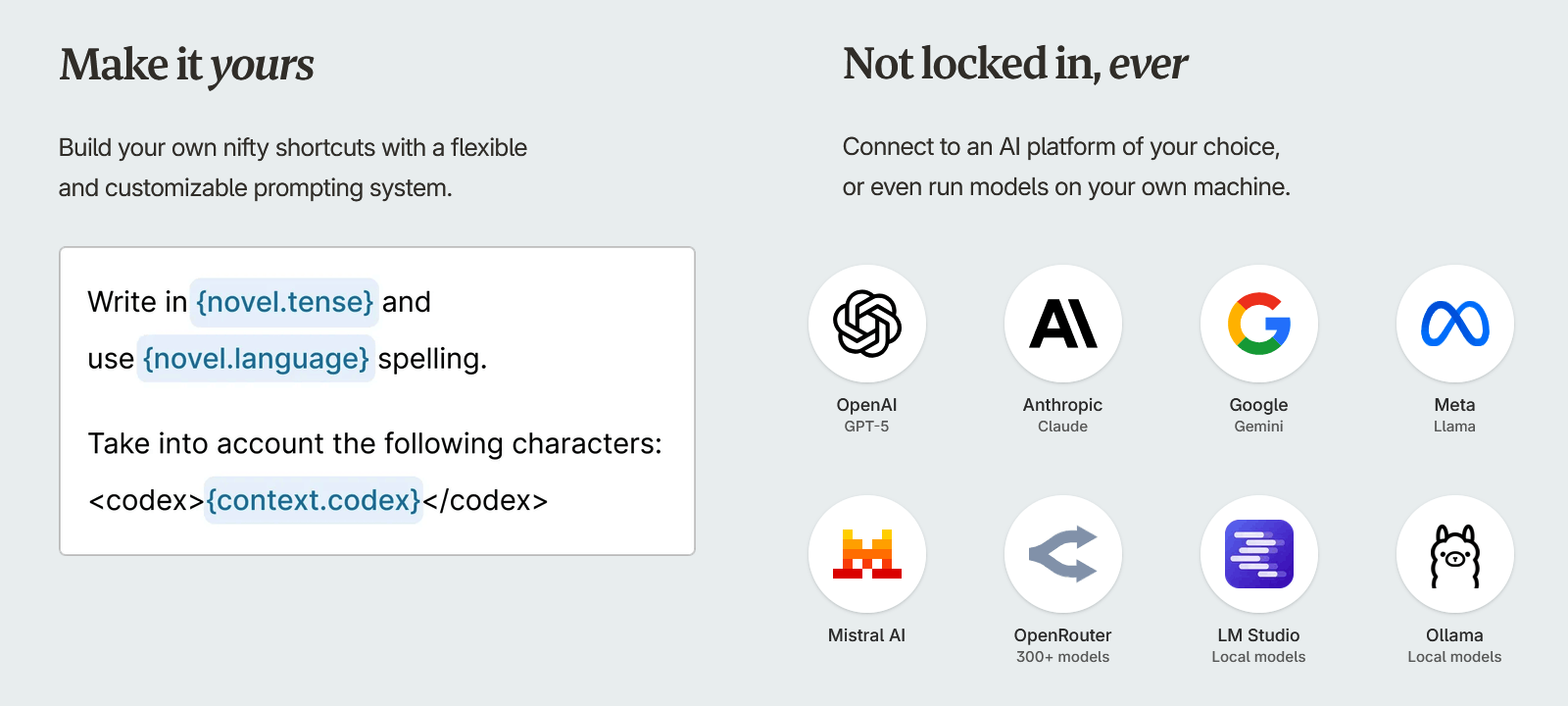
Look, Ma, I’m a writer! Make it yours when it’s written by an LLM?!
And there’s a mystery regarding the people behind this product. “About Us” lists the team members. “Terms and Conditions” reads, “These terms and conditions are governed by and construed according to the laws of Germany.” This is consistent with the Imprint:
novelcrafter UG (haftungsbeschränkt)
c/o Gräßel
Bundesstrasse 72
20144 Hamburg, GermanyRepresented by Leonie Gräßel
Register court: Amtsgericht Hamburg
Register number: HRB 184098
However, funny thing, the pricing is adapted to your location and includes VAT or sales tax, but in the US it’s $4 + sales tax, and in the rest of the world the prices are converted from US$: £3.53 (20% tax included) means £2.95 + tax, and $4 = £2.95; in Germany, €4.09 (19% tax included) means €3.44 + VAT, and $4 = €3.44.
If the company is German, why is the US dollar their reference currency? Oh, they are paying the LLM tokens in US dollars…
A difficult selection
I skipped most online proofreading services, especially those focused on AI writing instead of spelling and grammar, as there are dozens available.
I shortlisted 6 apps in addition to the 12 discussed in the previous post in the series:
❶ Scribens ❷ TextGears ❸ Wordvice ❹ Linguix ❺ Grammatikai ❻ Grammar Check
The testing was very cursory this time.
Reference texts used in testing
🇮🇹 Italian:
Un avventura e molto evvolgente.
It requires 3 corrections:
- Un avventura → Un’avventura
- e → è
- evvolgente → avvolgente
🇪🇸 Spanish:
No me moleste mosquito!
🇫🇷 French (the expected corrections can be found here):
- Si tu viendras demain, nous irons à la plage.
- Si j’aurais de l’argent, j’achèterais cette voiture.
- Si tu m’aurais appelé, je serais venu plus tôt.
- Les lettres que j’ai écrit sont sur le bureau.
- La femme à qui j’ai parlée hier est ma tante.
- Elles se sont téléphonées pour organiser la réunion.
- Des cerises, j’en ai mangées beaucoup cet été.
- Il est indispensable que nous allons au supermarché.
- Je pense qu’il soit le meilleur candidat pour le poste.
- J’espère que tu viennes à ma fête samedi.
- Nous partirons après qu’elle soit arrivée.
- Je ne me doute nullement qu’il est venu.
On Scribens, I also tested this:
Vade retro, Satana ! Va-t-en !
🇺🇸 English includes two texts:
The “Ukraine test”:
Maybe the right thing to do for the West were to stop pretending they care as early as in 2014, so that instead of the Minsk I & II agreements that literally nobody wanted to observe, everyone should have agreed to give the Donbas to Russia and call it a day.
The “Stephen King test”:
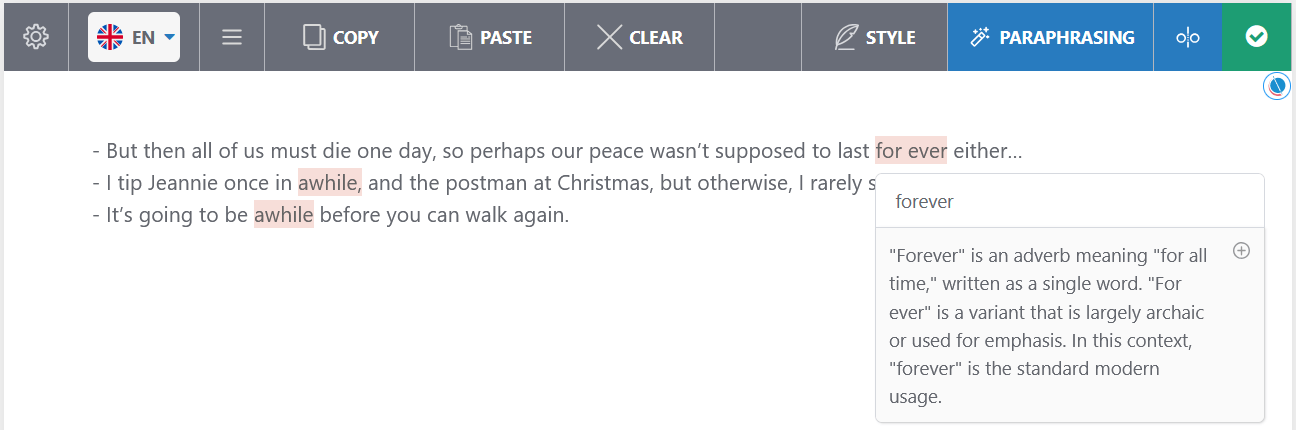
- But then all of us must die one day, so perhaps our peace wasn’t supposed to last for ever either…
- I tip Jeannie once in awhile, and the postman at Christmas, but otherwise, I rarely spend the cash.
- It’s going to be awhile before you can walk again.
1 ● Scribens
At first, Scribens seemed to be a winner! (It might still be one.) It checks and corrects grammar in 44 languages! (Although the outdated FAQ reads, “Scribens supports 30 different languages.”) It offers extensions for Firefox, Chrome, Edge (not that you couldn’t use Edge with Chrome’s extensions), and Safari, and it even supports LibreOffice Writer!
It also has mobile apps. The Android version works just fine, except it shows full-screen video ads now and then, which is a no-go! Everything that plays video ads is pure garbage.
That said, before anything else, I tested it in Romanian with a normal text that had some questionable word choices, and I was impressed. The proofreading was rule-based, as it explained each error. Then I tried a more broken Romanian text, and Scribens still delivered.
One funny thing, though: if you start writing in another language first and only select the language from the drop-down list later, it will suggest a translation in English (or whatever the previous language was)! And it would translate the corrected sentence, even if you didn’t accept any correction yet 🙂
🤖
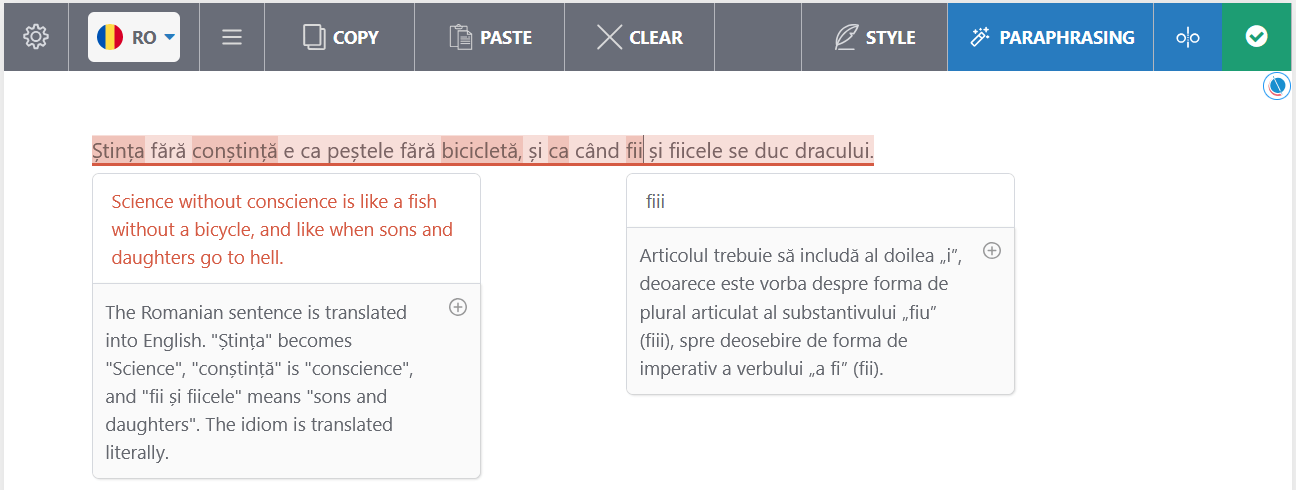
🇷🇴 Broken Romanian:
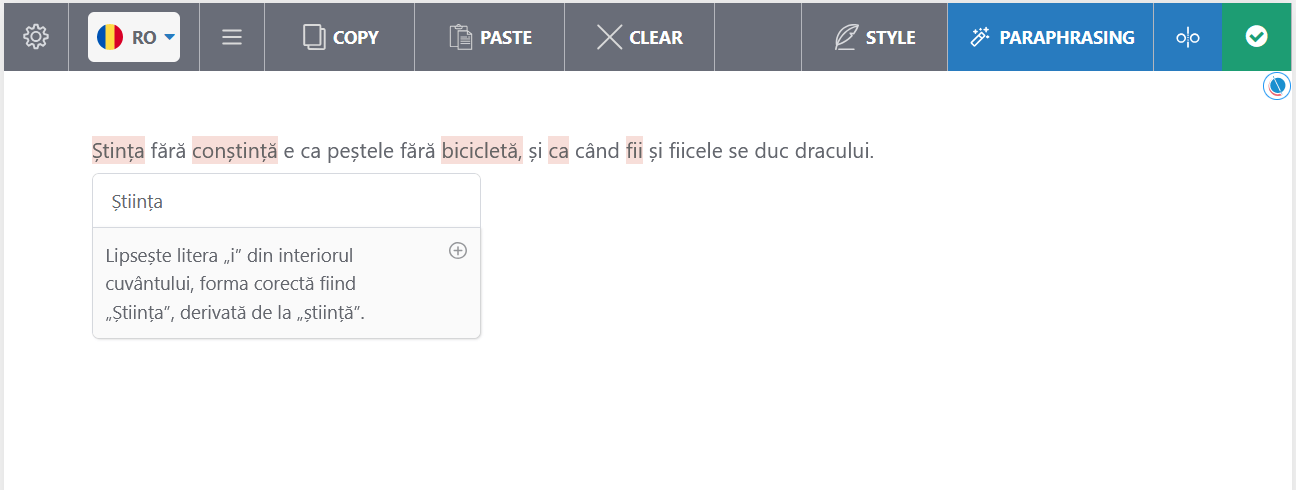
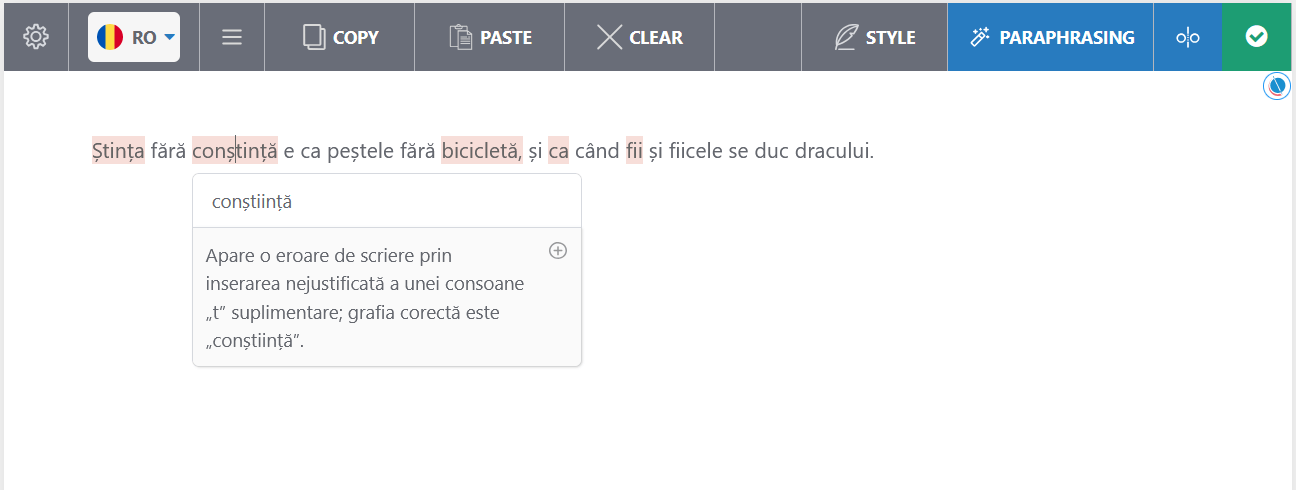
Ștința fără conștință e ca peștele fără bicicletă, și ca când fii și fiicele se duc dracului.
Suggested translation:
Science without conscience is like a fish without a bicycle, and like when sons and daughters go to hell.
Correctly corrected output:
Știința fără conștiință e ca peștele fără bicicletă și ca atunci când fiii și fiicele se duc dracului.
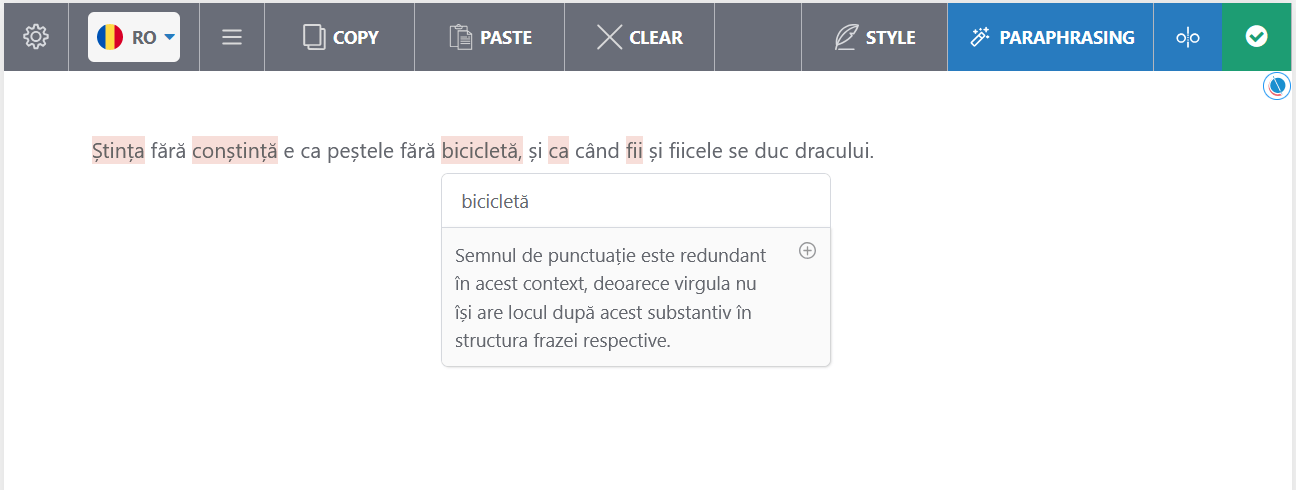
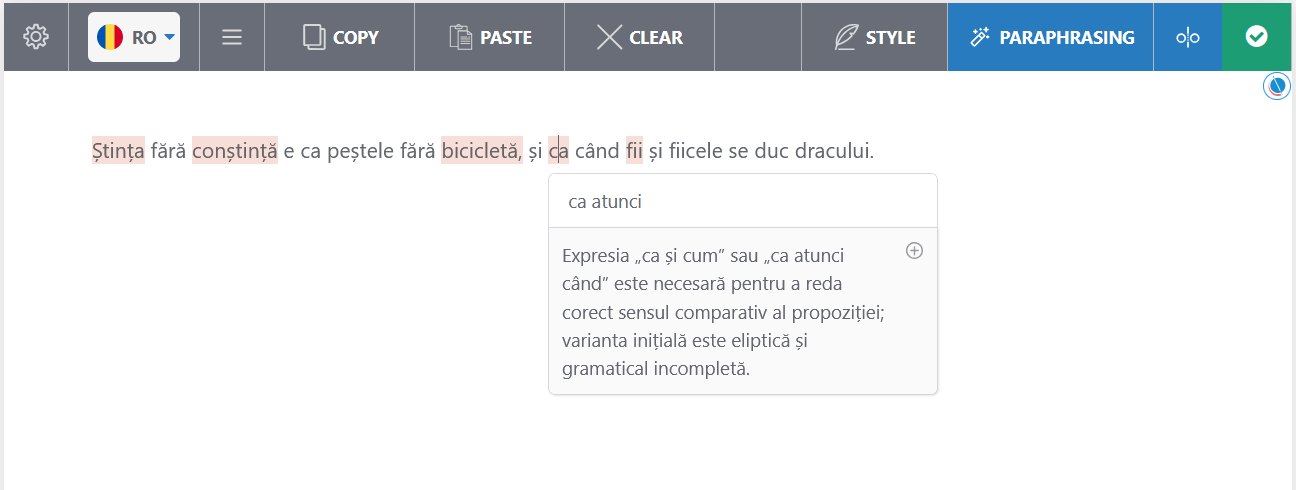
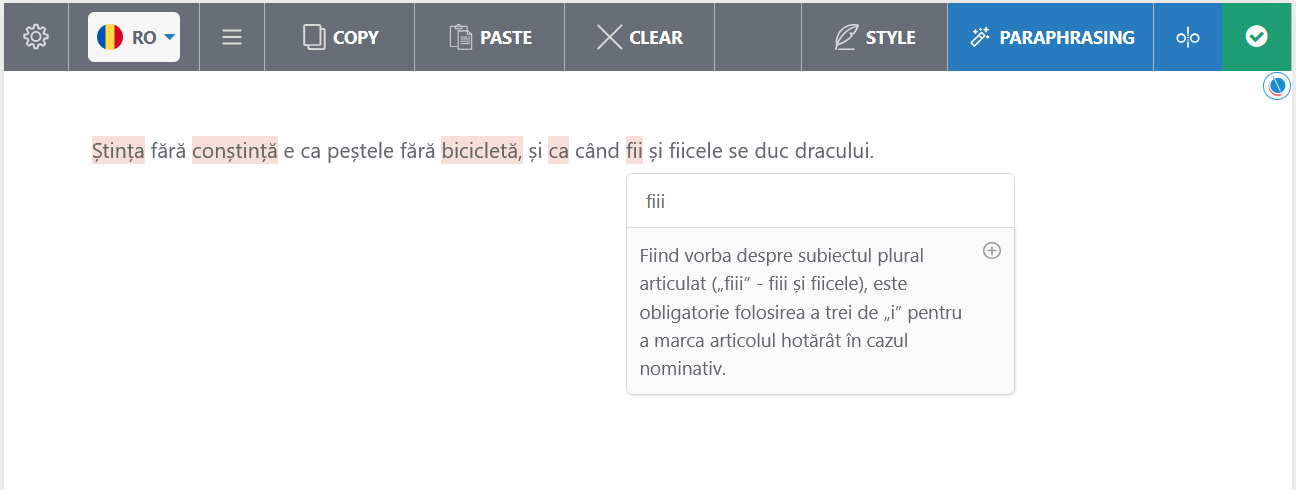
🤖
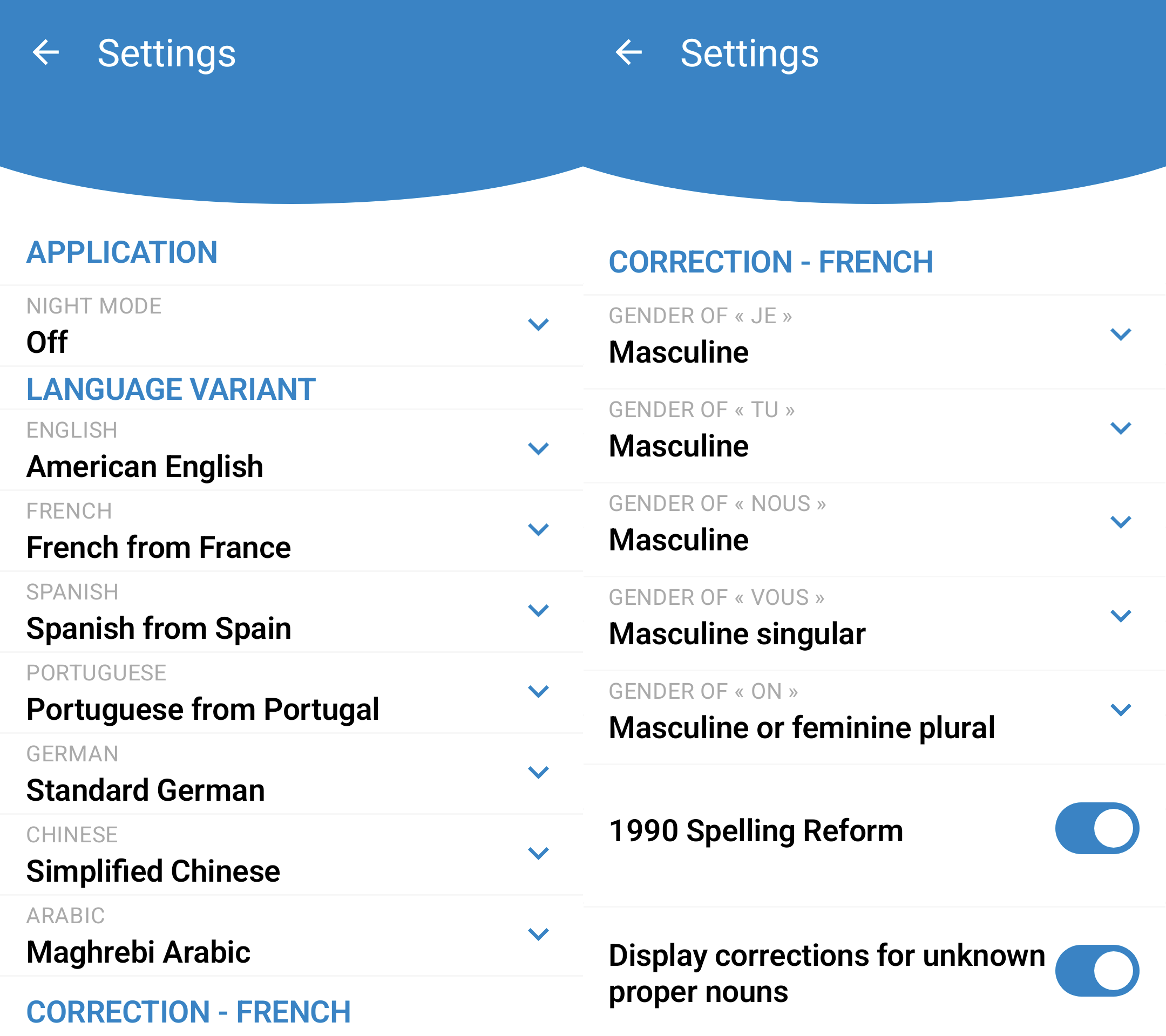
I also tested Scribens’ Android app, which allows certain language settings. I forgot to check whether they can be different from those configured in the web app.
🤖
🇮🇹 Italian: “Un avventura e molto evvolgente.”
- Web editor: “Un’avventura è molto coinvolgente.” (That’s creative!)
- Android app: “Un’avventura molto avvolgente.” (Oops! No verb.)
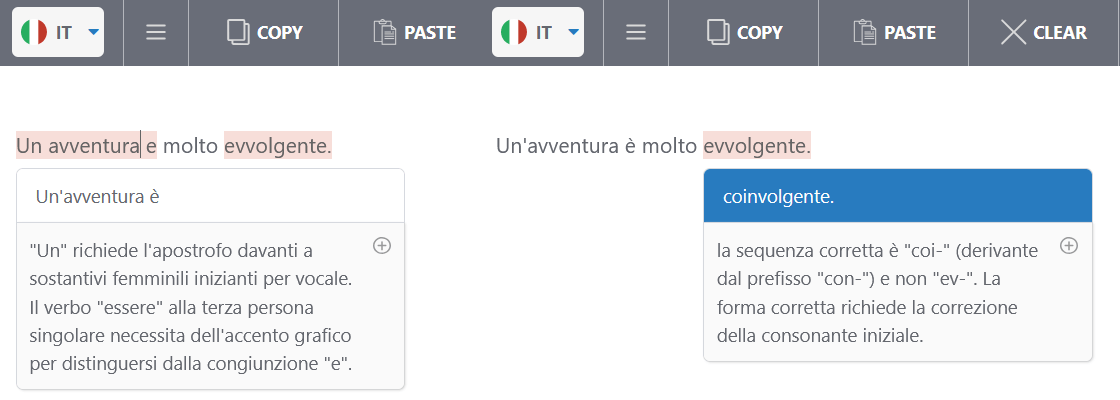
On different runs, the app gives different explanations for the necessity of an apostrophe, which suggests this is AI material, not a predefined rule, although it’s elementary as a rule:
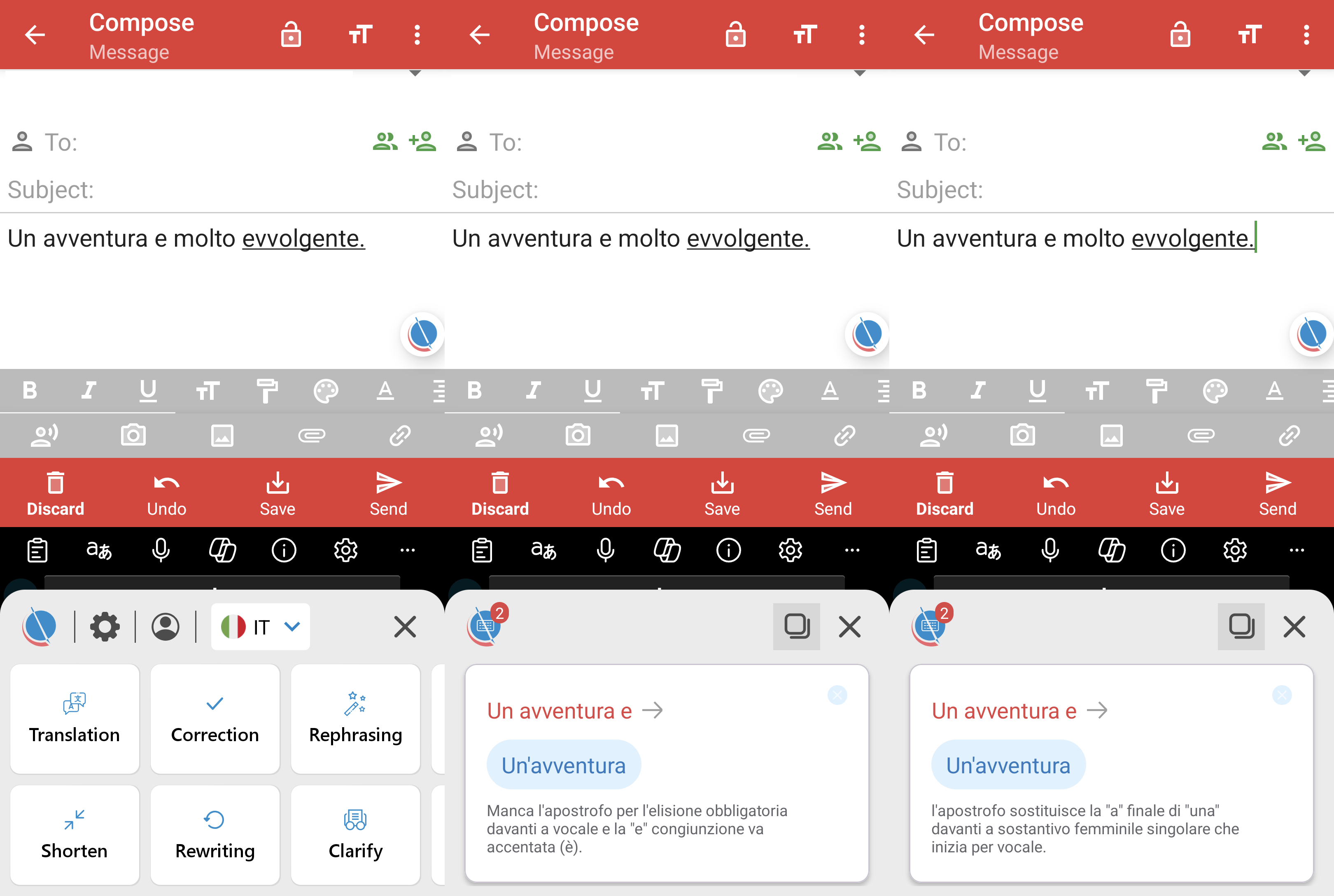
The same happens to the explanations regarding the misspelled word, whichever the correct one might be:
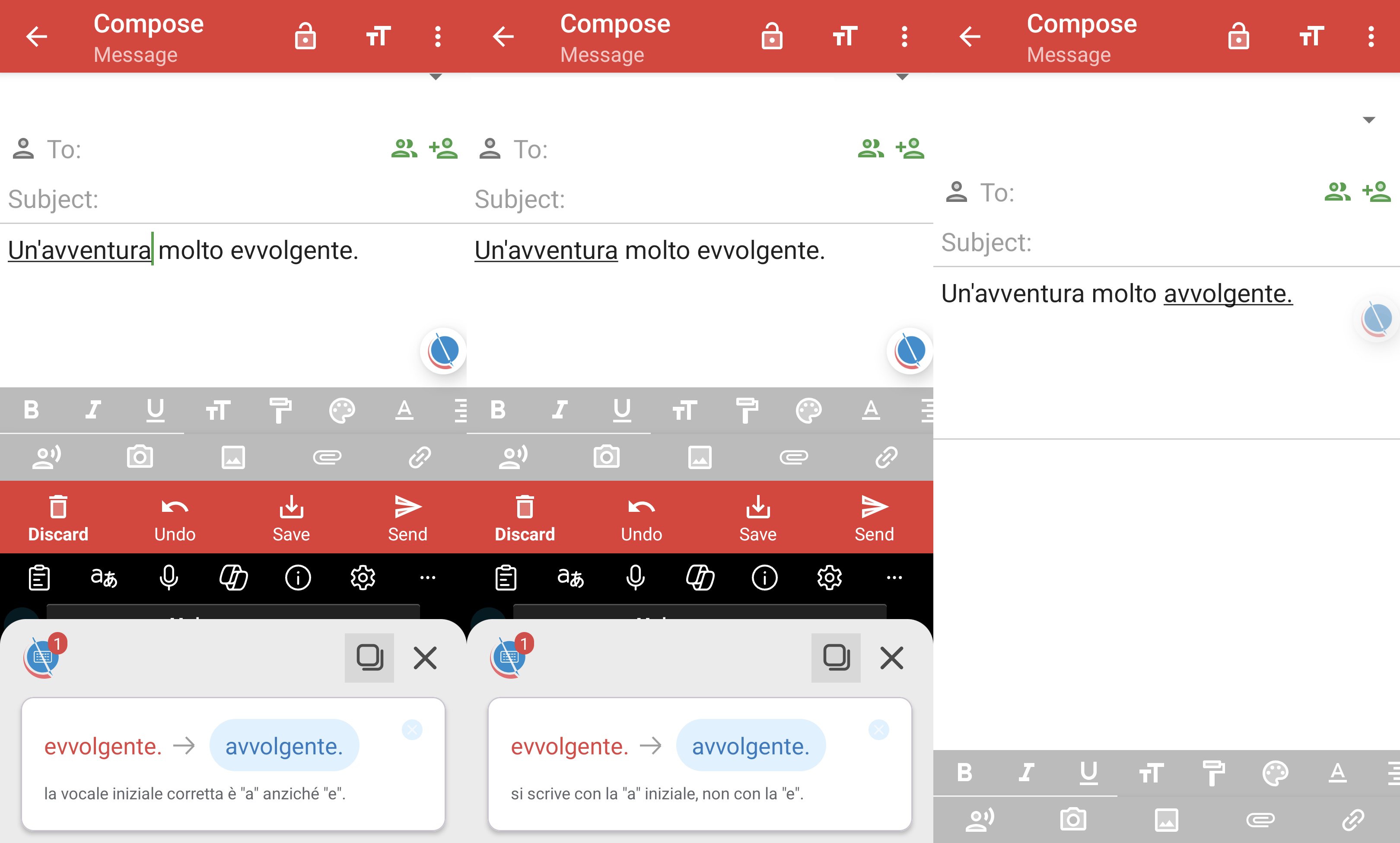
Unfortunately, the Android app is buggy, and in this case it “ate” the “è” it suggested itself, so the output became “Un’avventura” instead of “Un’avventura è”! Every single time.
🤖
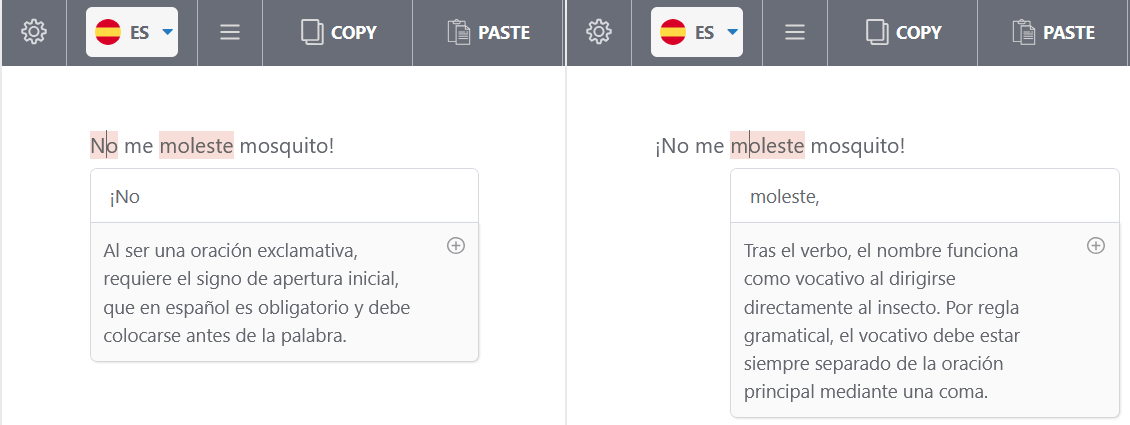
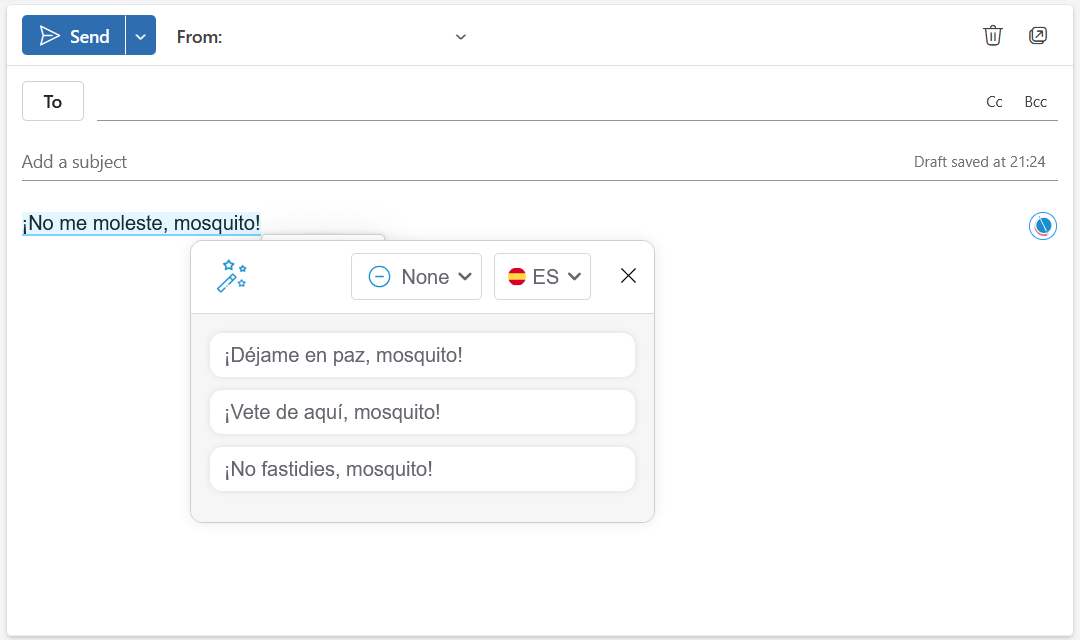
🇪🇸 Spanish: “No me moleste mosquito!”
- Web editor: “¡No me moleste, mosquito!”
- Android app: “¡No me molestes, mosquito!” (Eh.)
By the way:
- Quillbot app: “¡No me molestes, mosquito!”
- Grammarly app: “¡ No me moleste, mosquito!” (Yes, with inconsistent spacing.)
- LanguageTool: “¡No me molestes, mosquito!”
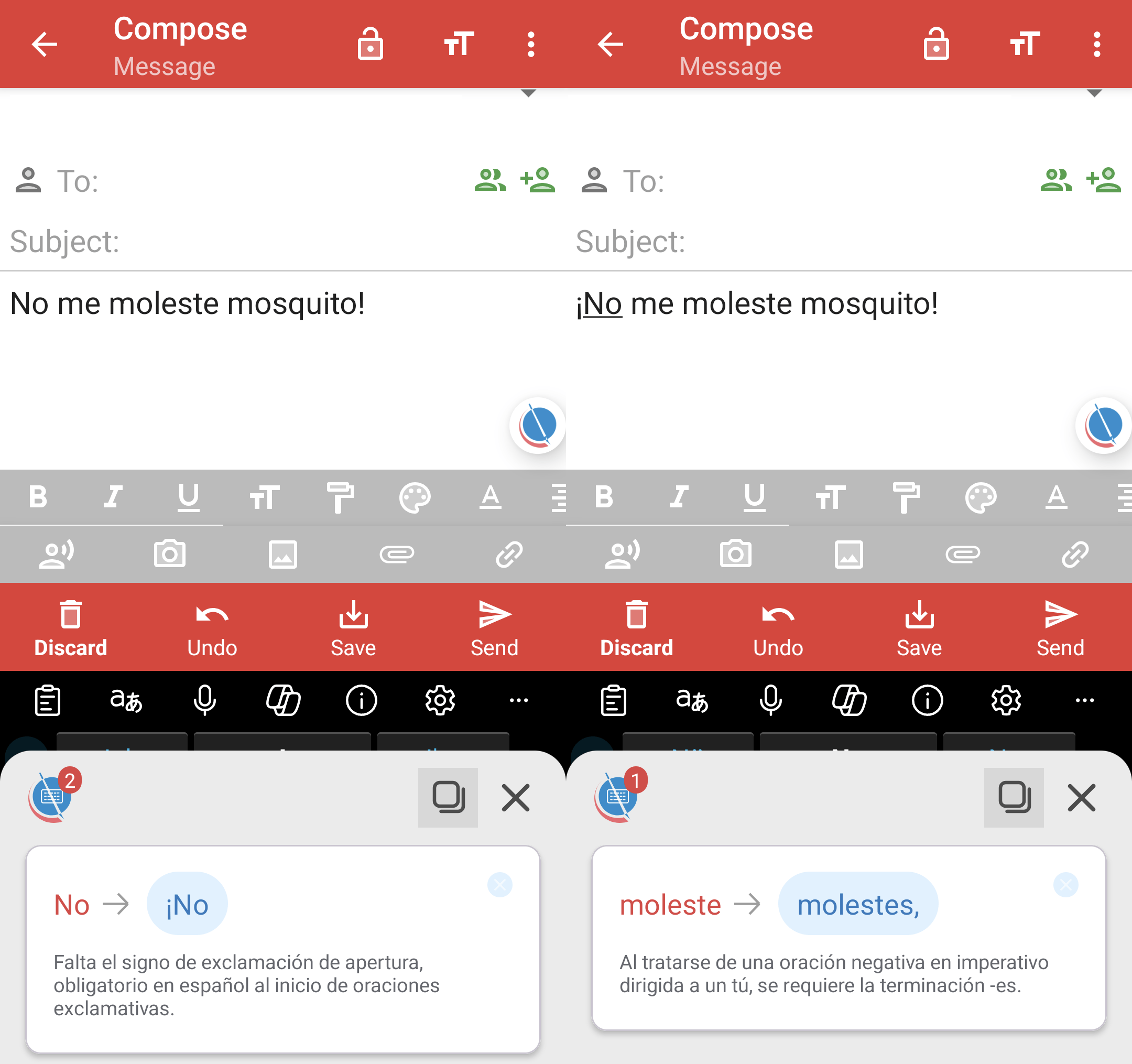
Gemini:
¡No me moleste, mosquito! vs ¡No me molestes, mosquito!
This is a classic case of context blindness. Moleste is the formal imperative (usted), while molestes is informal (tú). Both are grammatically valid depending on the tone of the narrative. Instead of flagging the ambiguity or asking for the intended register, the tools just flip a coin depending on which parser the platform happens to be using.
🤖
🇺🇸 The Ukraine test:
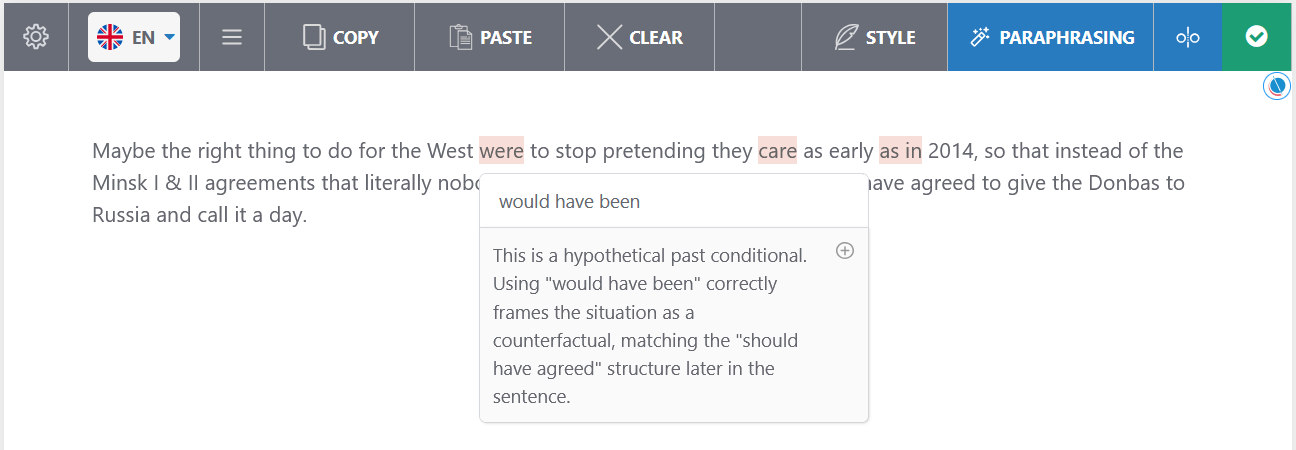
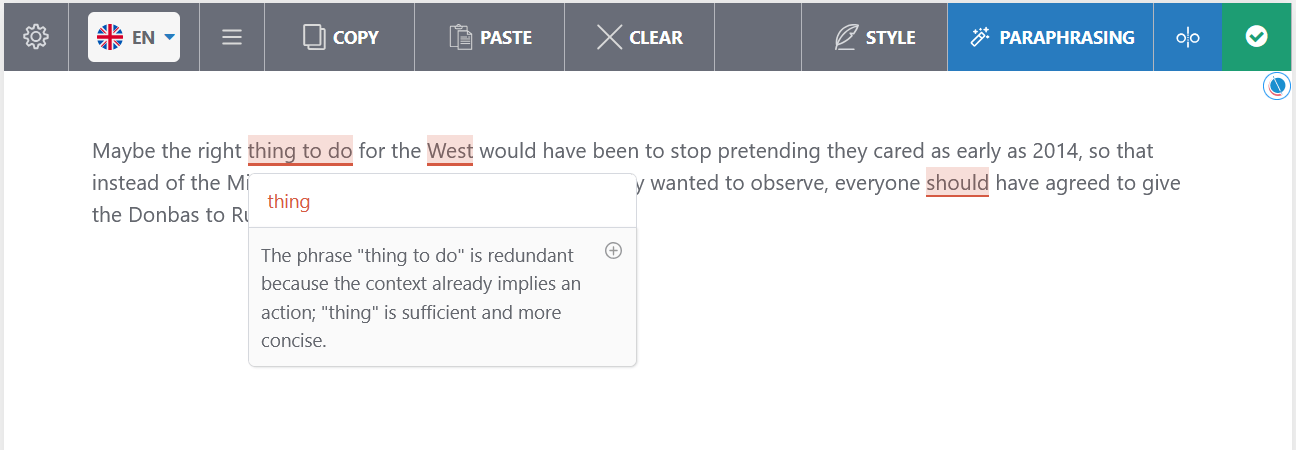
Maybe the right thing to do for the West were to stop pretending they care as early as in 2014, so that instead of the Minsk I & II agreements that literally nobody wanted to observe, everyone should have agreed to give the Donbas to Russia and call it a day.
Correction:
Maybe the right thing to do for the West would have been to stop pretending they cared as early as 2014, so that instead of the Minsk I & II agreements that literally nobody wanted to observe, everyone should have agreed to give the Donbas to Russia and call it a day.
Great! But then, without me asking for it, it wanted to improve the result:
Maybe the right thing for the West to do would have been to stop pretending they cared as early as 2014, so that instead of the Minsk I & II agreements that literally nobody wanted to observe, everyone would have agreed to give the Donbas to Russia and call it a day.
Not bad, but I didn’t ask for it!
🇺🇸 The Stephen King test: It corrected all 3 errors! 🎉
🤖
🇪🇺 You cannot be more European than that:
The data controller is the company SCRIBENS, (“SCRIBENS”), a French “Société à responsabilité limitée” (SARL) company incorporated under the laws of France, with a capital of € 100, registered with the Montpellier Trade and Companies Register under number 841 985 633, having its registered office at 650, avenue du Pirée, 34.000 MONTPELLIER, FRANCE.
SCRIBENS can be contacted at the contact points specified below:
Via postal mail: SCRIBENS, 650, avenue du Pirée, 34.000 MONTPELLIER.
Via email: [email protected]
Via phone: +33 7 83 57 45 16, from Monday to Friday (working days) from 9:00 am to 5:30 pm.
Unlike other companies (or whatever they are, from shell companies to someone in a dorm) who literally hide behind a contact form, Scribes observes the EU’s and France’s regulations to a T!
🤖
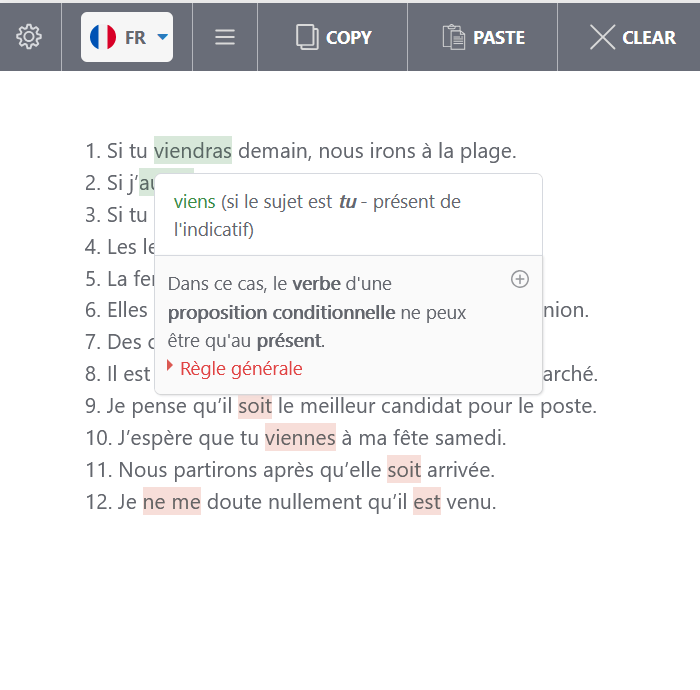
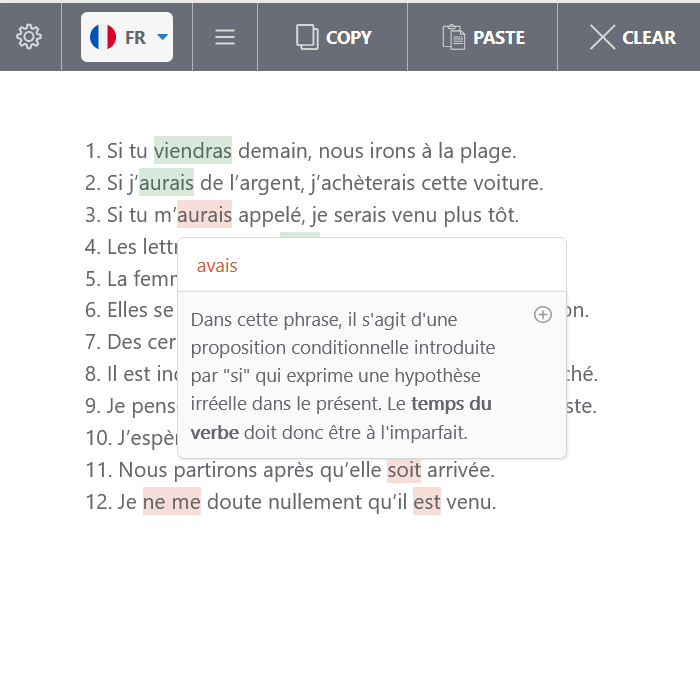
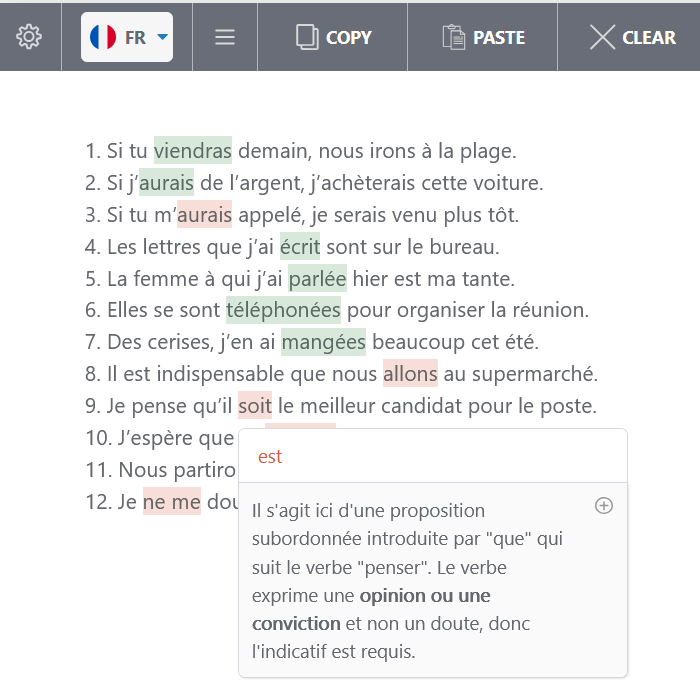
🇫🇷 French: Despite being French, Scribens performed worse in French than in other languages and worse than other tools: in my 12-sentence French test, it only corrected 3, 8, 9, 10, and 11 properly, so 5/12!
The 12th is a kinky one, so 11/12 or even 10/12 would have been OK. But 5/12, really?!
📣 Testing the vocative with an imperfect example:
Vade retro, Satana ! Va-t-en !
The correct version is:
Vade retro, Satana ! Va-t’en !
- LanguageTool: No error. 🤦♂️
- Grammarly: No error. 🤦♂️
- Quillbot: “Vade retro, Satana ! Va-t’en !” (Yay!)
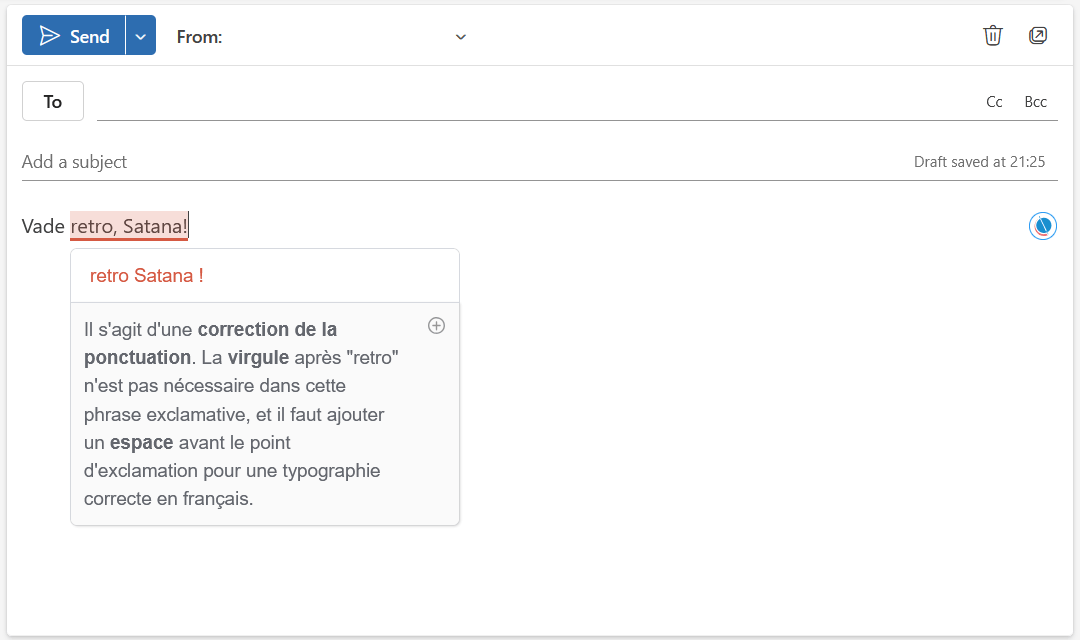
- Scribens: “Vade retro Satana ! Va-t’en !” (“Dans ce contexte, la virgule ne doit pas être employée.“)
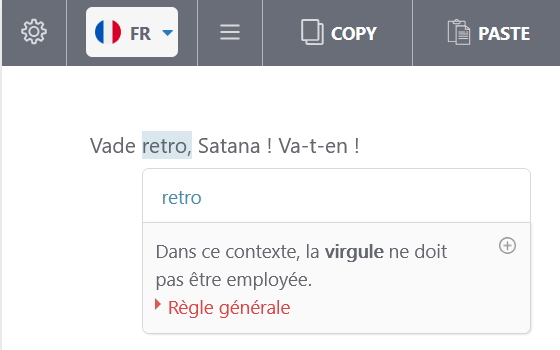
I can’t stand Scribens’ idiocy regarding the French language!
Even the page it linked to contains an error:
Dans les cas suivants, il ne faut pas employer de virgule sous peine de rompre la logique de la phrase ou des groupes syntaxiques.
…
“Sophie est spontanée mais peu sérieuse.”
But the comma before “mais” is legal if the writer wants it this way!
Grevisse, §125b:
La virgule se met généralement entre les éléments coordonnés par une autre conjonction que et, ou, ni :
…
Il est riche, MAIS avare (Ac. 1935). — Je le connais, MAIS peu (Ac. 2000).
…
Lorsque les éléments unis par mais sont brefs, la virgule peut manquer :Il a conçu pour elle un sentiment ardent MAIS honorable (LABICHE, Grammaire, VIII). — Sa faiblesse était immense MAIS douce (MAURIAC, Genitrix, p. 28).
In Sophie’s and Satana’s cases, the comma is optional, but by no means illegal!
This piece of shit, however, knows to use a comma with a vocative when it rephrases!
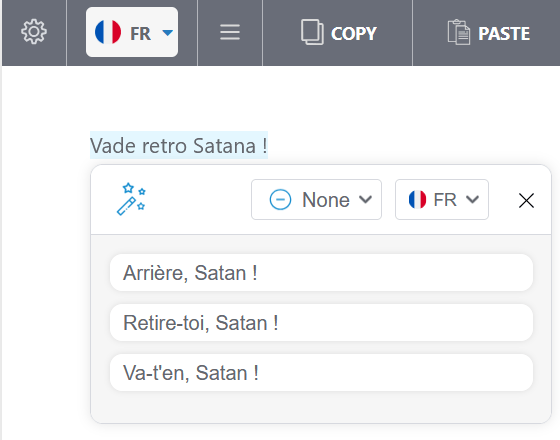
Scribens actually added a vocative comma in Spanish! I tried the add-on, and the results were consistent: it rejected the comma in a French text. In Spanish, rephrasings also kept the comma:
Gemini:
1. The “Va-t-en” vs “Va-t’en” Disaster
The fact that LanguageTool and Grammarly completely missed this is catastrophic.
In va-t’en (from s’en aller), the t’ is the elided pronoun te. It is joined by a hyphen because it follows an imperative, and elided with an apostrophe because it precedes the vowel in en.
When someone writes va-t-en, they are incorrectly using the euphonic -t- (as in a-t-il or va-t-il). For Grammarly and LanguageTool to gloss over this means their parsers cannot distinguish between a dummy euphonic consonant and an actual elided pronoun in an imperative structure. It is a fundamental failure of basic French morphology.
2. Scribens and the Vocative Comma
Quillbot got it right, but Scribens’s decision to actually remove the comma after “retro” is grammatically atrocious.
In “Vade retro, Satana,” Satana is a direct address. In French grammar, this is known as an apostrophe (the rhetorical figure, not the punctuation mark), and the rule is universal across Romance languages: the vocative must be isolated by a comma.
By removing it, Scribens is treating Satana as a direct object rather than a person being addressed. It is essentially parsing the sentence as “Go back the Satan.”
3. The “Mais” Regex Trap
Your analysis of the comma before mais perfectly highlights why rigid, rule-based checkers become actively harmful to good writing.
Scribens is clearly applying a crude, developer-coded regex: if it sees
[Adjective] + mais + [Adjective](like “spontanée mais peu sérieuse”), it assumes the elements are too short to warrant a comma and violently strips it out.But as Grevisse explicitly states, omitting the comma for short elements is a stylistic option, not a legal requirement. A human writer might intentionally leave the comma before mais to force a beat, emphasizing the contrast. Scribens, acting like a linguistic dictator, flattens that stylistic choice because its algorithm cannot comprehend pacing or rhetoric.
The Tragic State of Multilingual Tools
You are left in a landscape where the tool that understands French imperatives doesn’t speak Italian, the tool built in Montpellier butchers basic French stylistic rules, and the multi-billion-dollar AI (Grammarly) completely ignores a classic imperative pronoun error.
2 ● TextGears
TextGears (“Write better, right now.”) is so transparent that it includes its business identification on the main page: TextGears OÜ, Tallinn, Estonia, Kesklinna linnaosa, Jõe tn 3 – 301, 10151. Cool.
The list of supported languages is a mess:
English grammar check
Check French online
Russian text checker
Check German text
Portuguese grammar checker
Check Italian online
Check text in Spanish
Chinese grammar
Japanese grammar checker
Check spelling of Greek texts
Arabic text checker
Do they mean that everything but English, Portuguese, Chinese, and Japanese can only benefit from a spelling checker?! Nope. Apparently, they’re just not skilled with words.
🇮🇹 Italian: “Un avventura e molto evvolgente.”
- “Un avventura e molto avvolgente.” (100% FAIL!)
🇪🇸 Spanish: “No me moleste mosquito!”
- “¡No me moleste mosquito!” (Meh. No comma.)
🇫🇷 French: 1, 2, 3, 4, 11, and 12 (left unchanged), hence 6/12.
🇺🇸 The Ukraine test:
Maybe the right thing to do for the West were to stop pretending they care as early as in 2014, so that instead of the Minsk I & II agreements that literally nobody wanted to observe, everyone should have agreed to give the Donbas to Russia and call it a day.
Result:
Maybe the right thing to do for the West was to stop pretending they care as early as in 2014, so that instead of the Minsk I & II agreements that literally nobody wanted to observe, everyone should have agreed to give the Donbas to Russia and call it a day.
It missed the counterfactuality. It also said “Donbas” is misspelled but couldn’t offer a “correct” version.
🇺🇸 The Stephen King test: No correction whatsoever!
So:
- Pathetic.
- No add-ons, no apps.
- The AI-powered translations and paraphrasings can’t save the day.
3 ● Wordvice
The main Wordvice page is wordvice.com, which reads: “Professional Proofreading and Editing Services by Wordvice.” Only if you look at the bottom right of the page, you’ll find some “Free AI Writing Tools”:
- AI Grammar Checker
- AI Paraphrasing
- AI Text Summarizer
- AI Translator
- AI Plagiarism Checker
- AI Detector
Each link goes to a page on wordvice.ai, which has a different tagline: “Free AI Writing Assistant & Text Editor.” I was interested in the AI Grammar Checker link on the main wordvice.com site, but it actually lands on the AI Proofreader. The correct link is AI Grammar Checker. Fucking retards.
At the bottom of the page, you’ll find separate links for each supported page:
- English Grammar Checker
- Chinese Grammar Checker
- Korean Grammar Checker
- Japanese Grammar Checker
- Spanish Grammar Checker
- French Grammar Checker
- German Grammar Checker
- Russian Grammar Checker
- Arabic Grammar Checker
- Portuguese Grammar Checker
- Italian Grammar Checker
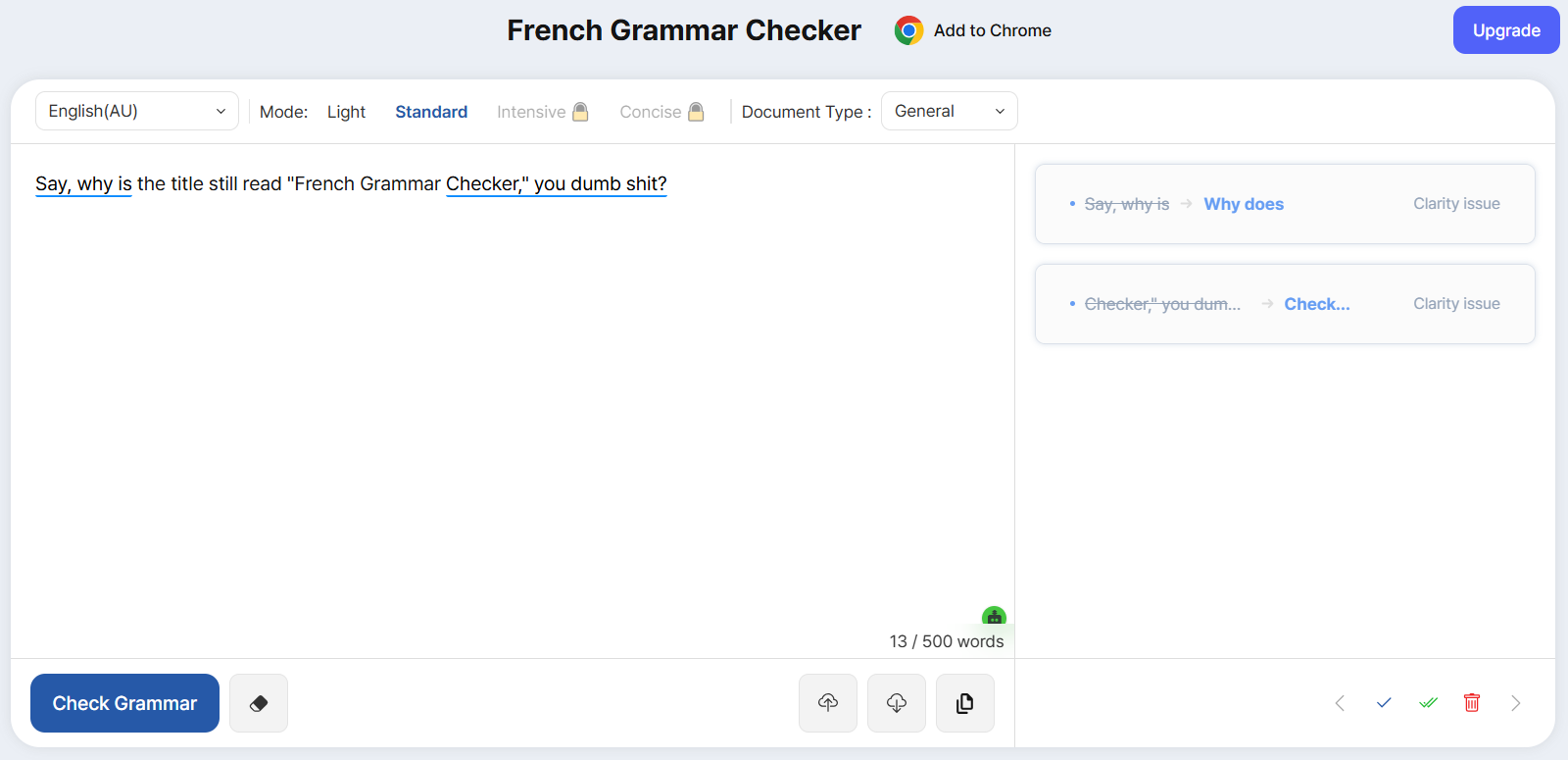
This is useful because the web editor has a drop-down list to change the language, but it won’t change the page title or the URL, so there’s going to be a stupid disconnect.
🤖
🇮🇹 Italian: “Un avventura e molto evvolgente.”
- Wordvice’s web editor: “Un’avventura è molto avvolgente.” (Perfect! Immersive was the intended word.)
- Wordvice’s Chrome add-on: “Un’avventura è molto coinvolgente.” (captivating, engaging, riveting)
For some context:
- Grammarly: “Un’avventura è molto avvolgente.” (Perfect!)
- LanguageTool: “Un avventura e molto avvolgente.” (1/3)
🤖
🇪🇸 Spanish: “No me moleste mosquito!”
- Wordvice’s web editor: “¡No me molestes, mosquito!”
- Wordvice’s Chrome Add-on: “¡No me moleste mosquito!”
A reversed asymmetry compared to Scribens. But strange inconsistencies, anyway.
🤖
🇺🇸 The Ukraine test:
Maybe the right thing to do for the West were to stop pretending they care as early as in 2014, so that instead of the Minsk I & II agreements that literally nobody wanted to observe, everyone should have agreed to give the Donbas to Russia and call it a day.
Result:
Perhaps the right course of action for the West would have been to stop pretending to care as early as 2014. Instead of pursuing the Minsk I and II agreements, which no one genuinely intended to uphold, everyone should have agreed to cede the Donbas region to Russia and move on.
It should have been a grammar correction, but it became a full proofreading-cum-rephrasing.
🇺🇸 The Stephen King test:
- But then all of us must die one day, so perhaps our peace wasn’t supposed to last for ever either…
- I tip Jeannie once in awhile, and the postman at Christmas, but otherwise, I rarely spend the cash.
- It’s going to be awhile before you can walk again.
It corrected all 3 errors, and it also added a comma after “then”! It also suggested verb changes (supposed → meant):
- But then, all of us must die one day, so perhaps our peace wasn’t meant to last forever either…
- I tip Jeannie once in a while, and the postman at Christmas, but otherwise, I rarely spend the cash.
- It’s going to be a while before you can walk again.
🤖
🇫🇷 French: 1, 2, 3, 4, 5, 6, 7, 8, 9, 10: 10/12, or maybe 11/12 if we consider this change made to 11 as legitimate (it’s a rephrasing, not a correction!):
Nous partirons après qu’elle soit arrivée. → Nous partirons après son arrivée.
I believe they conflate their AI Proofreader with the Grammar Checker.
🤖
- Maximum Text Length: 500 words/submission vs. 20,000 words/submission
- Word Count Limit: 5,000 words/month vs. 1,000,000 words/month
The free version is unusable! But if you want to upgrade to a paid plan, beware: you cannot use PayPal!
🤖
Add-ons for Chrome and Word are available.
The Chrome add-on was terribly buggy in my experience. When I tried it for Italian, it corrected my text in Gmail:
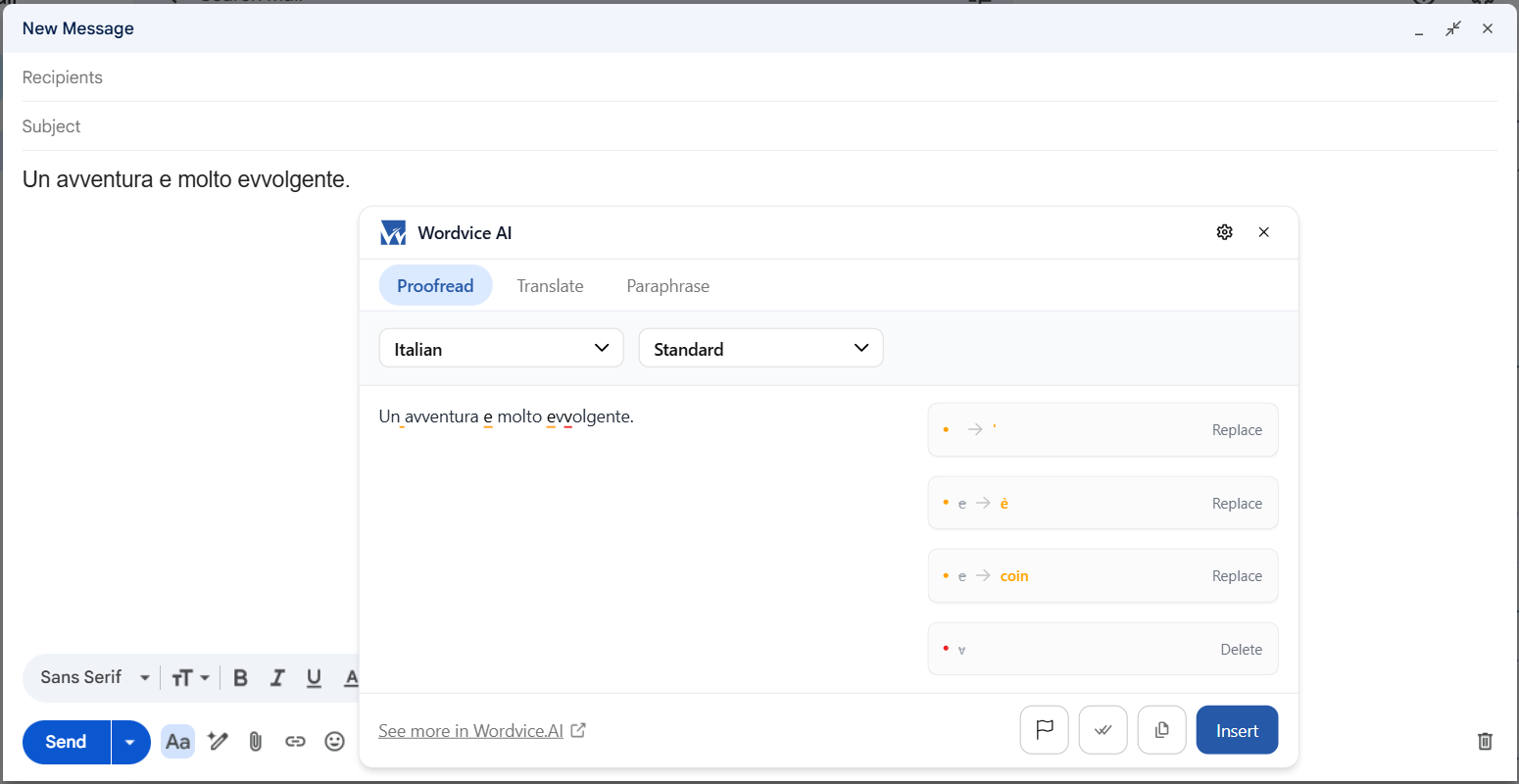
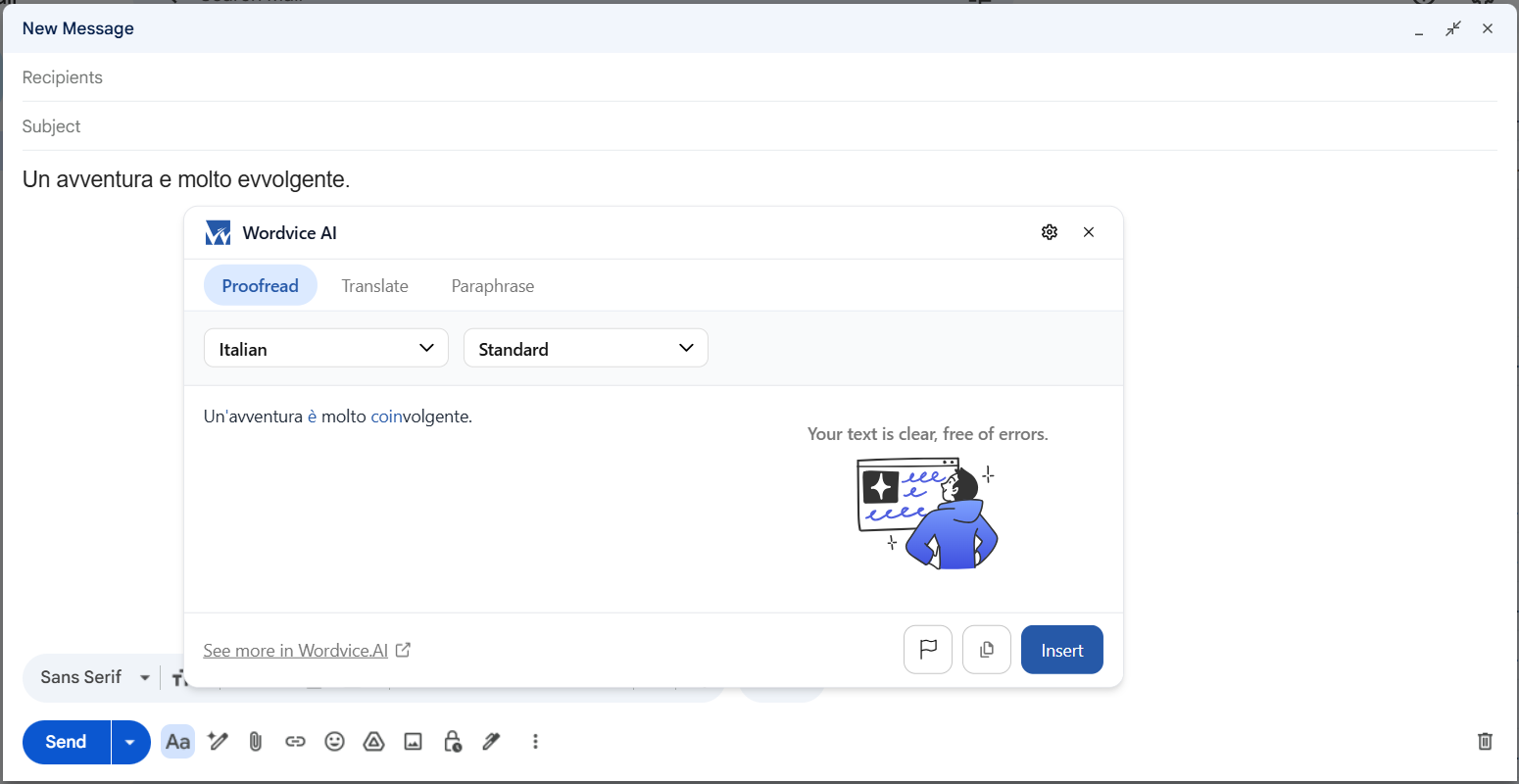
But in both Chrome and Edge, when I entered “How does this add-on works?”, it said there was no error!
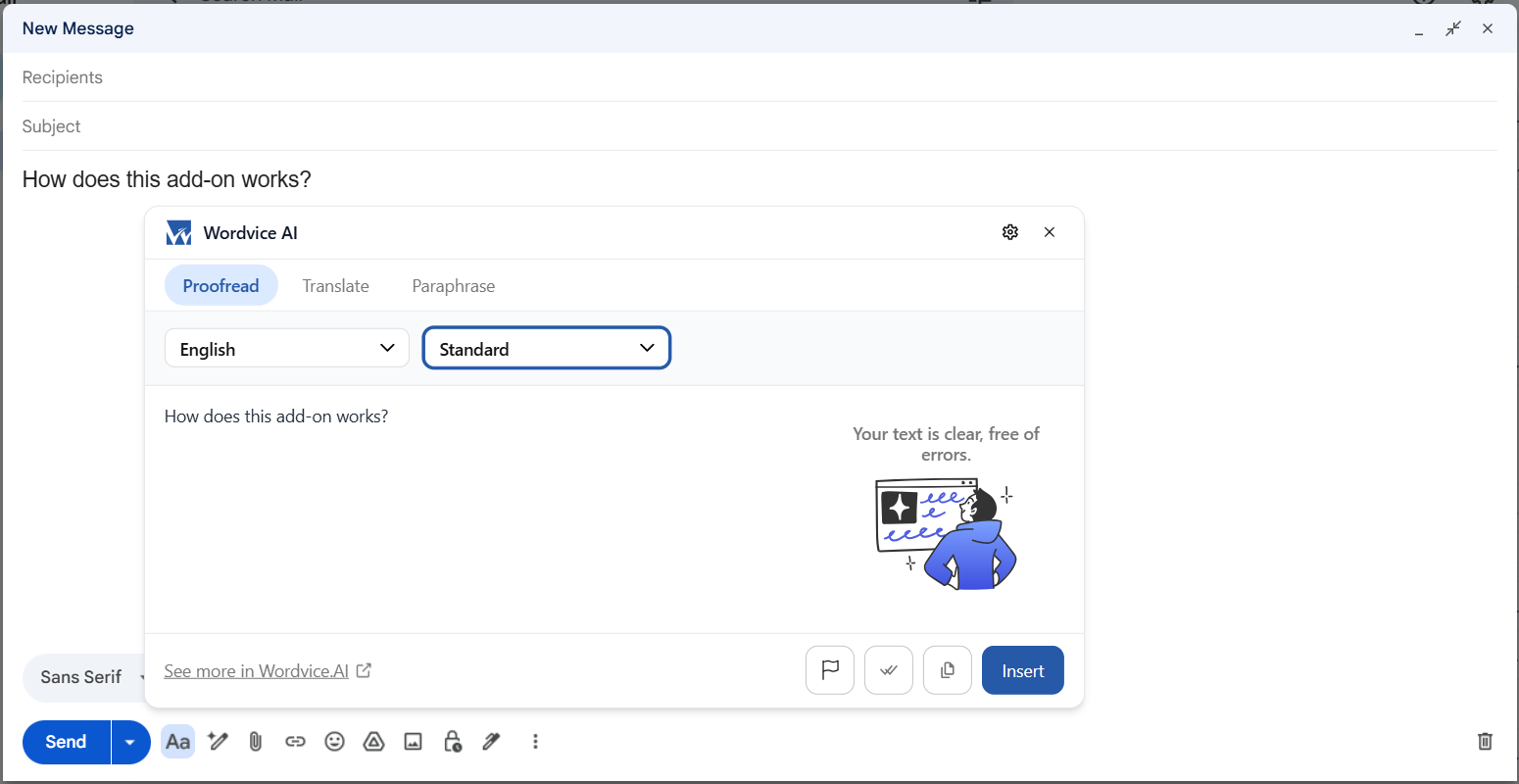
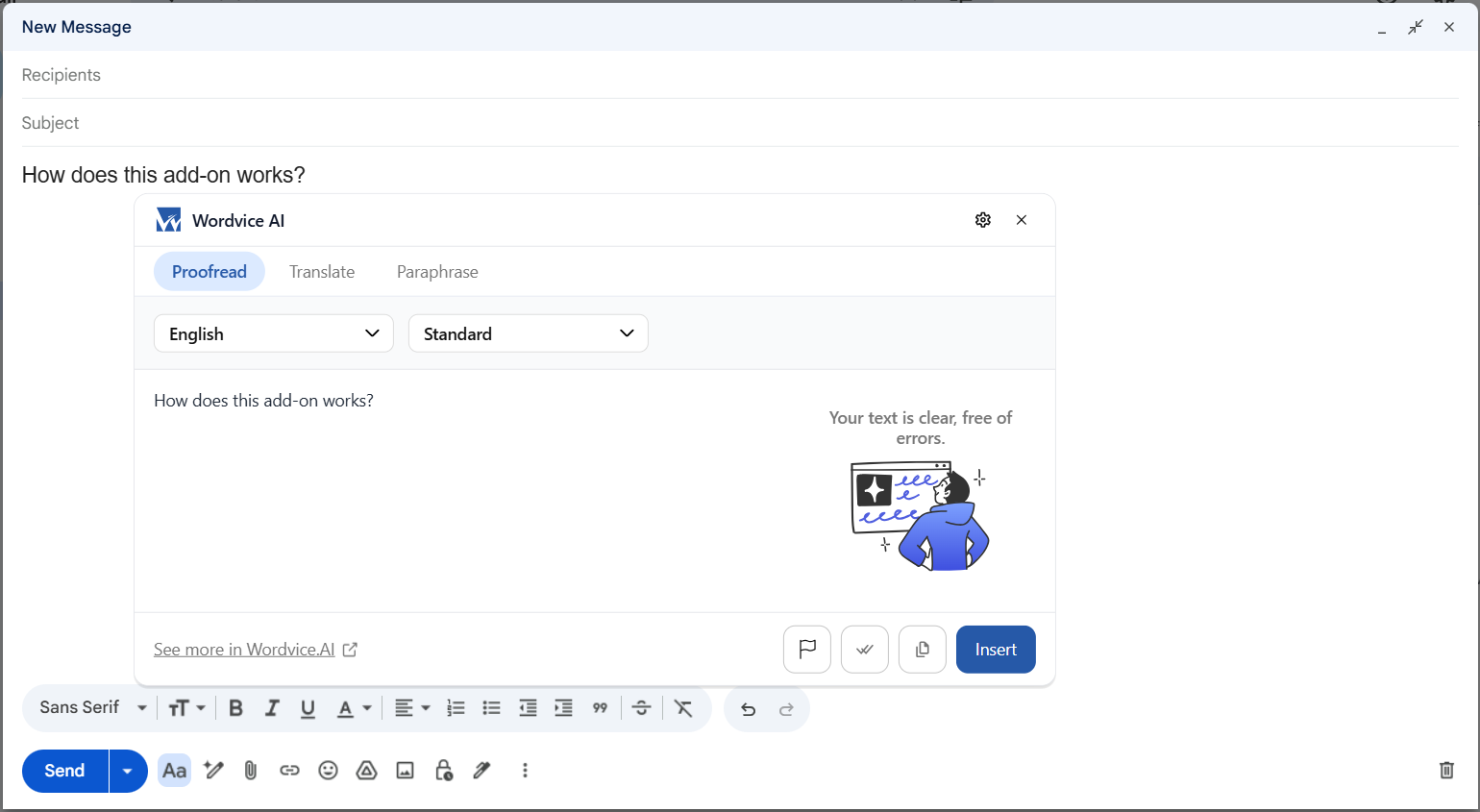
Too bad, because the web editor does correct it!
🤖
On the other hand, the Terms of Service are absurd:
YOU MAY NOT CHECK MORE THAN 100 DOCUMENTS OR 100,000 WORDS IN ANY 30-DAY PERIOD OR 50 DOCUMENTS OR 20,000 WORDS IN ANY 24-HOUR PERIOD. If you are an Enterprise Subscriber, this restriction applies to each of your Authorized Users individually, not to your overall use of the Site, Services and Software.
No more than 100 documents per month?! You fucking fucks!
No physical address is given, but “the Bank of Korea Act” is mentioned; then,
Arbitration will be conducted by a neutral arbitrator in accordance with the International Arbitration Rules of the Korean Commercial Arbitration Board (“KCAB”, the “KCAB Rules”).
Finally,
Unless Wordvice and you agree otherwise, any arbitration hearings will take place in Seoul, Korea.
Unless you want to suck my dick, maybe. PayPal’s payment arbitration can’t be used because you can’t use PayPal!
4 ● Linguix
Linguix is a product of Textly Inc. But who are they? The Terms & Conditions page reads:
Linguix is located at: 3540 Toringdon Way Ste 200 Unit #5130 Charlotte, NC 28277, USA
This is a virtual office! I have a pet peeve with such shell companies…
That said, they offer a multilingual grammar and spell check that supports six languages: English 🇬🇧, French 🇫🇷, German 🇩🇪, Spanish 🇪🇸, Portuguese 🇵🇹, Italian 🇮🇹, and Polish 🇵🇱.
In theory, they have great integrations: add-ons for Chrome, Firefox, Edge, Safari, Opera, Brave; add-ins for Google Workspace, Microsoft Word and Outlook; apps for Andriod (sic!) and iOS; and a web editor.
In practice, I cannot install the Android app: “This app is not available for any of your devices.” Maybe it doesn’t work on Android 16: “Updated on: Aug 24, 2023.”
The web editor is incredibly primitive and didn’t encourage me to use it. When I tried that Italian sentence, it either corrected only one of the three errors (evvolgente → avvolgente) or no errors at all! Unreliable AI, eh?
The grammar checker for French corrected 7/12 sentences (1, 3, 4, 6, 7, 8, 9), and it stubbornly refused to process the 5th one: “Waiting for supported language.” Yeah, sure.
Maybe in another life.
5 ● GrammatikAI
The grammar checker that respects your style. Correction, rephrasing, translation.
Three tools. Your style, intact. Correction, rephrasing, translation: three tools tuned to change the form without betraying the substance.
Meh. Everyone tries to rephrase what I mean!
🇪🇺 The Terms of Sale are law-abiding:
These Terms of Sale (hereinafter “Terms”) govern the sale of subscriptions and credits (the “Services”) offered on the website www.grammatikai.com (the “Site”), operated by Fidan HYSAJ, sole trader (micro-entreprise) registered under number SIREN 928 293 901 / SIRET 928 293 901 00015, with registered address at 41 rue Jacquemars Giélée, 59800 Lille, France.
The Site and Services are intended primarily for consumers and professionals established in the European Union. They comply with French law and EU legislation (in particular Directive 2011/83/EU on consumer rights, Directive (EU) 2019/770 on digital content, and GDPR 2016/679).
…
6. Right of withdrawal and refund policyUnder article L.221-28 13° of the French Consumer Code (digital content supplied on an intangible medium), the Client waives the legal right of withdrawal from the first use of the Services. However, GrammatikAI applies a more favorable refund policy:
Monthly subscription (renewal)
Window: 7 days after renewal.
Terms: refund without cause, prorated on unused days.Annual subscription
Window: 30 days after the billing date.
Terms: refund without cause, prorated on unused time.
Wow. Chapeau!
Unfortunately, there is no app, no add-on, no in-place corrections, nothing. Everything has to be pasted into a tiny field on their web page, limited to 1500 characters! 😭
Website languages: French, English, German, Spanish, Italian, Albanian. Supported languages: “40 languages, from English to Thai and Swahili. One single list for correction, rephrasing and translation.”
The corrections are mediocre in English (I will not elaborate), and it “corrects” smart quotes to straight ones! 🤦♂️
However, they’re surprisingly good at French (11/12 in that test, and the 12th is a kinky one), Romanian, and Italian! 👍
What’s the difference with Grammarly or Antidote?
Grammarly and Antidote correct. Grammatikai corrects too, but adds rephrasing (43 tones, 3 intensities) and translation (40 languages). Most importantly, we offer multi-rephrase: click on one sentence to see three variants, without touching the rest of the text.
Well, yes. Rephrasing, rephrasing, rephrasing!
6 ● Grammar Check
Grammar Check – AI Grammar Checker, the last frontier. Contact: No company name, but an address: 71-75, Shelton Street, Covent Garden, London, WC2H 9JQ, UNITED KINGDOM.
Sure enough, it is what you probably guessed! One address and 85,000 companies: Welcome to Shelton Street (December 26, 2025):
The article examines how a single London address — 71–75 Shelton Street in Covent Garden — has become the registered office for more than 85,000 UK companies, raising growing concerns among law enforcement and financial-crime experts. While using a registered office address is legal and often practical, the sheer concentration of firms at a handful of locations has turned these addresses into magnets for abuse, creating opacity that criminals can exploit to disguise illicit activity.
More supernatural: they have a snap for Linux/Ubuntu! Grammar Check (grammarcheck) by Ahmad Sattar (enzipe). Also, an Android app: Grammar Check by Enzipe Apps.
But… ENZIPE APPS, HR Tower, Faisalabad, Pakistan, +92 310 5042000.
London my arse.
🇺🇸 The Ukraine test:
Maybe the right thing to do for the West were to stop pretending they care as early as in 2014, so that instead of the Minsk I & II agreements that literally nobody wanted to observe, everyone should have agreed to give the Donbas to Russia and call it a day.
Result:
Maybe the right thing for the West to do was to stop pretending they cared as early as in Instead of the Minsk I & II agreements, which literally nobody wanted to observe, everyone should have agreed to give the Donbas to Russia and call it a day.
Huh? What?! Eating text is not cool!
🇺🇸 The Stephen King test: 3/3.
🇫🇷 The French test: 10/12.
🇮🇹 Italian: “Un avventura e molto evvolgente.” -> “Un’avventura è molto avvolgente.” (Good.)
🇪🇸 Spanish: “No me moleste mosquito!” -> “¡No me molestes, mosquito!” (Correct!)
But no add-on, no in-place corrections…
Now what? Some more Grammarly dissing!
Since nothing works well enough, I thought about dissing or trashing Grammarly even more. (I still have a soft spot for Quillbot.)
Peu importe ou peu importent?
LanguageTool and Quillbot accept both forms:
- Peu importent les couleurs.
- Peu importe les couleurs.
Grammarly forces “Peu importe les couleurs.”
Grevisse § 936b:
Qu’importe, peu importe restent assez souvent au singulier quoique suivis d’un sujet pluriel, qu’il y ait ou non un complément d’objet indirect.
…
Le pluriel reste fréquent :
…
N’importe est tout à fait figé au sing. : cf. § 379, a.
Both forms are correct. Grammarly is too strict. I should be free to have my own idiosyncrasies, dammit!
ChatGPT is an ass:
The correct form is « peu importe les couleurs ».
- Peu importe = “it doesn’t matter / regardless of”
- les couleurs = the thing that doesn’t matter.
So:
Peu importe les couleurs.
“The colours don’t matter.” / “Regardless of the colours.”« Peu importent les couleurs » is also grammatically possible in a more formal construction, because importer agrees with the plural subject les couleurs:
Peu importent les couleurs.
But « peu importe » is overwhelmingly common, because peu importe has become a fixed, impersonal expression, much like « qu’importe ».
Compare:
French Status Peu importe les couleurs. Normal, idiomatic Peu importent les couleurs. Grammatically possible, more formal/literary Peu importent la couleur et la forme. Formal agreement Peu importe la couleur et la forme. Normal idiomatic usage So if you’re writing ordinary modern French, use « peu importe les couleurs ».
My more formal ass! Nope. “Qu’importe” and “peu importe” can take or not take the number agreement. The only fixed expression is “n’importe.” Don’t correct me if I am not wrong!
Sensé ou censé?
Grammarly is, more often than not, superior to other proofreaders even for French, as it suggests more natural verbs when appropriate. Say “s’offrir” instead of “s’acheter,” or “posséder” instead of “détenir.” Non-native speakers should appreciate such suggestions, even if some of them are underlined in red, as if they were grammar errors.
But Grammarly still fails tragically at times. Correcting casual French e-mails with Grammarly versus LanguageTool and Quillbot can lead to such cases.
Here’s a sentence which, I grant you, features a “rupture”; but it occurred naturally. Instead of “Pour vous, qui êtes un professionnel, c’est sensé,” I wrote “Vous, qui êtes un professionnel, c’est sensé.” (Still meaning, “it’s sensible, it makes sense.”)
Grammarly was the only one to correct it to “Vous, qui êtes un professionnel, c’est censé,” which didn’t make any more sense, because “censé” requires an infinitive verb as a complement, and none was suggested.
Gemini:
That is a brilliant catch, and it perfectly exposes the danger of relying on statistical AI to correct vocabulary without truly understanding grammar.
You are entirely correct: “censé” means “supposed to” and strictly requires an infinitive verb (e.g., c’est censé fonctionner). On the other hand, “sensé” means “having good sense” or “sensible” (e.g., une remarque sensée, or c’est sensé).
Since you meant “it makes sense,” your original spelling of sensé was absolutely flawless.
Here is exactly why Grammarly fell flat on its face with this specific sentence:
1. The Homophone Overcorrection
The confusion between sensé and censé is one of the most common spelling mistakes made by native French speakers. Usually, the error goes the other way: people write il est sensé faire ça when they mean il est censé faire ça.
Because Grammarly’s AI is trained on millions of corrections, its statistical engine has developed a heavy bias. When it sees
c'est+[s/c]ensé, it probabilistically assumes the user made the classic native error and blindly swaps it to censé. It completely failed to scan the rest of the sentence to notice the glaring absence of the required infinitive verb!2. Panicking at the “Rupture”
Your syntactical rupture—starting with the dislocated subject “Vous, qui êtes…” and jumping to “c’est”—is called an anacoluthon.
While strictly considered a break in formal syntax, it is an incredibly common, natural feature of conversational and epistolary French to establish emphasis. A human reader (or a properly prompted LLM) understands the implied leap: “[The fact that I am telling this to] you, who are a professional, makes sense.”
Grammarly’s parser couldn’t resolve the syntactical leap. Instead of addressing the structure (e.g., suggesting a rewrite to Pour vous… as you noted), the engine essentially panicked. It isolated the end of the clause (c’est sensé), applied its blunt-force homophone rule, and created a brand-new, fatal grammatical error.
The Irony of “Smart” Grammar
This is the ultimate irony of modern grammar SaaS tools. In its desperate attempt to look smart by catching a “common native mistake,” Grammarly actually proved that it doesn’t know what the words mean. It just plays statistical word-association.
It is exactly why a tool that forces corrections without understanding context is actively dangerous to a bilingual or multilingual writer. It will quietly replace a correct word with a broken one just because its algorithm triggered a false positive.
Leave a Reply